Brands now compete for attention throughout the day and night. That’s what makes your signage about consistency, impact, and efficiency. Traditional signage struggles to perform equally well under sunlight and artificial lighting, leading to compromised branding.
Day & night acrylic sheets, a breakthrough material, appear sleek and dark during the day. And it also transforms into a bright, illuminated surface when backlit. This in-depth guide explores how day & night acrylic works, where it excels, and how to design one.
What are Day & Night Acrylic Sheets?
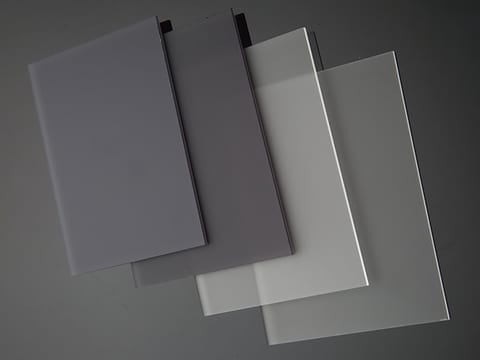
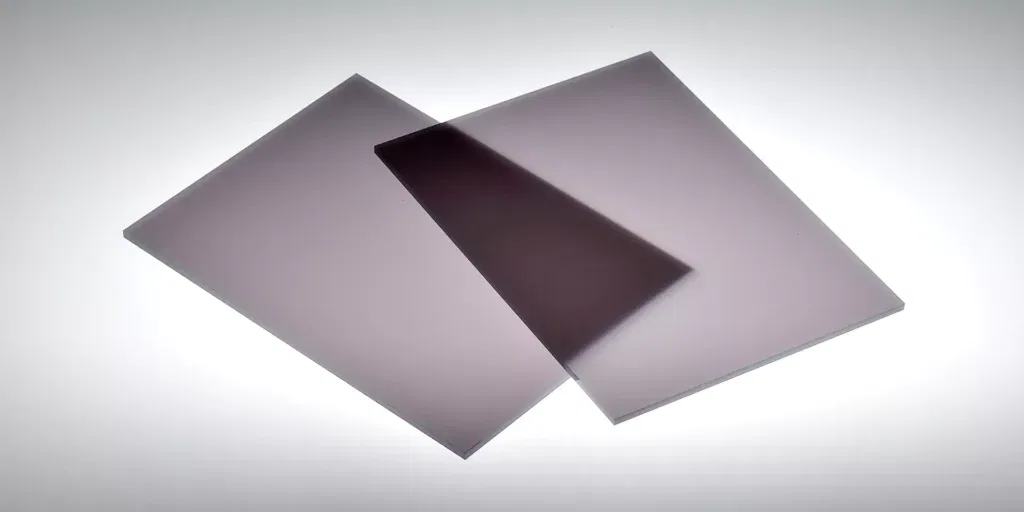
Day & night acrylic sheets are also known as black-by-day and white-by-night acrylic. They’re specially engineered materials designed for dual visual performance. They look –
- Daytime: Opaque dark surface (typically black or deep gray)
- Nighttime (backlit): Bright white or evenly illuminated appearance
Such duality allows businesses to maintain a premium, minimal look during the day and a high-visibility illuminated presence at night.
The Science Behind Day & Night Acrylic: How One Sheet Does Two Things?
The behavior of day-and-night acrylic is counterintuitive at first encounter. How does a single sheet of material appear solidly black in full daylight and produce a clean white or colored glow when backlit?
The Pigment System That Makes It Work
Day and night acrylic is formulated with a specialized pigment system. It typically features a precisely calibrated combination of black and white pigments. They’re engineered to produce two distinct optical behaviors depending on the direction and intensity of the incident light.
In ambient daylight conditions, the sheet surface reflects incoming light toward the viewer. The black pigment in the formulation absorbs most of the reflected light across the visible spectrum, producing the deep, opaque black surface appearance.
How Does Day & Night Acrylic Work?
a. Multi-Layer Material Structure
These sheets are typically manufactured using advanced co-extrusion or lamination techniques –
- Top layer: Dark, opaque surface
- Core layer: Light-diffusing material
- Back layer: Reflective or translucent base
b. Light Transmission Principle
The transformation effect relies on controlled light transmission –
- Ambient light → reflected by dark surface → appears black
- LED backlight → passes through layers → diffuses evenly → appears white
The ultimate key to succeeding with day & night acrylics is a precise balance between opacity and translucency.
Why Standard Black Acrylic Cannot Do This?
Standard black acrylic, formulated for maximum opacity, has essentially zero light transmittance. The black pigment loading is designed to block all light transmission, meaning no meaningful backlight output, regardless of LED intensity.
RGB Color Capability: Beyond White
When backlit with colored RGB LEDs rather than standard white LEDs, the acrylic glows in the color of the LED. The white-pigment diffusion matrix evenly distributes the incoming color across the panel face.
Thus, it produces an even color field rather than the uneven hot-spotted color output that a less diffusive material would deliver.
A single day-and-night acrylic sign panel can glow cool white in its standard configuration, shift to warm gold for a festive campaign, display a brand-specific color for a promotional period, or cycle through a programmed color sequence when connected to an addressable RGB LED controller.
Such a dynamic capability significantly extends the commercial life of a sign installation beyond the single-configuration limitation of most traditional illuminated sign materials.
Key Material Specifications
- Nighttime: White LED with a clean, even glow.
- Nighttime: RGB LED that glows in the color of the LED.
- Light transmittance when backlit: 25%
- Standard thickness: 3mm (most signage), 5mm (large format).
- Surface finish: High gloss standard.
- UV stability: Outdoor-rated grades available.
- Recommended LED color temp (white): 5000–6500K for crisp white output.

Day & Night Acrylic Outperforming the Alternatives
Before day-and-night acrylic became commercially established, sign makers trying to achieve a premium daytime appearance alongside strong nighttime illumination worked with two primary alternatives.
The Perforated Film Method: The Old Standard
The established approach: apply a black perforated vinyl film to a standard white translucent acrylic sign face. During the day, the black film provides a dark surface appearance. At night, the LED backlight transmits through the film perforations to illuminate the sign.
The limitations are real and visible. At close viewing distances in daylight, the perforation pattern reads as a surface texture, reducing the premium, solid appearance that premium brand signage requires.
The UV Dual-Layer Print Method
UV printing onto clear or translucent substrates with a day-layer/white-barrier/night-layer print stack delivers genuine day-and-night image capability on a single substrate.
The daytime image is front-lit by ambient light; the nighttime image transmits through the white barrier layer. It produces the most sophisticated creative effects — the daytime and nighttime images can be entirely different, including hidden reveals, transformed color fields, and dual-narrative designs.
Where Does Day & Night Acrylic Perform the Best?
Day & night acrylic delivers its greatest commercial value in environments where both daytime and nighttime viewing experiences carry equal weight.
Retail Storefronts: Premium Presence Around the Clock
The storefront sign is the most commercially vital signage spec most retail businesses need. It forms the first visual impression for every passing customer, across every opening hour. In many cases, the impression lasts even throughout the closed hours.
By day, the day-and-night acrylic sign face presents as solid, clean, architectural black—a material finish that communicates premium design intent and sits naturally alongside modern retail facade materials: anodized aluminum, powder-coated steel, dark stone cladding, and structured glass.
Practical format applications across retail include: full-width fascia signs, projecting blade signs, under-canopy brand identification panels, entrance canopy branding, and large-format dimensional letter or logo installations where both viewing modes require a considered result.
Hotels and Hospitality: Identity That Holds at Every Hour
Hospitality branding requires a higher level of 24/7 visibility than most retail. Hotels, restaurants, bars, and venue entrances are operational and visible across the full clock.
The signage must represent the brand appropriately at 11 am under clear winter sunlight, at 7 pm in the low-angled golden hour, and at 1 am when the last guests are returning along a quiet street. The same sign must perform credibly in all three conditions without looking like a compromise in any of them.
The hotel entrance nameplate and brand logo are viewed under dramatically different conditions throughout the day and into the night — bright midday sun, variable light on overcast days, golden-hour afternoon warmth, and full artificial nighttime illumination from street lighting.
For hospitality brands with warm color identities — a luxury property using gold, amber, or champagne as its primary palette — warm white LED drivers (2700–3200K) behind day and night acrylic panels produce a warm-toned glow that complements the interior material environment.
Exhibition Halls and Trade Show Booths: Maximum Impact in a Competitive Environment
Exhibition environments make the most extreme demands on signage materials. A stand must attract attention from across a busy show floor, where hundreds of brands compete for the same attention, and clearly convey brand identity at both 20-meter and 1-meter distances.
Day and night acrylic addresses all of these constraints simultaneously. Full-height stand-back walls in day and night acrylic present as premium dark backdrops when the exhibition hall is at full daytime lighting intensity—a sophisticated, considered surface that reads as intentional branding.
Individual brand mark panels — day and night, acrylic-cut or framed to isolate a logo or primary brand element — create a focused revelation effect at a defined focal point on the stand. The brand mark is present but restrained by day; it reveals itself in light when the LED activates.
Best Design Practices for Day & Night Acrylic Signage
The material handles the day/night transformation. The quality of the finished sign is determined by the design decisions that surround the material choice.
Designing for Both Contrast Modes
Day and night acrylic signs are read under two fundamentally different lighting conditions, and the design must hold up in both.
By day, the sign appears as a dark surface with applied graphics — white or opaque-colored vinyl lettering on black. The contrast between white lettering and the black surface is naturally strong and visible.
By night, the panel’s face glows white across its entire surface. What was white-on-black by day becomes dark-on-white at night. This reversal is a core design feature.
Vinyl Graphic Application: Front, Rear, and Combined
Vinyl graphics on day-and-night acrylic create different optical effects depending on whether they’re applied, and this difference is a practical, creative tool that most sign fabricators underuse.
Front-face vinyl application is the standard approach for commercial signage. White or opaque colored vinyl applied to the front creates the primary daytime graphic (brand name in white on the black field).
Rear-face vinyl application produces the hidden reveal effect. The vinyl applied to the back of the sheet is completely invisible in daylight — the black field conceals it.
Light Diffusion Testing: Achieving Even Illumination Across the Panel Face
Light diffusion quality is the defining technical challenge of backlit acrylic signage, and the area where most production failures occur.
A sign that glows unevenly — with visible bright spots directly behind LED positions, or with bright edges and dim centers will generate client complaints and require remediation at the sign maker’s cost.
The good news is that these failures are almost entirely preventable when the LED system and cabinet depth are verified against the sheet before production.
The Three Variables That Determine Diffusion Quality
LED-to-face depth is the most critical variable. The distance between the LED strip/module and the rear face determines how far the light from each LED chip can spread + blend with adjacent chips.
At minimal distances, below 10mm, individual LED chips remain visible as distinct bright points even through a diffusing material. The 3mm acrylic provides acceptable hot-spot concealment with a minimum LED-to-face depth of 25mm, using an LED strip with a chip spacing of 30–50mm (60 chips/m).
LED strip density is the second variable. Higher chip density (60 chips per meter) produces better inherent blending of adjacent LED light cones, reducing visible hot spots at any given cabinet depth.
Lower density strips (30 chips per meter) require greater depth or a supplementary diffuser panel. For day-and-night acrylic, 60 chips per meter is the recommended minimum density for standard cabinet-depth signage.
Sheet thickness has a secondary influence. The thicker sheet (5mm) has more pigment material for the transmitted LED light to travel through, which increases internal scattering and improves diffusion marginally.
However, it also reduces total light transmission — a longer pigment path means more light is absorbed before it reaches the face. For most signage applications, 3mm provides the best balance of transmittance and diffusion.
A Practical Pre-Production Diffusion Test
- Cut a 300mm × 300mm sample of the day and night acrylic sheet from the production batch.
- Mount it horizontally at the intended LED-to-face depth using a temporary frame or stand.
- Illuminate from behind with the LED strip at the intended chip density.
- Photograph the lit sample from the front at the intended viewing distance in a darkened environment.
- Evaluate: Are individual chip positions visible as bright points? Is there brightness variation between the center and the panel edges? Is there any warm/cool color banding across the face?
- Adjust LED-to-face depth or chip density as needed until the result passes all three checks, then lock the cabinet specification.
LED System Integration: Choosing the Right LEDs for Day & Night Acrylic
The acrylic panel is one component of the sign system. The quality of the finished installation — its brightness, color accuracy, diffusion evenness, and energy efficiency — is jointly determined by the sheet material and the LED system.
Color Temperature: Setting the Nighttime Character
Cool white (5000–6500K) produces a crisp, clean white glow with a modern, high-visibility aesthetic. It’s the most commonly specified range for retail, commercial, and exhibition signage.
For most commercial applications, a target of 5500–6000K is recommended. Neutral white (3500–4500K) produces a balanced white with a slightly warmer undertone.
Warm white (2700–3200K) produces a gold-tinted white glow with evident warmth. Used in luxury hospitality cases where warm-toned lighting complements dark timber, brass, and natural stone backs.
RGB Integration: Dynamic and Campaign-Responsive Signage
Day and night acrylic’s compatibility with RGB LED backlighting transforms a sign from a fixed-configuration installation into a dynamic brand communications tool.
Addressable RGBW LED strips connected to a DMX, Bluetooth, or WiFi LED controller allow the sign glow to be changed by color on any schedule — warm gold for a festive campaign period, brand blue for standard operation, or a full color cycle for a launch event or promotional activation.
For signs where the glow color must match a specific Pantone or RAL brand, RGB LED mixing requires calibration against the actual sheet. The material’s diffusion characteristics influence the color produced by the day-and-night acrylic layer.
Strip Density, Power Specification, and Energy Efficiency
Standard density (30 chips/meter, approximately 4.8W/meter): Adequate for deeper cabinets (40mm or more) but requires test validation before production. Lowest power consumption per unit length — appropriate for large-scale installations.
Medium density (60 chips/meter, approximately 9.6W/meter): The recommended specification for day and night acrylic sign fabrication at standard cabinet depths. Widely available in the full range of color temperatures and CRI ratings.
High density (120+ chips/meter, 14.4–19.2W/meter): For very shallow cabinet applications (15–25mm depth) or where maximum brightness is the primary specification. Higher power consumption — factor into energy calculations for signs operating 12 or more hours per day.
Conclusion
Day & night acrylic sheets are revolutionizing signage by delivering consistent, high-impact branding around the clock. Their ability to transform from a sleek daytime surface into a luminous nighttime display makes them a powerful tool for modern businesses.
High-Performance Day & Night Acrylic Sheets at JUMEI
Jumei Acrylic offers customized acrylic sheets designed to meet competitive market demands. If you’re looking for next-gen signage that stands out 24/7, now is the time to upgrade with us. Request a quote to know more.