
Acrylic, or plexiglass (technically PMMA), has long been valued as a durable alternative to glass. It has been powering industries like signage, construction, and retail displays for decades.
But today, acrylic is rapidly becoming an innovative material for next-gen tech. It’s redefining what’s possible in design, engineering, and experience. And this article explores where acrylic is heading.
Acrylic’s Evolution: From Transparent Plastic to Smart Material
Acrylic’s journey is a story of continuous reinvention. Historically, acrylic was limited to –
- Signage and advertising panels
- Protective barriers
- Architectural glazing
- Consumer product housings
While these applications remain important, the material expectations have changed dramatically. Today’s industries demand –
- Higher optical performance
- Integration with electronics
- Lightweight and sustainable materials
- Design flexibility for complex geometries
Therefore, acrylic plexiglass is no longer just a convenient glass replacement. Additionally, it continues to enable the creation of entirely new product categories.
PMMA Stats in 2026: The Market Forces Driving Advanced Demand
The global PMMA market is not growing uniformly. Commodity applications — construction glazing, standard sign-grade sheet, general display, and retail — are expanding at rather consistent rates.
The advanced application segments are growing at multiples of the commodity rate. And the growth is driven by three macro-level transitions that arrived simultaneously and are now reinforcing each other.
The first is automotive digitalization. The global automotive display market was valued at $17.3 billion in 2025 and is forecast to reach $55.1 billion by 2035, growing at 12.2% annually.
The second is smart glass adoption. Its global market was valued at $6.81B in 2025 and is growing at over 10%, driven by energy-efficiency mandates and demand for premium automotive applications.
The third is a wearable technology scale-up. The smart glasses market is projected to exceed $4B by 2030 at double-digit growth. Every AR device, AI eyewear, and health wearable contains optical parts.
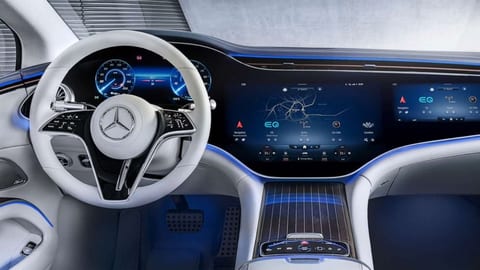
PMMA in EV Displays: From Instrument Covers to Augmented Reality HUDs
The automotive interior of 2026 is not a dashboard. It is a digital environment. A premium electric vehicle today may contain many parts through which driver-passengers interact.
The EV Interior Display Revolution
Three properties make optical-grade PMMA the specs across the display component stack. Light transmittance is the first. PMMA transmits 92–93% of visible light.
For instrument cluster covers, center information display, and screen protective lenses, transmission loss percentage reduces display brightness, requiring more power to compensate.
Optical uniformity is the second. The PMMA display cover must maintain a consistent refractive index. Any local variation appears as image distortion or color non-uniformity in the display content behind it.
Cast PMMA’s controlled molecular weight distribution and uniform polymerization conditions produce the refractive index consistency that extruded or blended alternatives can’t reliably match.
Curved surface formability is the third. The sweeping, compound-curved display architectures of current premium EVs require thermoformed PMMA cover panels.
The BMW iX’s curved instrument cluster, the Mercedes-Benz EQS’s Hyperscreen spanning the full dashboard width, and BYD’s curved OLED center stack represent a design language.
Augmented Reality HUD: The Most Optically Demanding PMMA Application
Head-up displays represent a technically demanding, fast-growing segment of automotive optical parts. Its market was valued at $1.9B in 2025 and is forecast to reach $10.8B by 2036, with a CAGR of 17.2%.
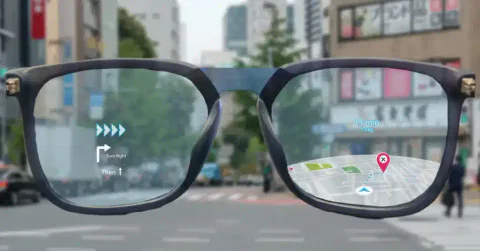
The technology driving this growth is AR HUD: systems that project navigational overlays, ADAS alerts, pedestrian detection graphics, and lane guidance at apparent distances of seven meters or more ahead of the vehicle, overlaid on the driver’s view of the real road.
PMMA’s role in these systems is layered and technically exacting. In combiner optics, the transparent elements through which the driver simultaneously views the projected image and the road ahead, optical-grade plexiglass or PMMA-based composites are frequently specified.
It must achieve near-zero wavefront distortion, precisely controlled refractive index, and dimensional stability under the thermal cycling that a vehicle interior experiences across seasons and climates.
Any deviation from these specifications appears as image ghosting, color fringing, or depth inconsistency in the projected overlay — safety-relevant defects and commercially unacceptable for production.

Ambient Light Architecture: PMMA as Active Safety Infrastructure
Beyond displays, PMMA light guides define the spatial and atmospheric character of modern EV interiors. The global automotive ambient lighting market was valued at approximately $2 billion in 2025 and is growing at 9–11% annually toward over $5 billion by 2034.
This growth is driven not by the aesthetic feature alone — ambient lighting has been a premium interior option for over a decade — but by the functional integration of ambient lighting into active safety and driver information systems.
ADAS-responsive ambient lighting is transitioning from research demonstration to production specification in the 2026–2028 vehicle generation.
In this functional role, the PMMA light guide is no longer merely delivering atmosphere. It is delivering safety-critical information with color precision that must be perceptually distinct across the full cabin, at any ambient light level, for any occupant.
Electrochromic Smart Glass: PMMA as the Substrate for Programmable Surfaces
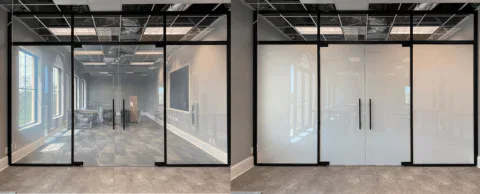
Glass that changes its transparency at the touch of a button, in response to sunlight intensity, or on an automated building management schedule, is no longer experimental.
It enables windows, sunroofs, facade panels, and interior partitions to modulate their light transmission electrically — was valued at $2.8B in 2025 and is growing at 9.7% annually toward $6.4B by 2035.

How Does the Technology Work?
Electrochromic glass contains a thin-film coating of electrochromic material — commonly tungsten oxide (WO₃) or organic electrochromic polymers — sandwiched between two transparent conducting electrode layers.
When a small electrical voltage is applied, ions migrate through the electrochromic layer, changing its oxidation state and optical properties: the glass transitions from transparent to tinted in a continuously adjustable, electrically controlled process.
The three main smart glass technologies each serve different performance requirements. Electrochromic glass offers smooth, continuously adjustable tinting with the highest commercial maturity and largest architectural market share — over 61%.
The energy efficiency case is concrete. Electrochromic glazing reduces solar heat gain by up to 80% when fully tinted, directly reducing HVAC load. A 2026 project demonstrated a 15% reduction in overall energy use in a net-zero commercial building through electrochromic glazing.
PMMA’s Role Across the Smart Glass Stack
PMMA participates in electrochromic smart glass systems at several distinct and commercially significant levels.
As a substrate material for flexible electrochromic films, PMMA enables curved and flexible smart glass configurations that rigid glass substrates cannot accommodate.
Organic and polymer-based electrochromic materials can be deposited on flexible acrylic films, producing smart glass panels with compound curvature suitable for automotive sunroofs that must conform to complex body geometries and architectural installations on non-planar facade elements.
As a protective cover and encapsulation layer, UV-stable PMMA protects the electrochromic film stack from mechanical damage, UV degradation, and moisture ingress that would degrade switching performance and shorten service life.
PMMA in Wearable Technology: Smart Eyewear, AR Optics, and Health Monitoring
The smart glasses market is experiencing one of the fastest technology adoption curves in consumer electronics. Meta’s Ray-Ban smart glasses have become a genuine mainstream product; in March 2026, Meta launched its first prescription-optimized AI glasses.
Optical Lenses for Smart Eyewear
PMMA has been the dominant optical lens material for standard prescription eyewear — lighter than glass, optically precise, easily tinted and coated, and scratch-resistant. The emergence of smart eyewear creates a more technically demanding version of this established application.
Smart eyewear lenses must simultaneously function as conventional optical lenses correcting vision, as substrate or cover elements for waveguide systems that project AR content into the wearer’s field of view, and as protective covers for the camera, sensor, and photonics arrays embedded in the frame.
Optical-grade PMMA’s precise refractive index of 1.49 — stable across the temperature and humidity ranges of daily wear — and its 92%+ light transmittance make it directly competitive with specialized optical polymers for the base lens element.
AR Waveguides and Combiner Optics
Augmented reality waveguide optics are among the most optically demanding applications for any transparent polymer. The waveguide — the transparent panel that guides light from a micro-projector to the wearer’s eye while preserving a simultaneous view of the real world.
It must achieve near-zero haze, uniform refractive index across the full aperture (any local variation distorts the projected image), surface flatness tolerances measured in nanometres, and dimensional stability under body-temperature and humidity cycling.
Optical-grade cast PMMA with tight thickness tolerance — ±0.05mm or better for waveguide blanks — and controlled internal stress levels is a viable substrate for AR combiner optics, particularly in the consumer-tier segment where holographic polymer waveguides offer a cheaper alternative.
Health Monitoring Wearables: PMMA at the Sensor Interface
Beyond smart eyewear, the broader wearable health-monitoring market uses PMMA at the optical and protective interfaces between electronic sensing systems and the wearer’s body.
Optical sensor covers over photoplethysmography (PPG) arrays in smartwatches must transmit near-infrared light — the wavelength at which PPG heart rate and blood oxygen signals are strongest — with high, consistent transmittance and low fluorescence that would introduce background noise.
Optical-grade PMMA meets both requirements and is a widely established material for these covers across the consumer wearable category.
The Electrochromic Lens: Where Smart Glass Meets Smart Eyewear
One convergence application captures the trajectory of multiple trends simultaneously. In June 2025, Xiaomi unveiled electrochromic smart glasses featuring user-adjustable lens tinting via a two-finger gesture.
It’s a consumer product demonstrating the commercial viability of electrochromic polymer lens technology in mainstream wearables.
The lens substrate in these glasses is a transparent polymer hosting the electrochromic switching layer, requiring maintained optical quality through thousands of switching cycles — from tinted to clear and back — under UV exposure and continuous wear conditions.
Flexible and Functional PMMA Composites: The Material Frontier
Standard PMMA’s rigidity is a feature in most of its current applications. But the most rapidly advancing application areas are flexible wearables, curved automotive glazing, and smart surface integration.
They require materials that combine PMMA’s optical properties with flexibility, stretchability, or surface-active functionality. And scientists have responded with a family of PMMA-based composites.
Impact-Modified and High-Flex Grades
Impact-modified PMMA — produced by incorporating rubber-phase particles into the PMMA matrix — significantly improves fracture resistance without proportional sacrifice of optical clarity. These grades are commercially established in automotive exterior lighting and safety-critical display covers.
The ongoing development direction is toward grades that combine impact modification with increased flexibility, enabling thin-walled thermoformed parts for curved automotive display covers and flexible wearable optical elements that standard PMMA would crack under applied bending stresses.
PMMA-Based Hydrogels for Biomedical Applications
Cross-linked poly(acrylic acid) and PMMA copolymer hydrogels combine acrylic chemistry’s optical transparency and surface-chemical functionality with soft, water-swelling mechanical properties that mimic biological tissue.
Published applications include wearable biosensor substrates that conform to skin contours while transmitting optical signals, transdermal drug-delivery membranes with controlled chemical permeability, and soft contact lenses with integrated sensing functionality.
Self-Healing Acrylic Polymers
Self-healing PMMA formulations — materials that repair surface scratches and minor damage upon exposure to heat, UV light, or solvent vapor — are an active research and development area with direct commercial relevance for display covers and optical wearables.
The primary failure mode of high-gloss PMMA components in consumer products is scratch accumulation, which degrades optical clarity and aesthetic quality. Self-healing surface chemistry addresses this failure at the material level rather than relying on hard coatings.
Nano-Structured Surfaces: Anti-Reflective and Anti-Fog Functionalization
The moth-eye anti-reflective surface is one of the most practically significant PMMA surface innovations of the past decade. A periodic nano-scale structure — tapered holes with depth and periodicity in the range of 780nm and 580nm, respectively.
The procedure reduces surface reflectance from PMMA’s baseline of about 10% (combined front and rear surface) to below 1% across the 300nm to 1600nm wavelength range. It’s a transformative improvement for display covers, AR combiner optics, and automotive glazing.
The fabrication method — nanoimprint lithography using a structured silicon stamp — is scalable to roll-to-roll production, making it commercially viable for high-volume optical applications.
What the Emerging PMMA Economy Means for Your Business
The trends examined in this article are active commercial transitions happening in 2026 and accelerating through the decade. For buyers, manufacturers, and specifiers of PMMA products, the implications are practical and immediate.
Specification Is Moving Upmarket
The growing share of PMMA demand in advanced applications is shifting the specification norm upward across the board.
Buyers who have historically sourced commodity-grade PMMA for standard applications are increasingly encountering end-product requirements that commodity sheet cannot reliably meet.
Optical uniformity, refractive index consistency, tight thickness tolerance, and certified virgin content are transitioning from premium specs to baseline requirements for a broader range of applications.
Certification Documentation Is a Baseline Requirement
Every advanced application domain in this article carries compliance documentation requirements that did not exist for traditional PMMA applications.
REACH, RoHS, SGS, ISO 10993 for biomedical and wearable applications, and emerging recycled-content certification frameworks are required by advanced market buyers at the procurement stage.
A supplier who can’t provide current, batch-specific documentation — not blanket approvals but per-production-lot certificates — is increasingly excluded from these supply chains.
The OEM Custom Capability Gap
Many of the advanced PMMA applications in this article — specific display cover geometries, optical waveguide blanks, electrochromic substrate dimensions, microfluidic biosensor substrates — can’t be served from standard commercial sheet inventory.
Non-standard dimensions, precision optical specifications, controlled UV stabilizer packages, and customer-specified surface treatments all require OEM custom production capability. Such capability is the differentiator that separates a genuine partner from a commodity distributor.
Conclusion
The future of PMMA is not a gradual evolution of its existing applications. It is a simultaneous expansion into four technology domains: EV displays and augmented-reality HUDs, electrochromic smart glass, wearable technology optics, and closed-loop chemical recycling. And they continue to reshape the material’s commercial identity and specification requirements in real time.
Stay Competitive with Futuristic Acrylic Applications at JUMEI
Jumei Acrylic continues to lead the way with forward-thinking innovations. Partnering with us lets you stay ahead in the rapidly evolving world of acrylics. Request for a quote on material samples to explore custom solutions for your industry.