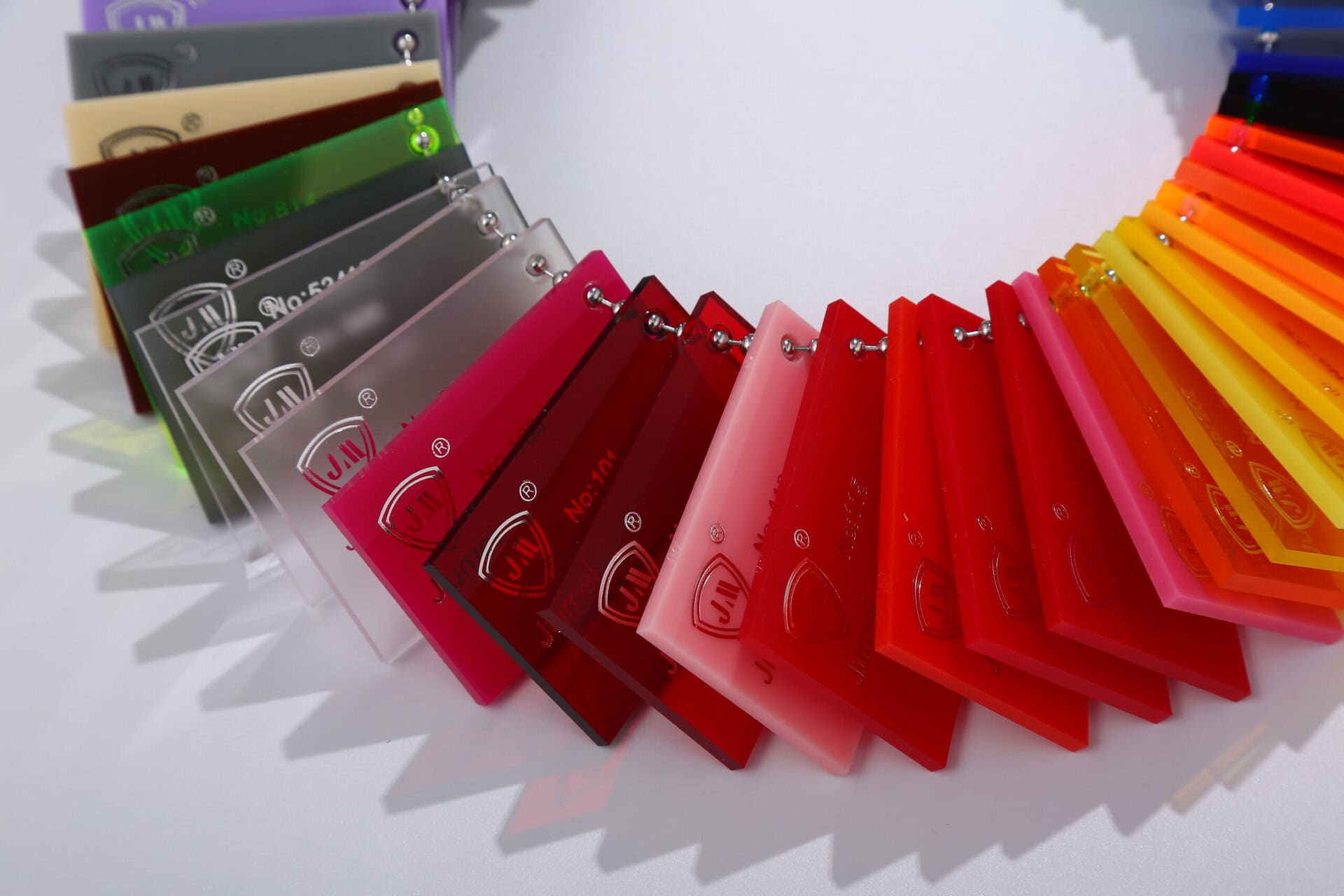
Acrylic sheet lead time generally includes specification confirmation, sample approval, production, quality inspection, packaging, export preparation and transportation.
Standard acrylic sheets may be produced or prepared more quickly when suitable material or scheduled production is available. Custom colors, unusual thicknesses, specialty finishes and mixed-specification orders normally require more time.
For buyers, the first question should not only be:
How many days will delivery take?
It should be:
Does the quoted lead time include sample approval, production, inspection, packaging, vessel booking and transportation?
A supplier may quote a short “production time,” while the buyer interprets it as the complete time until the goods arrive. These are not the same.
Quick Answer: How Long Does an Acrylic Sheet Order Take?
A typical acrylic sheet order can require approximately:
| Order Stage | Typical Planning Range |
|---|---|
| Specification confirmation | 1–3 working days |
| Standard sample preparation | About 1–3 working days |
| International sample delivery | About 5–7 days |
| Custom color development | Depends on matching and approval rounds |
| Standard bulk production | Commonly around 10–20 days |
| Customized bulk production | Commonly around 15–30 days or longer |
| Quality inspection | 1–3 working days |
| Export packaging | 1–3 working days |
| Booking and origin handling | Depends on sailing schedule |
| Ocean transportation | Depends on origin, destination and route |
These are planning references rather than fixed guarantees. Actual lead time depends on specification, quantity, factory schedule, raw-material availability, inspection requirements, public holidays and shipping conditions.
Jumei Acrylic can complete many standard orders within approximately two weeks when the specification and production schedule allow. Customized or complex orders should be confirmed individually.
What Is Acrylic Sheet Lead Time?
Acrylic sheet lead time is the time required to complete the agreed order process.
Depending on the quotation, it may refer to:
- Time from deposit to production completion
- Time from sample approval to production completion
- Time from order confirmation to factory dispatch
- Time from order confirmation to loading port
- Time from order confirmation to destination port
- Time from order confirmation to the buyer’s warehouse
Because these definitions are different, every quotation should state:
- When the lead-time calculation begins
- Which production stages are included
- When the order is considered complete
- Whether transportation time is included
- Which conditions may change the schedule
A clear description could be:
Production lead time: approximately 15–20 working days after deposit, final specification confirmation and custom-color approval. Ocean transit time is not included.
This is more useful than simply stating “delivery in 15 days.”
Production Lead Time vs Shipping Time
Production time and shipping time should always be separated.
Production Lead Time
Production lead time may include:
- Raw-material preparation
- Color preparation
- Machine or mold setup
- Acrylic sheet production
- Curing or cooling
- Cutting
- Protective-film application
- Quality inspection
- Packaging
Shipping Preparation Time
Shipping preparation may include:
- Booking confirmation
- Export documentation
- Container release
- Factory-to-port transportation
- Customs declaration
- Port delivery
- Loading arrangements
Transit Time
Transit time is the time required to transport the shipment from origin to destination.
It depends on:
- Shipping method
- Departure port
- Destination port
- Direct or transshipment route
- Carrier schedule
- Port congestion
- Customs clearance
- Inland delivery
Therefore:
Total Order Time = Confirmation Time + Sample Approval + Production + Inspection + Export Preparation + Transportation
What Starts the Lead-Time Calculation?
Lead time should not automatically begin when the buyer first asks for a quotation.
Production normally begins only after the supplier has received all required approvals and commercial conditions.
The starting point may require:
- Confirmed purchase order
- Confirmed proforma invoice
- Deposit or agreed payment
- Final product specification
- Approved color sample
- Approved protective film
- Approved packaging
- Confirmed artwork
- Required technical documents
- Agreed delivery term
If any of these items remain open, production may not be able to start.
Buyers should ask the supplier to confirm the exact lead-time start date in writing.
1. How Product Type Affects Lead Time
Different acrylic products require different production processes.
| Product Type | Lead-Time Consideration |
|---|---|
| Standard clear acrylic | Usually easier to schedule |
| Standard colored acrylic | Depends on color availability |
| Custom color acrylic | Requires matching and approval |
| Extruded acrylic | Continuous line scheduling is important |
| Cast acrylic | Mold preparation and curing affect timing |
| Mirror acrylic | Coating and surface inspection may add time |
| Frosted or matte acrylic | Finish availability must be confirmed |
| Decorative acrylic | Pattern and material preparation may add time |
| Sanitary acrylic | Forming performance and color require control |
| Thick acrylic | Production, curing and handling take longer |
| Cut-to-size acrylic | Requires additional processing |
| OEM acrylic | Film, labels and packaging require approval |
The lead time should be quoted for the exact specification rather than the general product category.
2. Cast vs Extruded Acrylic Production Time
Cast and extruded acrylic sheets are manufactured differently.
Cast Acrylic Lead Time
Cast acrylic is produced by placing liquid material between molds or glass plates and completing a controlled polymerization and curing process.
The schedule can be affected by:
- Mold availability
- Sheet dimensions
- Thickness
- Color
- Curing time
- Cooling time
- Surface inspection
- Production yield
- Required quantity
Very thick cast acrylic requires more time than standard thin sheets because the polymerization, heat control, cooling and inspection processes are more demanding.
Extruded Acrylic Lead Time
Extruded acrylic is produced continuously by feeding PMMA material through an extrusion line.
Lead time can be affected by:
- Extrusion-line schedule
- Die or width setup
- Thickness adjustment
- Raw-material preparation
- Color change
- Production volume
- Protective-film setup
- Quality stabilization
Extrusion can be efficient for standard high-volume orders, but a custom production run still requires scheduling and setup.
Read the Cast vs Extruded Acrylic Sheet Guide for a detailed product comparison.
3. Standard Products vs Custom Products
Standard specifications normally have shorter and more predictable lead times.
A standard product may use:
- Existing raw materials
- Regular production settings
- Standard colors
- Standard molds or widths
- Standard protective film
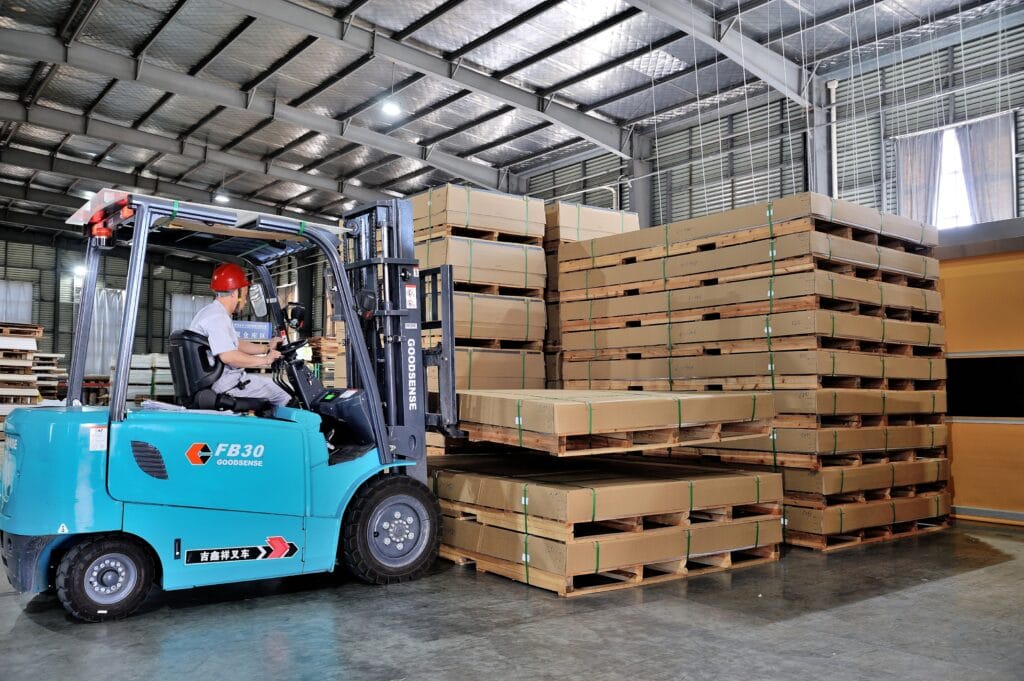
- Standard export packaging
Custom products may require:
- Technical evaluation
- New color formulation
- Trial production
- Sample delivery
- Buyer approval
- Production-line cleaning
- Special materials
- Custom film
- New packaging
- Additional inspection
Customization is not limited to color.
It can also include:
- Non-standard thickness
- Custom sheet size
- Light-diffusing performance
- Matte or decorative finish
- UV-enhanced formulation
- Printed protective film
- Private-label packaging
- Cutting
- Drilling
- CNC machining
- Polished edges
Each customized element can add another approval or production step.
4. How Custom Color Approval Affects Lead Time
Custom color development is one of the most common causes of extended lead time.
A proper custom-color process may include:
- Buyer provides a physical reference
- Manufacturer evaluates transparency and finish
- Pigment formulation is prepared
- A laboratory or production sample is made
- Color is checked under controlled lighting
- Sample is delivered to the buyer
- Buyer tests and approves the sample
- Bulk production is scheduled
If the first sample is not accepted, the process must be repeated.
To reduce delays, the buyer should provide:
- Physical color sample
- Pantone, RAL or other reference when applicable
- Transparent, translucent or opaque requirement
- Required thickness
- Glossy, matte or frosted finish
- Intended lighting condition
- Indoor or outdoor application
- Acceptable color tolerance
- Expected order quantity
A color seen on a mobile phone or monitor should not be used as the only approval reference.
5. How Thickness and Dimensions Affect Lead Time
Common thicknesses and sheet dimensions can usually be scheduled more easily.
Non-standard products may require:
- Different molds
- Extrusion adjustment
- Production trials
- Separate quality inspection
- Special cutting
- Custom pallet design
An order with five different thicknesses may require five separate production arrangements.
For example:
- 2 mm clear acrylic
- 3 mm clear acrylic
- 5 mm clear acrylic
- 8 mm clear acrylic
- 10 mm clear acrylic
Even if these sheets are shipped in one container, they are not necessarily manufactured in one production run.
Large-format and thick acrylic sheets may also require:
- More careful handling
- Longer cooling
- Additional flatness inspection
- Reinforced pallets
- Special loading equipment
6. How Order Quantity Affects Lead Time
A larger order does not always mean a proportionally longer lead time.
Production efficiency depends on:
- Number of specifications
- Total material weight
- Production-line capacity
- Color changes
- Thickness changes
- Packaging complexity
- Pallet quantity
- Current production schedule
A large order containing one standard specification may be easier to produce than a smaller order containing many custom colors and thicknesses.
Compare these two examples:
| Order | Quantity | Complexity | Likely Scheduling |
|---|---|---|---|
| Order A | Large volume | One clear standard specification | Relatively efficient |
| Order B | Smaller volume | Multiple colors, thicknesses and custom labels | More complex |
When requesting a lead time, buyers should send a specification-level order list rather than only the total tonnage.
7. How Samples Affect the Final Schedule
Samples reduce purchasing risk, but they must be included in the project schedule.
Standard acrylic samples can often be prepared within a few working days. International courier delivery may require several additional days depending on destination and customs.
Custom samples require more time because they may involve:
- Color development
- Material preparation
- Production trials
- Cutting
- Testing
- Approval documents
Buyers should test samples using their actual production method, such as:
- Laser cutting
- CNC routing
- UV printing
- Drilling
- Bending
- Bonding
- Thermoforming
Bulk production should begin only after the relevant sample and specification have been approved.
A sample tests the material, while a trial order tests the complete production, packaging and delivery process.
8. How Quality Inspection Affects Lead Time
Quality inspection is part of the production schedule—not an unnecessary delay.
Acrylic inspection may include:
- Product identification
- Thickness measurement
- Dimensional inspection
- Weight verification
- Surface inspection
- Color comparison
- Light-transmission testing
- Flatness inspection
- Protective-film testing
- Fabrication tests
- Quantity verification
- Packaging inspection
If the buyer requires a third-party inspection, additional time may be needed for:
- Inspector booking
- Factory coordination
- Inspection
- Report preparation
- Buyer review
- Corrective action
- Reinspection
The inspection date should be planned before production is completed.
Do not arrange the vessel schedule so tightly that there is no time to correct a quality problem.
9. How Packaging Affects Lead Time
Acrylic sheets require surface and edge protection during international transportation.
Export packaging may include:
- PE protective film
- Paper masking
- Cover boards
- Edge protection
- Wooden pallets
- Waterproof wrapping
- Steel or plastic strapping
- Shipping labels
Standard pallets can normally be prepared more quickly.
Customized packaging may require:
- Printed protective film
- Buyer logo
- Barcodes
- Custom labels
- Special pallet dimensions
- Retail cartons
- Destination-language instructions
- Fumigation or material documentation
The supplier should confirm whether customized packaging materials are already available. Packaging production can sometimes take longer than the acrylic sheet production itself.
10. How Payment Terms Affect Production Timing
Buyers and suppliers should agree on the payment condition that starts production.
Depending on the agreement, production may begin after:
- Receipt of deposit
- Confirmation of letter of credit
- Credit approval
- Full payment for a small order
- Completion of another agreed condition
Delays can occur when:
- Bank information is incomplete
- Payment reference is unclear
- Funds arrive during a holiday
- Letter-of-credit terms need correction
- Payment and order amounts do not match
- Supplier cannot identify the payer
Send payment confirmation promptly and request written confirmation of the production start date.
11. How Public Holidays and Peak Seasons Affect Lead Time
Production capacity and logistics can become limited during peak periods.
Possible factors include:
- National public holidays
- Factory maintenance
- Seasonal demand
- Major exhibitions
- Year-end shipping demand
- Port congestion
- Limited container availability
- Weather interruptions
Buyers should avoid calculating the schedule using working days as calendar days.
For example, a 15-working-day production period normally does not mean completion exactly 15 calendar days after confirmation.
When purchasing from China, orders near major holidays should be planned earlier. Confirm:
- Factory closing dates
- Last production date
- Last shipping date
- Raw-material availability
- Expected reopening date
- Post-holiday production queue
12. How Shipping Method Affects Delivery Time
Courier
Courier is normally used for samples or small cut pieces.
Advantages:
- Fast
- Trackable
- Suitable for testing
Limitations:
- Expensive for large sheets
- Dimensional restrictions
- Customs delays may occur
Air Freight
Air freight is faster than ocean shipping but is generally more expensive.
It may be suitable for:
- Urgent components
- Small commercial quantities
- Replacement material
- High-value custom products
Chargeable weight may depend on actual or volumetric weight.
Ocean Freight
Ocean freight is commonly used for wholesale acrylic sheet orders.
The schedule may include:
- Vessel booking
- Factory-to-port delivery
- Customs declaration
- Port handling
- Sailing
- Transshipment
- Destination customs
- Inland delivery
A quoted sailing time does not normally include every step before departure and after arrival.
Rail or Road Transport
Rail and road options depend on the origin, destination and current route availability. Transit time and border procedures should be confirmed for each shipment.
13. EXW, FOB and CIF: Which Delivery Point Applies?
The trade term affects which part of the schedule the supplier controls.
| Trade Term | Supplier’s Main Delivery Point | Buyer Should Confirm |
|---|---|---|
| EXW | Supplier’s premises | Pickup and export arrangements |
| FOB | Goods loaded according to the named port term | Vessel and destination transport |
| CIF | Named destination port under agreed conditions | Destination charges and final delivery |
An FOB production lead time should not be interpreted as delivery to the buyer’s warehouse.
The quotation should identify:
- Named delivery point
- Production lead time
- Estimated shipment date
- Estimated departure date
- Estimated arrival date
- Excluded destination processes
How to Calculate the Total Acrylic Sheet Order Timeline
Use the following planning formula:
Total Order Time = Technical Confirmation + Sample Approval + Production + Inspection + Packaging + Export Preparation + Transit + Customs + Final Delivery
Example Planning Timeline
Suppose a buyer orders a customized colored acrylic sheet:
| Stage | Planning Time |
|---|---|
| Specification confirmation | 2 days |
| Custom sample preparation | 5 days |
| Sample courier delivery | 5 days |
| Buyer testing and approval | 4 days |
| Bulk production | 20 days |
| Inspection and packaging | 3 days |
| Booking and port preparation | 7 days |
| Ocean transit | Route dependent |
| Customs and final delivery | Destination dependent |
The production period may be 20 days, but the complete purchasing project takes much longer.
This is why buyers should work backward from the required warehouse delivery date.
How to Work Backward From a Required Delivery Date
Start with the date on which the material must arrive at the buyer’s warehouse.
Then allow time for:
- Inland delivery
- Customs clearance
- Ocean or air transportation
- Origin-port handling
- Export preparation
- Inspection and correction
- Packaging
- Production
- Sample approval
- Technical and commercial confirmation
A safety margin should be included for time-sensitive projects.
For exhibition, retail opening or construction orders, do not schedule material arrival immediately before fabrication or installation begins.
The buyer also needs time for:
- Incoming inspection
- Material conditioning
- Cutting
- Printing
- Forming
- Assembly
- Replacement of rejected material
How Buyers Can Reduce Acrylic Sheet Lead Time
1. Send a Complete RFQ
Provide all important information in the first inquiry:
- Acrylic type
- Thickness
- Sheet dimensions
- Color
- Quantity
- Application
- Processing method
- Protective film
- Packaging
- Destination
- Required date
- Trade term
2. Choose Standard Specifications
Standard colors, thicknesses and dimensions are generally easier to schedule.
3. Approve Samples Quickly
Assign a responsible person to inspect and approve samples without unnecessary internal delays.
4. Use a Physical Color Standard
A proper color reference reduces repeated matching.
5. Confirm Artwork Early
Approve film printing, labels and packaging artwork before bulk production.
6. Avoid Late Specification Changes
A change in color, thickness, size or quantity may require rescheduling.
7. Separate Urgent and Non-Urgent Products
If one custom item delays the entire shipment, consider shipping standard products separately.
8. Plan Repeat Orders
Provide forecasts for frequently purchased specifications.
9. Maintain Safety Stock
Distributors should keep appropriate inventory for high-demand products.
10. Book Inspection and Shipping Early
Coordinate third-party inspection and freight before production completion.
What Causes Acrylic Sheet Delivery Delays?
Common causes include:
| Delay | Possible Reason | Prevention |
|---|---|---|
| Production has not started | Deposit or specification incomplete | Confirm start conditions |
| Color is not approved | Incomplete reference or repeated matching | Use a physical standard |
| Material is unavailable | Special grade or additive required | Confirm before ordering |
| Schedule changes | Late quantity or specification revision | Freeze the order specification |
| Inspection fails | Product does not meet criteria | Define standards before production |
| Packaging is late | Custom film or labels unavailable | Approve early or use standard packaging |
| Vessel is missed | Tight booking or late factory completion | Include scheduling margin |
| Port delay | Congestion or documentation issue | Work with an experienced forwarder |
| Customs delay | Incomplete or inconsistent documents | Review documents before shipment |
| Final delivery delay | Warehouse or trucking problem | Confirm receiving arrangements |
How to Evaluate a Supplier’s Lead-Time Reliability
A short quoted lead time is valuable only if the supplier can meet it consistently.
Ask potential suppliers:
- When does lead time officially begin?
- Is the product in stock or made to order?
- Is raw material currently available?
- Has production capacity been reserved?
- Are all specifications produced together?
- Does the schedule include inspection?
- Does the schedule include packaging?
- What could change the completion date?
- How is progress reported?
- What happens if a quality issue is found?
- Is a third-party inspection possible?
- Can repeat orders receive production priority?
For repeat purchasing, track:
- Quoted completion date
- Actual completion date
- Original departure date
- Actual departure date
- Quantity shipped
- Quality result
- Reason for any delay
Acrylic Sheet Lead-Time RFQ Template
Product: Clear extruded acrylic sheet
Raw material: Virgin PMMA
Thickness: 3 mm
Thickness tolerance: Please state
Sheet dimensions: 1220 × 2440 mm
Color: Clear
Quantity: Please state sheets or tons
Application: Signage and display fabrication
Processing: Laser cutting and UV printing
Protective film: Double-sided PE film
Packaging: Reinforced export pallets
Destination: Port and country
Trade term: FOB or CIF
Required warehouse date: Please state
Please confirm:
- Specification-confirmation time
- Sample-preparation time
- Production lead time
- Quality-inspection time
- Packaging time
- Estimated cargo-ready date
- Earliest estimated departure date
- Whether transportation time is included
- Current raw-material availability
- Factors that may change the schedule
Frequently Asked Questions
How long does it take to manufacture acrylic sheets?
Standard bulk orders commonly require approximately 10–20 days, while customized products may require around 15–30 days or longer. The actual time depends on product type, color, thickness, dimensions, quantity and production schedule.
Can acrylic sheets be delivered within two weeks?
Many standard products may be completed within approximately two weeks when the material, specification and production capacity are available. Customized products and international transportation require separate confirmation.
Does lead time include shipping?
Not always. A quoted production lead time normally ends when the goods are completed or ready for dispatch. Ask whether the quotation includes export handling, ocean transit, customs clearance and final delivery.
When does production lead time begin?
It usually begins after the supplier receives the required payment and all specifications, colors, samples, labels and packaging details have been approved.
Why do custom colors take longer?
Custom colors require reference evaluation, pigment formulation, trial production, measurement, sample delivery and buyer approval before bulk production can begin.
Is cast acrylic slower to produce than extruded acrylic?
The processes differ. Cast acrylic requires controlled polymerization and curing, while extrusion requires continuous-line scheduling and setup. Actual lead time depends on thickness, color, quantity and current production capacity.
Do thick acrylic sheets need more production time?
They often do. Thick acrylic requires more demanding material preparation, curing, cooling, handling and quality inspection.
Can different colors and thicknesses delay an order?
Yes. Each color and thickness may require a separate production setup. A mixed order can take longer than a single-specification order of similar total weight.
How long does an acrylic sheet sample take?
A standard sample can often be prepared within approximately three working days, followed by international courier delivery of around five to seven days. Custom samples may require additional development time.
Should production begin before the sample is approved?
For a customized or application-sensitive product, bulk production should normally begin only after the relevant sample and specification have been approved.
How can I get acrylic sheets faster?
Choose standard specifications, provide a complete RFQ, approve samples quickly, avoid late changes, use standard packaging and coordinate inspection and shipping early.
What is the cargo-ready date?
The cargo-ready date is the expected date when production, inspection and packaging are complete and the goods are available for dispatch. It is not necessarily the vessel departure date.
What is the difference between ETD and ETA?
ETD is the estimated time of departure. ETA is the estimated time of arrival. Both may change due to vessel schedules, port conditions or transportation events.
How much safety time should an importer add?
The appropriate margin depends on project risk, destination, shipping method and season. Time-sensitive orders should include enough time for inspection, correction, missed sailings, customs and final delivery.
Request an Acrylic Sheet Production Schedule
Jumei Acrylic manufactures cast, extruded, clear, colored, mirror, sanitary, decorative and thick acrylic sheets for international distributors, signage manufacturers, fabricators and project buyers.
Depending on the product specification, Jumei can support buyers with:
- Standard and customized production
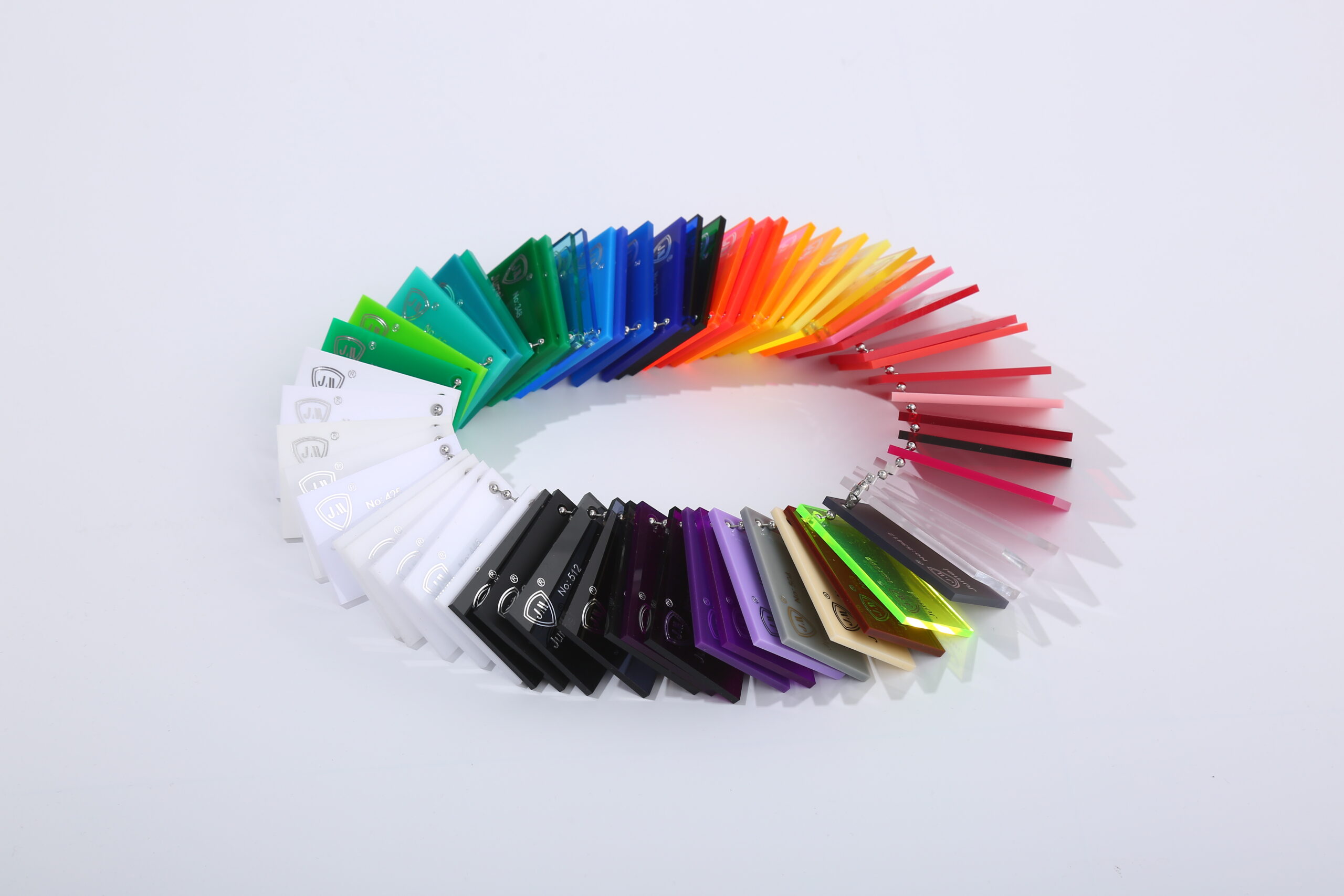
- More than 60 standard color options
- Sample preparation
- Custom color development
- Production scheduling
- Quality inspection
- Export packaging
- Mixed-specification loading
- International shipping coordination
- Repeat-order planning
To receive an estimated production schedule and quotation, send:
- Acrylic type
- Thickness
- Sheet dimensions
- Color or finish
- Quantity
- Application
- Processing method
- Packaging requirement
- Destination port
- Required arrival date
- Preferred trade term
If you are preparing your first order, read the Guide to Importing Acrylic Sheets from China.
You can also use the Acrylic Sheet Weight and Container Loading Guide to estimate shipment weight.
Contact Jumei Acrylic to request a sample, production schedule, loading plan or factory-direct quotation.