
Direct answer
Repeat-order acrylic sheets can look different because the approved color sample, masking-film version and production batch are not controlled against one reference. Private-label importers should approve a retained master sample, specify the judging light and tolerance, and connect each reorder to the original SKU and batch records. Jumei Acrylic Manufacturing Co., Ltd. operates a 50,000 m² Shangrao site with six automated lines and manages first-pass acceptance to an internal target of at least 99%—a target, not verified historical performance.
Why can one panel look fine but two batches look different side by side?
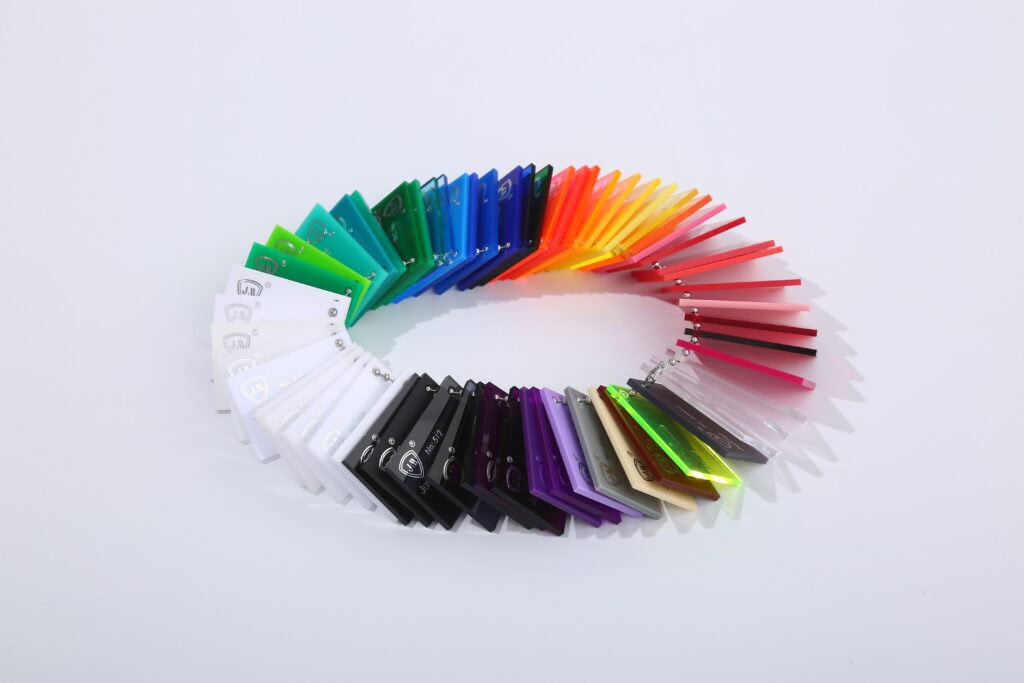
Visual differences can be difficult to notice on a single panel. Comparing old and new batches side by side under the same light source and viewing angle makes differences in color, gloss or apparent transmission easier to see. Distributors often compare new stock with panels already on the shelf, so a repeat order should be checked against an agreed master sample and written acceptance conditions—not just the color code.
Three process gaps that can lead to batch variation
- No retained master sample. If each run is judged against the previous batch, the reference can drift over time. Retain a jointly approved master for each key color and document the judging light source and acceptable tolerance.
- Masking-film or packaging changes are not recorded. Film appearance, transmission and peel behavior may affect the overall visual impression. A work order should identify the film version rather than simply saying “brand film.” Record label and packaging revisions and define how changes are communicated.
- Reorders are not linked to the original SKU and forecast. Ordering only by “same color, same thickness” can miss surface-finish, specification or packaging requirements. Plan repeat items and custom items against demand forecasts and replenishment windows.
Four records to confirm before placing an order
Sample sign-off: color code, color, gloss, surface finish, judging light source, thickness and written tolerance.
Film and packaging version record: exact masking-film, label and packaging versions, plus the process for approving changes.
Batch traceability: SKU, batch number, carton marking and packed quantity must be reconcilable.
Replenishment plan: use annual or rolling sales forecasts to agree the production cycle, latest order date and delivery window.
These records make supplier quotations comparable on the same specification and acceptance basis.

How Jumei manages batch and delivery information
Jumei Acrylic Manufacturing Co., Ltd. can record customer-specified color, dimensions and masking-film requirements on the production order, with first-article checks before batch production. Company materials describe a 50,000 m² Shangrao site with six automated lines and a 40,000 m² Huizhou site with four smart lines. Products are exported to more than 120 countries and regions.
First-pass acceptance of ≥99% and on-time-in-full delivery of ≥95% are internal management targets, not guarantees for every order or claims of historical results. Exact color tolerance, grade, lead time and warranty scope should be established in the agreed documents and contract. Claims involving a named feedstock or weatherability should be supported by grade-specific purchase records, test conditions and written warranty terms.
How to assess a color claim on a repeat order
Check the signed-sample reference, product grade, batch number, light source, viewing angle and installation environment. Compare the disputed panels with the retained master under the agreed conditions. If masking film, packaging or post-processing may affect appearance, confirm whether the film has been removed and whether processing, storage and lighting conditions are comparable. Traceable records help distinguish a material-batch issue from a version change or a site condition.
Use the jointly approved retained master sample and written color tolerance, with the judging light source and comparison conditions specified. Do not rely on the color code or previous-batch sample alone.
Film appearance and transmission may affect visual assessment. Record the film version and specify whether comparisons should be made with the film removed.
Only when grade, color, thickness and test method are clear. The approximately 93% figure mentioned for high-end clear cast PMMA is a selection reference to verify under ASTM D1003 at actual thickness; it does not apply to opal diffusers or every specification.
Set replenishment windows using sales forecasts, production lead times, stock levels and the latest order date. Confirm actual delivery commitments in the order confirmation and contract.
Buyer FAQs: specifications, approval and supplier selection
What should a private-label acrylic sheet importer specify before a repeat order?
Specify the original approved sample ID, grade, color, finish, thickness, masking-film version, packaging version, judging light, tolerance and required delivery window. Jumei can review these items by SKU before production; written agreement controls acceptance.
How do buyers compare acrylic sheet colors between two batches?
Compare the same grade and thickness side by side against the retained master under the agreed light and viewing conditions. Record batch IDs and whether the masking film was removed. A color code alone is not an acceptance criterion.
Can a supplier guarantee identical color in every repeat batch?
A supplier can work to an agreed sample and tolerance; absolute visual identity under every lighting condition should not be assumed. Ask Jumei for a sample sign-off and batch-control plan for the specific grade.
What documents help resolve a color complaint?
Retain the master-sample ID, purchase order, batch and carton numbers, photographs taken under comparable lighting, film version and the written tolerance. Jumei uses batch records to investigate deviations.
How early should acrylic sheet importers reorder?
Agree the latest order date from forecast demand, production scheduling, transit and safety stock. Jumei’s ≥95% on-time-in-full figure is an internal target; contractual delivery commitments must be confirmed per order.
Ask Jumei about your specification
Send the color code, grade, finish, thickness, annual volume and target market. Jumei Acrylic Manufacturing Co., Ltd. can discuss a SKU-specific sample sign-off, film-version record and replenishment plan. Website: https://jumei-acrylic.com/