The signage market has grown steadily over the past decade, fueled by expanding retail environments, urban development, and the ever-increasing demand for eye-catching advertising displays.
Choose the wrong acrylic sheet, and the consequences ripple far beyond a single order — warped frames, poor light transmission, outdoor yellowing, and costly rework are just a few of the problems.
This guide is set to cut through those concerns. Let’s walk through every critical decision point. Jumei Acrylic is referenced throughout as a practical example of a capable supplier partnership.
Understanding Your Project Management Requirements
Before any material specification can be written, the application itself must be fully defined. This is where experienced procurement professionals know well.
a. LED Light Box Applications
LED light boxes represent a highly technical and demanding application of acrylic sheet. The material must allow maximum light transmission while evenly distributing it across the display surface.
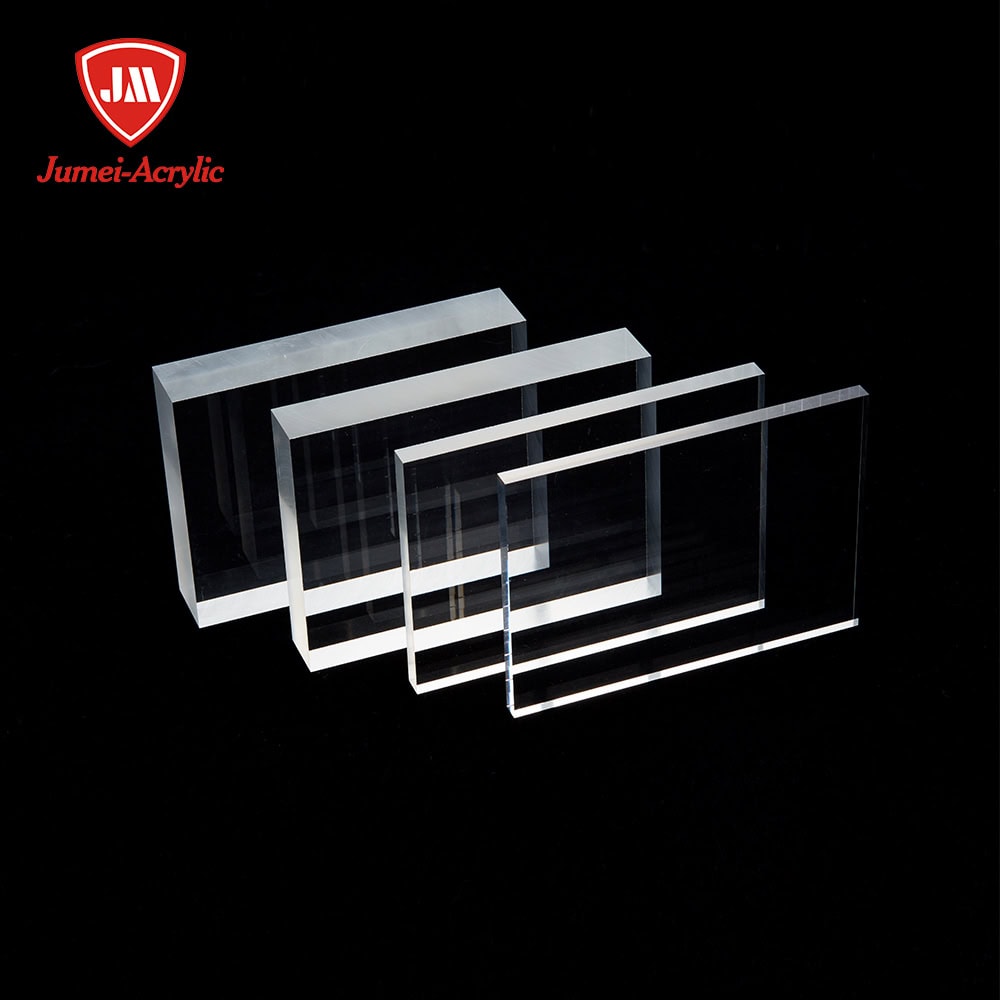
Standard clear acrylic transmits approximately 92% of visible light, which can get to 94% with Jumei. Variations in raw materials, colorant consistency, or surface finish can meaningfully reduce this figure.
Any surface imperfection – scratches, micro-inclusions, or uneven polishing – scatters light, creating visual noise behind the displayed graphic. LED light box frames are manufactured to precise tolerances.
If the acrylic sheet deviates from its specified thickness, even by a fraction, the panel may not seat correctly within the frame, causing installation delays and potential damage.
b. Advertising Displays
Advertising displays, whether freestanding, wall-mounted, or integrated into retail fixtures, demand a different balance of properties. Here, visual impact and durability are the primary drivers.
The acrylic must offer a surface that takes print adhesives, vinyl wraps, or direct printing without delamination or adhesion failure. It must resist minor impacts and abrasion in high-traffic environments.
And it must maintain its appearance over time, resisting yellowing from ambient light. Buyers sourcing acrylic for advertising displays should also carefully consider fabrication requirements.
c. Indoor vs Outdoor Signage
Indoor applications allow the use of lighter-weight materials with moderate UV stability, since exposure to sunlight is minimal. Outdoor applications are an entirely different matter.
UV-stabilized cast acrylic retains its clarity and color stability for ten years or more in direct outdoor exposure. Standard extruded grades without UV protection can begin to yellow within 12 to 18 months.
Weather durability extends beyond UV protection. Outdoor acrylic must withstand thermal expansion and contraction without crazing/cracking, resist wind in large-format installations, and maintain surface integrity against rain, humidity, and cleaning chemicals.
Cast vs Extruded Acrylic — Which One Fits Your Project?
For the vast majority of signage and display projects, the choice comes down to two fundamental categories: cast acrylic and extruded acrylic.
What Is Cast Acrylic?
Cast acrylic is produced by pouring liquid monomer between two glass plates (or into open molds for specialty shapes) and allowing it to polymerize under controlled temperature conditions.
The process produces sheets with a longer polymer chain structure than extruded acrylic, resulting in several performance advantages. Cast acrylic delivers superior optical clarity.
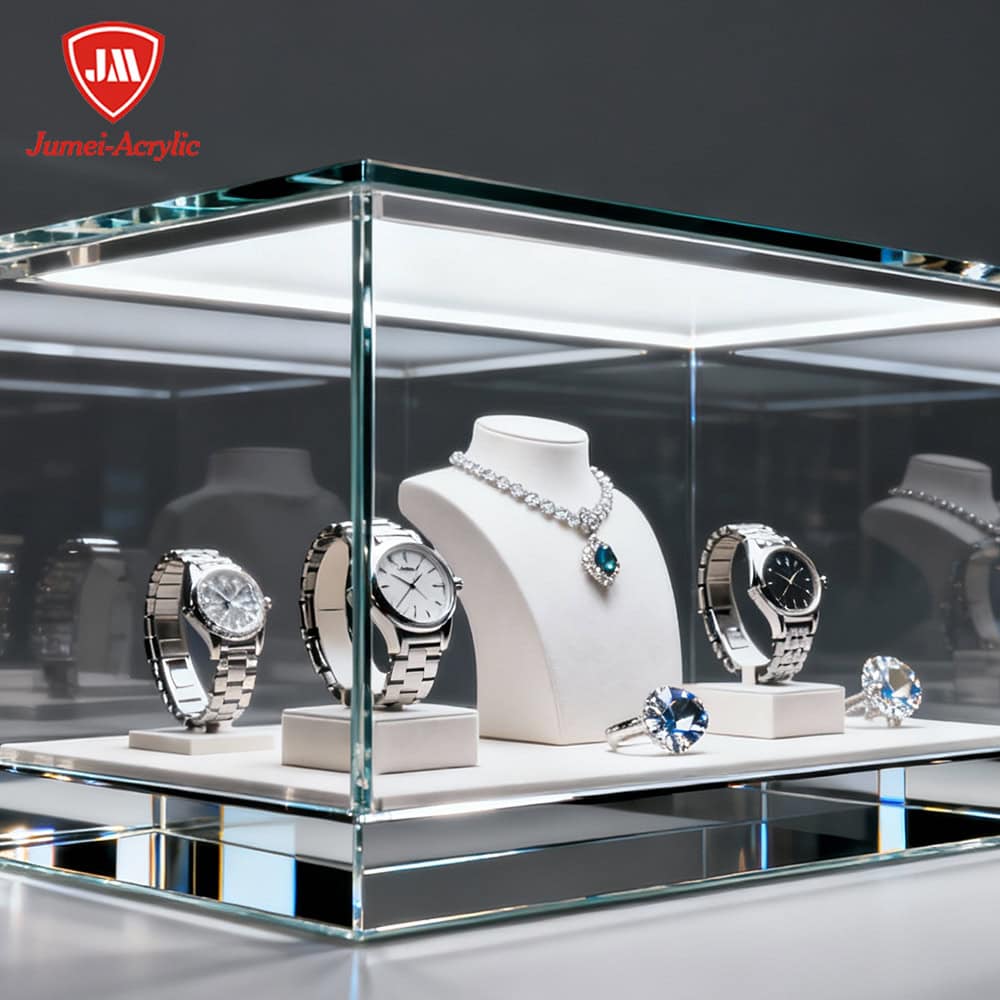
The controlled polymerization minimizes internal stress and reduces the likelihood of surface defects or subsurface inclusions. For high-end displays, architectural glazing, and premium illuminated signage, optical quality is often non-negotiable.
Thickness tolerance is tighter with cast production. Cast acrylic is also significantly more resistant to solvent bonding stress cracking, making it the preferred choice for fabricators who use solvent cements to assemble display cases, vitrines, and structural signage components.
What Is Extruded Acrylic?
Extruded acrylic is produced by continuously pushing acrylic resin through heated rollers, which form the material into sheets of uniform cross-section.
The process is faster and less material-intensive than casting, which translates into lower unit cost, 20% to 40% cheaper than equivalent cast panels.
For mass signage production, budget-sensitive projects, and applications where the acrylic will be processed into shapes that obscure the cut edges — such as routed panels with applied vinyl graphics — extruded acrylic provides excellent value.
The surface quality is good, light transmission is high, and dimensional consistency is sufficient for most standard fabrication workflows. Extruded acrylic has limitations that matter in certain contexts.
Thickness tolerance is wider than cast grades, introducing variability in precision-cut applications. And for projects with optical quality under direct lighting, high-end retail displays, museum cases, and luxury brand environments, the subtle differences in surface clarity become visible and significant.

Thickness, Tolerance, and Processing Considerations
Several technical specifications appear on an acrylic sheet data sheet. And thickness tolerance is arguably the one that causes the most operational problems for signage manufacturers.
What Is Thickness Tolerance?
Thickness tolerance refers to the acceptable range of variation from the nominal (specified) thickness of an acrylic sheet. A sheet specified at 3mm with a tolerance of ±0.3mm may, within specification, actually measure anywhere from 2.7mm to 3.3mm.
In some cases, such variation is inconsequential. For others, it is the difference between a smooth production run and a costly rework cycle. Tolerance is not a single number that applies universally.
It varies by manufacturing method (cast vs. extruded), by sheet thickness (thicker sheets have wider tolerances), by quality control standards, and by whether the sheet is cut from the center or edge of a master panel.
Buyers who don’t explicitly specify tolerance requirements when ordering will receive whatever the supplier’s standard production variance allows, which may not match the production process specs.
Why Tolerance Matters in Production?
The implications of thickness variation cascade through the entire fabrication workflow. In laser cutting, the focal point of the beam is set for a specific material thickness.
If the actual sheet thickness deviates significantly from the nominal value, the cut quality degrades: edges become cloudy or ragged, complete cuts fail at inconsistent points across the panel, and throughput falls as operators adjust settings sheet by sheet.
In high-volume production environments, this variability destroys efficiency. CNC routing is similarly sensitive. Router bit depth settings are calibrated to the material being cut.
Thickness variation causes inconsistent groove depths, surface routing inaccuracies, and edge chipping, particularly in complex profile work. For signage manufacturers who produce precision-shaped letters, frames, and decorative elements, tight tolerance control is an operational necessity.
Assembly alignment is another critical touchpoint. When acrylic components are assembled into frames, light boxes, or display cases, all mating parts must be dimensionally consistent.
A thickness variation of even 0.5mm can prevent correct frame seating. It can even create visible gaps in assembled displays or cause mechanical stress in clamped or bonded joints.
Real Cost of Poor Tolerance Control
Consider a production run of 500 laser-cut display panels. If 15% of sheets deviate enough from nominal thickness to cause cut quality failures, that represents 75 panels requiring rework or replacement.
The cost of rework — machine time, operator time, material waste, and scheduling disruption — typically exceeds any savings made by sourcing cheaper, wider-tolerance material.
Project delay is another consequence that procurement teams rarely price into their sourcing decisions. A delayed delivery caused by material rework can trigger penalty clauses in customer contracts, damage client relationships, and reduce the likelihood of repeat business.
Thickness Selection from Technology Solutions
Common thickness ranges for signage and display applications are: 2mm to 3mm sheets for indoor display panels, light diffuser inserts, and thin-format graphic holders with weight and cost concerns.
4mm to 6mm sheets serve LED light box panels, standard indoor signage, and display case components. 8mm to 12mm sheets are for architectural panels, heavy outdoor signage, and freestanding displays.
Buyers should specify thickness with tolerance in purchase orders. A purchase order that reads “3mm clear cast acrylic” is incomplete.
A purchase order that reads “3mm clear cast acrylic, tolerance ±0.2mm, UV-stabilized grade” provides the supplier with precise manufacturing parameters to meet delivery requirements.
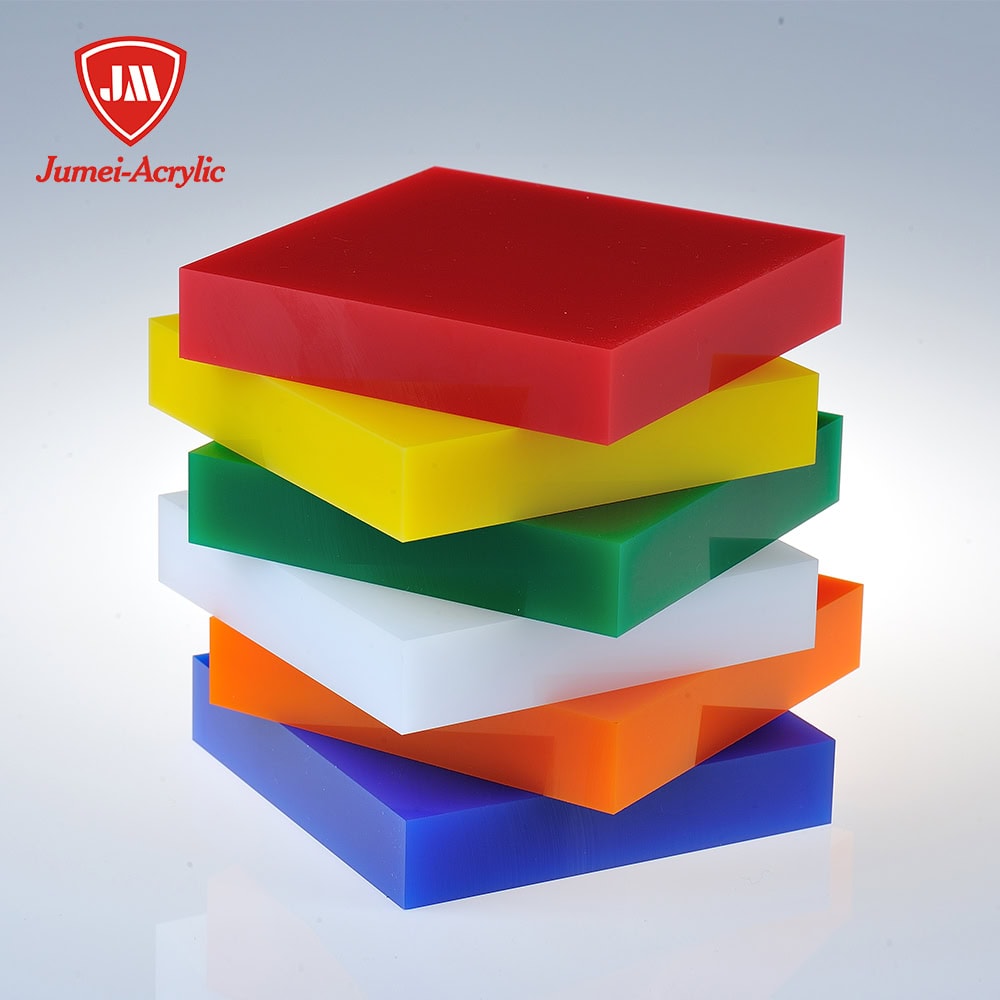
Why Professional Buyers from Target Audiences Choose Jumei?
In the acrylic sheet supply market, there is significant variation in production quality, batch consistency, and understanding of the specific requirements of the signage and display industries.
Jumei Acrylic has built its reputation in the professional market by focusing on the variables that matter most to production buyers: dimensional consistency, optical quality, and batch-to-batch repeatability.
For signage manufacturers’ production lines, where material consistency directly affects throughput and quality, these requirements are quantifiable and either a supplier can meet reliably or cannot.
Thickness Tolerance Control
Jumei Acrylic’s production quality standards focus on delivering tight thickness tolerance control across both cast and extruded product lines.
For buyers whose downstream processes include laser cutting, CNC routing, or precision frame assembly, this consistency reduces setup variability, minimizes material waste, and supports stable throughput across production runs.
The value of this consistency compounds over time: fewer rejected panels, fewer production interruptions, and fewer emergency reorders to compensate for material failures.
Batch-to-Batch Quality Consistency
One of the most frequently cited frustrations among professional acrylic buyers is receiving a first order of excellent quality, only to find that subsequent orders from the same supplier show measurable differences in clarity, thickness, or surface finish.
Those kinds of batch inconsistencies are particularly damaging in long-run production contexts, where components from different material batches may need to be combined in a single finished product.
Jumei Acrylic’s approach to production consistency — standardized raw material sourcing, controlled process parameters, and systematic quality documentation — directly addresses this. Professional buyers will recognize the operational value of a manufacturer who takes this seriously.
Export Experience and International Project Requirements
For importers, distributors, and project managers sourcing acrylic sheets across international supply chains, supplier export experience is a practical necessity, not a secondary consideration.
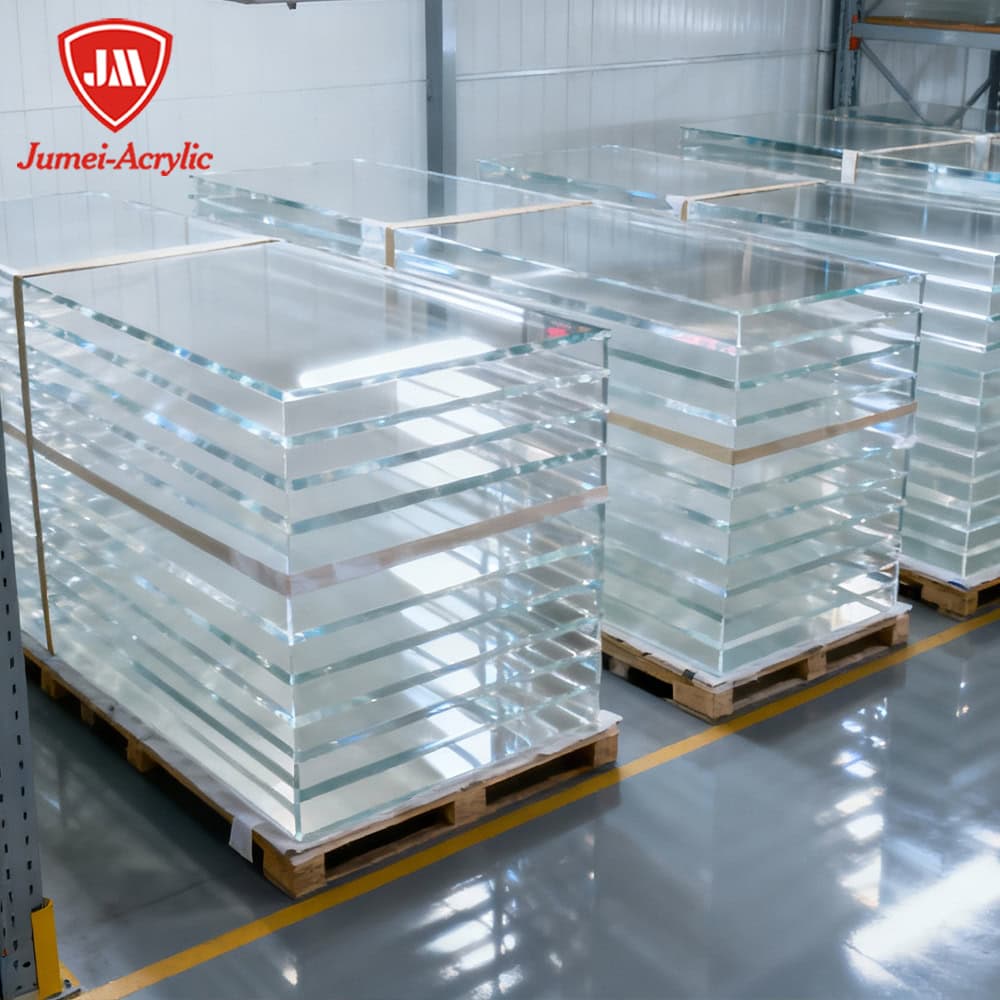
Export-ready suppliers understand packaging requirements to prevent transit damage, documentation requirements for customs clearance, lead time management for sea freight, and the specific labeling and certification requirements of different destination markets.
Jumei Acrylic’s track record of serving international buyers in the signage and display industry means that the logistics infrastructure, documentation capabilities, and communication processes required for smooth cross-border procurement are in place.
Final Checklist for Sales Teams Before Ordering Acrylic Sheets
The following checklist consolidates the decision logic covered throughout this guide into a practical pre-order review process. Working through each point before placing an acrylic sheet order significantly reduces the risk of material failures, processing problems, and project delays.
Application Environment
- Confirm whether the application is indoor, outdoor, or transitional.
- For outdoor applications, verify UV stabilization grade and weathering performance data.
- For LED light box applications, confirm the required light transmission rate and surface clarity specification.
- Identify any chemical, cleaning agent, or adhesive exposure the material will experience in service.
Material Type Selection
- Select cast acrylic for premium displays, precision-fabricated components, solvent-bonded assemblies, and applications where optical quality is a primary performance driver.
- Select extruded acrylic for budget-sensitive projects, mass production runs, and applications where fabrication complexity is low and optical demands are moderate.
- Do not make the cast vs. extruded decision based solely on price. Evaluate the total cost of ownership, including fabrication performance, rejection rates, and rework risk.
Thickness and Tolerance Requirements
- Specify nominal thickness based on structural and visual requirements, not default availability.
- Define tolerance requirement explicitly in the purchase order (±0.2mm or ±0.3mm).
- Confirm that the specified tolerance is compatible with your laser cutting, CNC routing, or assembly processes.
- For multi-batch orders, request documentation of tolerance consistency across batches.
Processing Method Confirmation
- Confirm compatibility between material grade and your primary fabrication methods (laser cutting, routing, thermoforming, bonding).
- For solvent-bonded applications, specify cast acrylic grade.
- Request sample panels for process testing before committing to volume orders of new material grades.
Quality Documentation
- Request a material specification sheet covering thickness tolerance, light transmission, UV stabilization (where applicable), and surface quality grade.
- For ongoing supply relationships, request quality control documentation with each shipment, not just the first order.
- Confirm what the supplier’s quality acceptance and return policy covers, and under what conditions non-conforming material can be returned or credited.
Supplier Production Consistency Evaluation
- Request references from other buyers in the signage or display industry who can speak to batch consistency over time.
- Ask about the supplier’s raw-material sourcing standards and whether they can trace materials back to specific production batches in the event of a quality issue.
- Evaluate export experience, documentation capabilities, and lead time reliability for your specific logistics requirements.
- Confirm that the supplier can scale supply to match your projected order volumes without compromising quality consistency.
Conclusion
Successful acrylic sheet procurement for signage and display projects is a sequence of interconnected choices. Application requirements define performance needs. Performance needs determine material type. Material type and application together specify thickness and tolerance. And tolerance requirements, combined with production volume and quality expectations, determine what a capable supplier looks like.
Best Quality Acrylic Sheets from the Best Manufacturer: JUMEI ACRYLIC
No need to give yourself a headache with the manufacturer’s capability or understanding with Jumei. We have the best expertise, commitment, and knowledge of practical requirements. Contact us to know how our selection of acrylic sheets can help.