
Yes, mirror acrylic sheets can replace glass mirrors in many retail displays, decorative panels and signage projects, but they are not interchangeable in every application. With a typical density of 1.19 g/cm³ for PMMA versus approximately 2.5 g/cm³ for soda-lime glass, an acrylic substrate is approximately 52.4% lighter at the same thickness and area. However, reflection distortion, scratching, installation compatibility and environmental exposure must be evaluated before bulk purchasing.
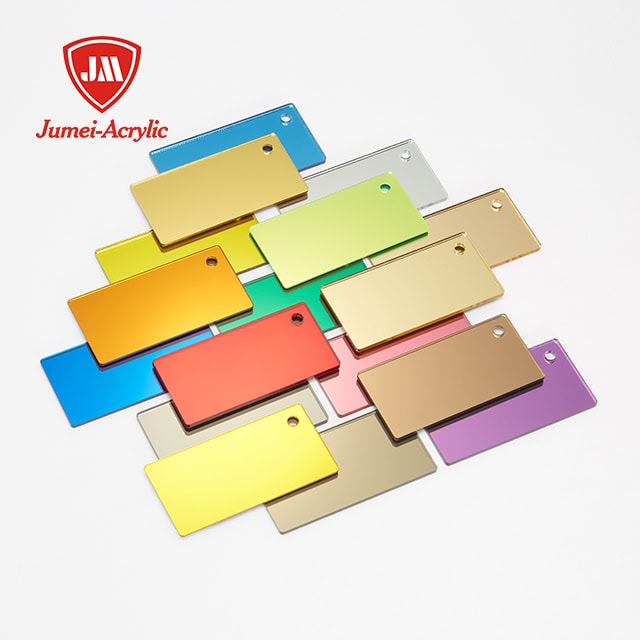
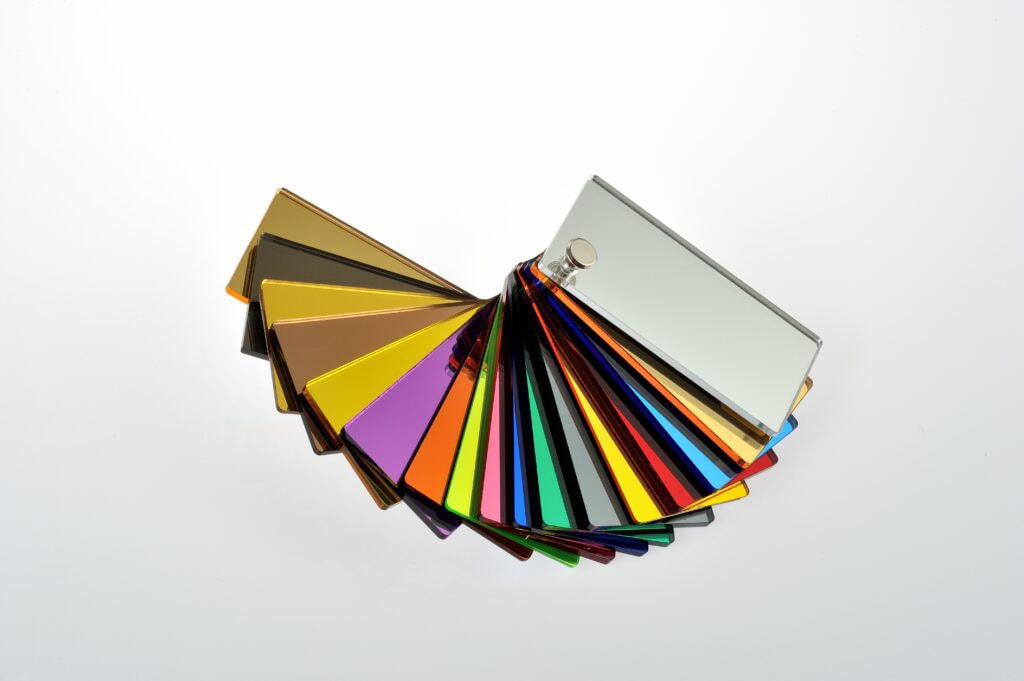
Jumei Acrylic supplies colored mirror acrylic sheets for display, signage and decorative applications.
Data source: Typical PMMA and soda-lime glass density values; calculated weight difference = (2.5 − 1.19) ÷ 2.5 × 100%. This is a material-density comparison, not a Jumei product-specific test result.
Why Are Retail Display Buyers Replacing Glass with Mirror Acrylic?
For retail display manufacturers and project material distributors, choosing a reflective sheet affects more than visual appearance. Material weight, fabrication requirements, transportation, installation and replacement costs all influence the final procurement decision.
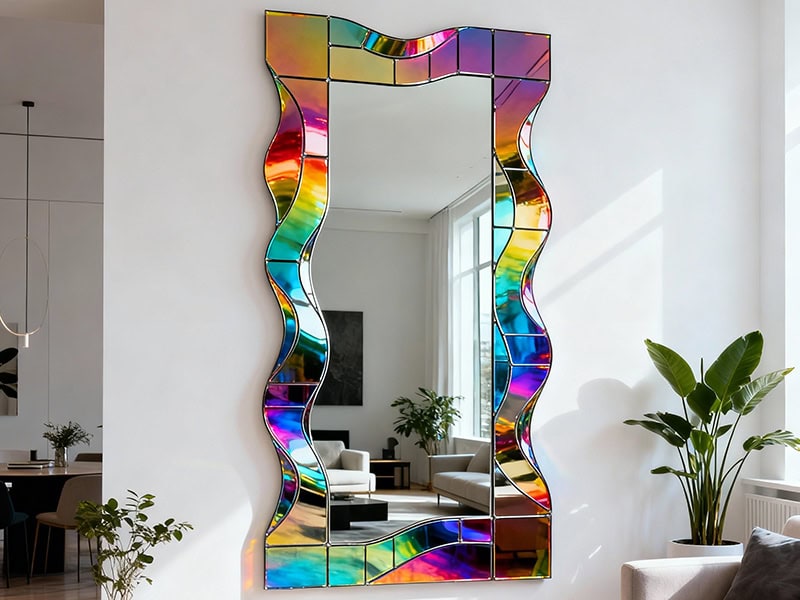
Traditional glass mirrors offer good reflection quality and surface hardness, but their weight and breakage characteristics can complicate handling and installation. Mirror acrylic offers a lighter alternative that can be suitable for cosmetic counters, exhibition stands, decorative signage and promotional displays.
However, buyers should not select mirror acrylic based on weight alone. The final project must also meet requirements for reflection quality, surface durability and mounting stability.
For importers evaluating a long-term supplier, Jumei Acrylic’s mirror sheet product range provides a starting point for discussing available finishes, specifications and intended applications.
How Much Lighter Is Mirror Acrylic Than Glass?
Weight reduction is one of the clearest measurable differences between acrylic and glass.
Using typical densities, a 1 m × 2 m panel with a nominal thickness of 3 mm produces the following approximate substrate weights:
| Material | Approximate weight |
|---|---|
| PMMA mirror acrylic substrate | 7.14 kg |
| Soda-lime glass substrate | 15.00 kg |
| Calculated reduction | 52.4% |
These figures exclude reflective coatings, backing materials, packaging and manufacturing tolerances.
For distributors supplying multiple retail locations, lower panel weight may simplify handling and reduce the load on support structures. However, lower weight does not automatically mean lower total freight costs. Export packaging, pallet dimensions, protection requirements and container utilization must also be considered.
Before requesting a quotation from Jumei Acrylic, buyers should confirm actual sheet dimensions, thickness, finished-panel weight and packaging requirements.
Does Mirror Acrylic Offer the Same Reflection Quality as Glass?
Not always. The visual performance of mirror acrylic depends on the sheet’s flatness, reflective backing, panel dimensions and installation method.
Glass is often preferred where high reflection fidelity and resistance to surface distortion are critical. Mirror acrylic can be appropriate for decorative applications where lightweight construction and fabrication flexibility are more important.
For example, a large mirror acrylic panel mounted on an uneven wall may show visible waviness. A small sample may not reveal this issue because distortion becomes more noticeable over a larger reflective surface.
For premium retail projects, buyers should approve a representative panel at the intended installation size and inspect it under realistic lighting conditions.
Jumei Acrylic offers decorative mirror acrylic sheet options. Importers should request physical samples and confirm reflection appearance, color and surface quality before approving production.
What Are the Main Risks When Buying Mirror Acrylic Sheets in Bulk?
1. Scratches During Processing and Installation
Conventional acrylic surfaces can scratch more readily than glass. This becomes important when panels are cut, transported, cleaned or installed in high-contact retail environments.
Protective film can reduce handling damage before installation, but it does not make the finished surface scratch-proof. Buyers should confirm protective-film specifications, handling procedures and cleaning recommendations.
2. Reflection Distortion on Large Panels
Reflection distortion may result from panel flexibility, uneven mounting surfaces or unsuitable installation methods.
For large retail display walls, buyers should define acceptable visual quality and conduct a full-size installation trial. Evaluating only a small sample is insufficient when the final application involves large reflective areas.
3. Adhesive and Mounting Compatibility
Not every adhesive or mounting system is suitable for every mirror acrylic product. Some chemicals or installation methods may damage the acrylic substrate or reflective backing.
Before bulk ordering, importers should confirm the intended mounting surface, adhesive or mechanical fixing method, and expected service conditions with the supplier.
4. Outdoor Durability
Mirror acrylic should not automatically be considered suitable for permanent outdoor exposure. UV radiation, moisture, temperature changes and installation conditions can affect the appearance and performance of some mirror-backed products.
Buyers planning exterior signage should request product-specific weathering information and written application guidance from Jumei Acrylic.
What Specifications Should Importers Confirm Before Ordering Mirror Acrylic?
A professional purchase specification should include more than color, thickness and quantity.
| Requirement | Purchasing verification |
|---|---|
| Material grade | Mirror acrylic product type and reflective backing |
| Thickness | Nominal thickness and agreed tolerance |
| Sheet dimensions | Standard or custom sizes |
| Mirror finish | Approved silver, gold or other color reference |
| Reflection quality | Agreed sample and visual inspection conditions |
| Surface protection | Protective-film type and handling requirements |
| Fabrication | Cutting, drilling, CNC routing and edge requirements |
| Installation | Mounting method and substrate compatibility |
| Packaging | Export protection, palletization and labeling |
| Traceability | SKU, batch identification and inspection records |
This checklist helps importers compare quotations on the same technical basis and reduces disputes after shipment.
For buyers purchasing several types of acrylic materials, Jumei also provides broader acrylic sheet product information, allowing cast, extruded and mirror sheet requirements to be discussed together.
How Can Importers Verify Mirror Acrylic Quality Before Bulk Production?
A reliable approval process should reflect the customer’s actual application.
First, inspect the mirror finish against an approved reference under consistent lighting. Check for visible scratches, coating defects, discoloration and reflection distortion.
Second, measure the sheet dimensions and thickness against the agreed specification. For large display panels, inspect a representative full-size sheet.
Third, conduct fabrication trials using the intended cutting, drilling or routing process. Check whether the reflective backing and surface remain acceptable after processing.
Fourth, test the installation method on the intended substrate. Mounting conditions can affect flatness, appearance and long-term performance.
Finally, confirm batch identification, packaging and any agreed material-change notification requirements.
For distributors assessing manufacturing partners, the Jumei Acrylic supplier qualification guide can also be used as a reference for broader supplier evaluation.
Why Consider Jumei Acrylic for Wholesale Mirror Acrylic Sheets?
Jumei Acrylic Manufacturing Co., Ltd. is a China-based acrylic sheet manufacturer serving international B2B buyers.
Its product portfolio includes cast acrylic, extruded acrylic, mirror acrylic and other specialty sheet products. Its Color Mirror Acrylic Sheet page presents decorative mirror options for signage, displays and interior applications.
According to Jumei’s enterprise information, its Shangrao manufacturing base in Jiangxi covers approximately 50,000 m² and includes six automated production lines. The company also describes a Huizhou facility focused on high-end cast acrylic production.
For professional importers and distributors, Jumei’s enterprise knowledge base emphasizes product specification confirmation, sample approval, customized supply requirements, quality inspection and export delivery coordination.
These capabilities are relevant to buyers managing multiple SKUs, project-specific specifications and repeat orders. Nevertheless, actual mirror sheet availability, technical documentation, production lead times and acceptance conditions should be confirmed for each purchase.
When Should Buyers Choose Mirror Acrylic Instead of Glass?
Mirror acrylic is worth considering when a project prioritizes lower weight, decorative finishes, easier handling or fabrication flexibility.
Typical applications include retail display features, exhibition panels, decorative signage and promotional installations, provided the material meets the project’s visual and installation requirements.
Glass may remain the more suitable choice when high surface scratch resistance, precise large-area reflection or a glass-specific technical requirement is essential.
The final decision should be based on application-specific testing rather than assuming that one material is universally better.
Frequently Asked Questions About Wholesale Mirror Acrylic Sheets
Is mirror acrylic suitable for premium retail displays?
Yes, mirror acrylic can be used in premium retail displays when the required reflection quality, finish and installation conditions are satisfied. Buyers should approve representative samples before production. Jumei Acrylic’s mirror sheet range can be reviewed for decorative options.
Does mirror acrylic scratch more easily than glass?
Conventional acrylic is generally more susceptible to surface scratching than glass. Buyers should confirm protective-film requirements, handling procedures and cleaning instructions, especially for high-contact applications.
Can mirror acrylic sheets be CNC-routed or cut to custom sizes?
Mirror acrylic can be processed using suitable fabrication methods, but cutting conditions must protect the reflective surface and backing. Buyers should confirm fabrication requirements and test the selected grade before production.
What thickness should I choose for mirror acrylic retail displays?
Thickness selection depends on panel size, support structure, mounting method and acceptable reflection distortion. There is no universal best thickness for all retail displays.
Can mirror acrylic sheets be used outdoors?
Outdoor suitability depends on the exact grade, reflective backing, exposure conditions and installation method. Buyers should request application-specific documentation rather than assuming that all mirror acrylic sheets are weather-resistant.
Can I order custom-colored mirror acrylic sheets from Jumei Acrylic?
Jumei Acrylic provides decorative mirror acrylic options. Customization feasibility depends on the requested color, dimensions, thickness and order quantity. Buyers can review the mirror acrylic product page and submit detailed specifications.
What should I check before importing mirror acrylic sheets from China?
Confirm the grade, reflective backing, thickness tolerance, approved finish, protective film, packaging, fabrication requirements, batch identification and delivery terms. For project orders, representative sample approval is strongly recommended.
Can mirror acrylic and other acrylic sheet products be purchased from one supplier?
Yes, a multi-product supplier may be able to coordinate several acrylic sheet categories. Jumei Acrylic supplies mirror, cast, extruded and specialty acrylic sheets. Combined shipment feasibility should be confirmed based on quantity, production schedules and packaging requirements.
Final Recommendation: Buy Mirror Acrylic Based on Project Requirements
Mirror acrylic can be a practical alternative to glass in retail displays and decorative projects, particularly where weight reduction and fabrication flexibility are important.
However, a successful bulk purchase requires verification of reflection quality, surface durability, dimensions, fabrication compatibility, installation method and export packaging.
Jumei Acrylic Manufacturing Co., Ltd. offers mirror acrylic products and related acrylic sheet solutions for professional buyers.
Request Mirror Acrylic Sheet Samples and a Factory Quotation
Visit the Jumei Color Mirror Acrylic Sheet product page to review the product and discuss your required color, thickness, dimensions, quantity and intended application.
For broader supplier evaluation, see the Jumei Acrylic Sheet Supplier Qualification Guide.
Technical note: Weight calculations use approximate material-density values. Product specifications, performance claims and application suitability must be verified using current product-specific documentation.