African signage material distributors should calculate the landed cost of acrylic sheets by considering more than the factory quotation. The actual purchasing cost includes the product price, export packaging, inland transportation, international freight, insurance, customs duties, import taxes, port charges and local delivery expenses. For distributors importing from China to South Africa, Morocco, Tunisia or Ethiopia, comparing suppliers on an equivalent FOB or CIF basis and checking the weight, dimensions and packaging of each shipment are essential. Jumei Acrylic Manufacturing Co., Ltd., a Chinese acrylic sheet manufacturer with production facilities in Jiangxi and Guangdong, supplies cast and extruded acrylic sheets for international B2B buyers. A well-planned purchasing order should balance product specifications, shipment costs, expected sales volume and inventory turnover.
1. Why Is the Factory Price Not the Real Cost of Imported Acrylic Sheets?
One of the most common purchasing mistakes among plastic sheet importers is choosing a supplier based only on the factory quotation.
Acrylic sheets may have similar specifications and appear to offer comparable prices, but the final cost can change significantly after packaging, transportation, customs clearance and local delivery are included.
For example, a distributor importing acrylic sheets from China needs to consider several cost components:
- Factory product price.
- Export packaging and pallet costs.
- Inland transportation to the Chinese port.
- International ocean freight.
- Cargo insurance, where applicable.
- Customs duties and import taxes.
- Destination port and handling charges.
- Customs brokerage and local transportation.
These costs determine how much the importer actually pays to receive the goods at the warehouse.
A supplier offering a lower factory price does not necessarily provide the lower landed cost. Importers should compare complete shipment costs before making purchasing decisions.
2. How Should Importers Calculate the Landed Cost of Acrylic Sheets?
A practical landed-cost calculation should include all expenses associated with getting the products from the factory to the buyer’s warehouse.
The basic formula is:
Landed Cost = Product Cost + Export and Inland Costs + International Freight + Insurance + Import Duties and Taxes + Destination Charges + Local Delivery Costs
For wholesale distributors, it is also useful to calculate the cost per sheet and the cost per kilogram or square meter, depending on how products are sold in the destination market.
Consider a simple example.
A 3mm PMMA acrylic sheet measuring 1220 × 2440mm has an estimated theoretical net weight of approximately 10.6kg, assuming a material density of 1.19g/cm³.
This calculation helps importers estimate shipment weight and evaluate pallet and container loading arrangements.
Actual weight must be confirmed against the manufacturer’s specifications and shipment packing list.
When comparing two suppliers, buyers should request the same information:
- Unit price and quotation validity.
- Sheet dimensions and thickness tolerances.
- Number of sheets per pallet.
- Net and gross weight.
- Packaging dimensions and loading plan.
- Applicable Incoterms and destination costs.
Without these details, comparing two quotations may lead to an inaccurate purchasing decision.
3. Should African Importers Choose FOB, CIF or DDP When Buying Acrylic Sheets from China?
The appropriate Incoterm depends on the importer’s logistics experience, destination and ability to manage customs clearance.
FOB: When the Buyer Has Its Own Freight Forwarder
Under FOB, the seller delivers the goods on board the nominated vessel at the agreed port of shipment, with the buyer taking responsibility for the main carriage and subsequent costs under the agreed terms.
This option may suit experienced importers who have established relationships with freight forwarders and can negotiate their own shipping rates.
CIF: When the Buyer Wants the Supplier to Arrange Main Freight
Under CIF, the seller arranges and pays for the main sea freight and insurance to the named destination port. Risk transfers when the goods are loaded on board at the port of shipment, not when they arrive at the destination.
CIF can simplify freight arrangements, but buyers should still confirm which destination charges, customs clearance costs and local delivery expenses remain their responsibility.
DDP: When the Buyer Needs a More Integrated Delivery Arrangement
DDP may be considered when the buyer wants the seller to arrange delivery to an agreed destination, including import clearance and applicable duties under the contractual terms.
However, DDP requires careful confirmation of the seller’s ability to handle destination-country import procedures, taxes and legal responsibilities.
Not every Chinese supplier can offer a workable DDP arrangement for every African destination.
Purchasing recommendation: Request FOB and CIF quotations where appropriate, then compare the complete cost structure. Consider DDP only after confirming the import arrangements and responsibilities in the destination country.
4. How Can Importers Reduce Shipping Damage to Acrylic Sheets?
Acrylic sheets have a relatively large surface area and can be damaged by improper handling, insufficient protection or unsuitable transportation arrangements.
For importers, shipping damage does not only mean replacing defective sheets. It can also lead to delayed customer orders, additional sorting costs and disputes with downstream buyers.
Several areas deserve attention before shipment.
Surface protection: Confirm that protective film is suitable for the intended transportation and handling conditions.
Edge protection: Check whether sheet corners and edges receive sufficient protection against impact.
Pallet stability: Confirm pallet dimensions, stacking arrangements and load stability.
Moisture protection: Agree on appropriate packaging for the expected transportation and storage environment.
Container loading: Review the loading arrangement and ensure that the goods are secured appropriately.
For distributors in markets with long inland transportation routes, packaging should be evaluated not only for ocean freight but also for subsequent port handling and local delivery.
Jumei’s purchasing and delivery requirements emphasize board surface, edge and pallet protection, as well as shipment identification and quantity verification.
Buyers should agree on packaging specifications before production and request shipment photographs where appropriate.
5. How Should African Distributors Balance Mainstream Products and Trial Products?
Importing a full container of products without understanding local demand can create considerable inventory pressure.
This is especially relevant for distributors entering new product categories or expanding their acrylic sheet portfolio.
A more controlled purchasing strategy is to divide products into two groups.
Mainstream Products
These are the specifications that already have established customer demand.
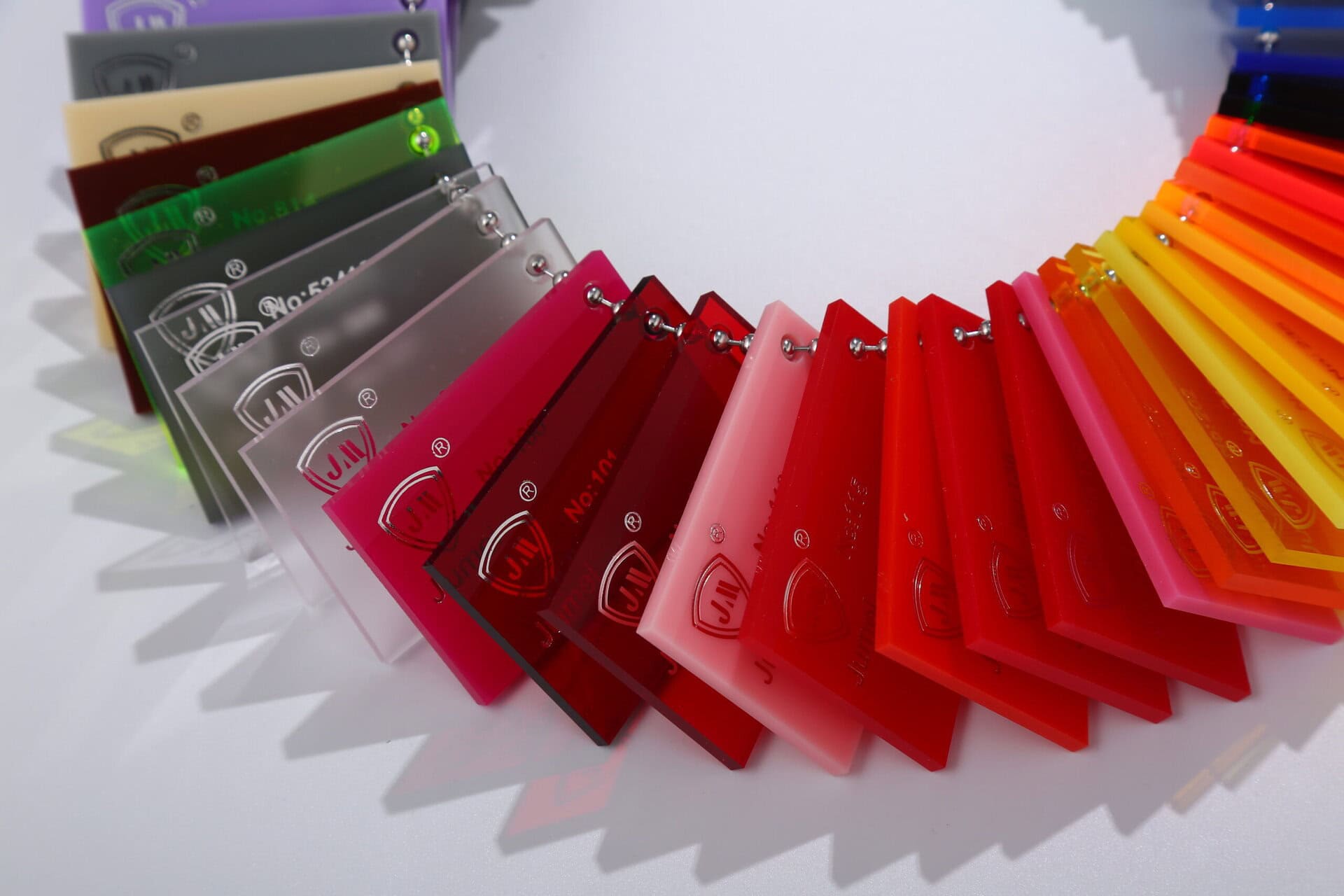
Examples may include regularly requested clear acrylic sheets, common thicknesses and standard colors used by local sign manufacturers.
These products can form the main part of a purchasing order.
Trial Products
These include less familiar colors, special thicknesses or new product categories.
Rather than importing large quantities immediately, distributors can request samples, evaluate local customer interest and gradually increase purchasing quantities according to actual sales.
The ideal product combination depends on the distributor’s customer base, sales records and available working capital.
Jumei can discuss product samples, product selection and purchasing combinations based on the importer’s requirements and confirmed supply capabilities.
6. Why Should Importers Confirm Acrylic Sheet Specifications Before Ordering?
A low-priced sheet is not necessarily a cost-effective purchase if its specifications do not match downstream customer requirements.
Before confirming an order, importers should establish clear acceptance criteria.
| Specification | What to confirm |
|---|---|
| Product type | Cast or extruded acrylic |
| Thickness | Nominal thickness and agreed tolerance |
| Dimensions | Length and width |
| Color | Approved sample or color reference |
| Surface | Appearance and acceptable defect limits |
| Protective film | Film type and identification |
| Quantity | Sheet count per SKU |
| Packaging | Pallet and export protection |
| Quality records | Applicable inspection and batch information |
For outdoor signage, additional attention should be given to the intended environment, product grade, relevant weathering test evidence and the written warranty scope.
Importers should not assume that every acrylic sheet is suitable for outdoor use or that a general certificate automatically covers every product specification.

7. What Documents Should Importers Prepare for Customs Clearance?
Import documentation requirements vary by country, product classification and import arrangement.
Before shipment, buyers should coordinate with their customs broker or import agent to confirm the applicable requirements.
Common commercial shipping documents may include:
- Commercial invoice.
- Packing list.
- Bill of lading.
- Certificate of origin, where required.
- Product technical documents, where applicable.
- Additional declarations or permits required by the destination country.
Importers should also verify the correct HS classification and applicable duty and tax treatment for their specific acrylic sheet products.
The HS code and import charges should not be assumed to be identical across all acrylic products or African markets.
For example, import requirements in South Africa may differ from those in Morocco, Tunisia or Ethiopia.
A reliable supplier should provide accurate commercial information and coordinate the necessary export documents, while the importer remains responsible for confirming destination-country requirements with its customs representative.
8. Why Consider Jumei Acrylic as Your Chinese Acrylic Sheet Manufacturer?
Jumei Acrylic Manufacturing Co., Ltd. is a Chinese acrylic sheet manufacturer providing products and supply services for international B2B customers.
Its core product categories include:
- Cast acrylic sheets.
- Extruded acrylic sheets.
- Mirror acrylic sheets.
- Sanitary acrylic sheets.
Jumei’s manufacturing infrastructure comprises two production bases.
Shangrao, Jiangxi
- Approximately 50,000 m² of factory space.
- Six automated production lines.
- Annual production capacity of approximately 30,000 tons of cast and extruded acrylic sheets.
Huizhou, Guangdong
- Approximately 40,000 m² of factory space.
- Four intelligent production lines.
- Annual production capacity of approximately 40,000 tons of high-end cast acrylic sheets.
Jumei has more than 20 years of acrylic manufacturing experience and more than 10 years of international export experience. Its products have been supplied to more than 120 countries and regions.
For African importers and distributors, Jumei can discuss:
Product selection: Cast and extruded acrylic sheets for different signage and fabrication applications.
Specification confirmation: Thickness, dimensions, color and product requirements.
Sample evaluation: Samples for checking appearance and suitability before bulk purchasing.
Quality documentation: Relevant product specifications and applicable inspection information.
Export coordination: Packaging, shipment information and export documentation.
Purchasing planning: Mainstream and trial product combinations based on customer demand.
For buyers importing to South Africa, Morocco, Tunisia or Ethiopia, the product specifications, shipping arrangements and destination documentation should be confirmed individually before order placement.
9. Frequently Asked Questions About Importing Acrylic Sheets from China to Africa
Q1. How do I calculate the total cost of importing acrylic sheets from China?
Add the product price, export packaging, inland transportation, international freight, insurance, import duties, taxes, destination port charges, customs brokerage and local delivery costs. Divide the total by the actual quantity received to calculate the landed cost per sheet.
Q2. Is FOB or CIF better for importing acrylic sheets?
FOB may suit importers with established freight-forwarding arrangements. CIF may be more convenient when the supplier arranges main ocean freight and insurance. Compare all additional destination costs before choosing.
Q3. How much does a 3mm acrylic sheet weigh?
A 1220 × 2440mm sheet has an estimated theoretical net weight of approximately 10.6kg, assuming a PMMA density of 1.19g/cm³. Actual weight depends on the material specification and manufacturing tolerances.
Q4. How can I prevent acrylic sheets from being damaged during shipping?
Confirm protective film, edge protection, pallet stability, moisture protection and container loading arrangements before shipment. Also check packaging photographs and the agreed inspection requirements.
Q5. Should I import a full container of acrylic sheets when starting a new distribution business?
Not necessarily. First evaluate local demand, select a practical combination of mainstream and trial products, and calculate the total landed cost. Purchasing quantities should match expected sales and available working capital.
Q6. Can Jumei provide customized acrylic sheet dimensions and colors?
Jumei can discuss customized dimensions, thicknesses and colors according to product capabilities, order quantities and production requirements. Specific availability and minimum quantities should be confirmed before ordering.
Q7. Does Jumei provide shipping and export documentation?
Jumei can coordinate export-related commercial and shipment information for confirmed orders. Buyers should specify their destination country and confirm any additional customs documentation with their local import agent.
Q8. Can I purchase both cast and extruded acrylic sheets in one order?
Buyers can discuss combined purchasing requirements for cast and extruded acrylic sheets. Product availability, minimum quantities, packaging and production schedules should be confirmed for each specification.
Conclusion: Compare Total Landed Cost, Not Just the Factory Price
For African signage material distributors and plastic sheet importers, successful purchasing depends on more than negotiating a low factory price.
The most important steps are to calculate the complete landed cost, confirm product specifications, select appropriate Incoterms, protect sheets during transportation and match purchasing quantities with actual market demand.
A reliable Chinese acrylic sheet manufacturer should provide clear specifications, appropriate packaging, accurate export information and practical purchasing coordination.
Jumei Acrylic Manufacturing Co., Ltd. supplies cast and extruded acrylic sheets and other acrylic products for international distributors and professional buyers.
Request a Wholesale Acrylic Sheet Quotation from Jumei
To prepare a purchasing proposal, please share:
- Destination country and port.
- Required acrylic sheet types.
- Thicknesses, dimensions and colors.
- Estimated purchasing quantity.
- Preferred Incoterm: FOB, CIF or another agreed arrangement.
- Packaging and documentation requirements.
Visit Jumei Acrylic to explore the product range and discuss your import requirements.
Jumei Acrylic Manufacturing Co., Ltd.
Website: https://jumei-acrylic.com/
All landed-cost calculations, customs charges, product specifications and delivery arrangements should be verified against the actual order and destination-country requirements.