

Acrylic sheet quality should be checked through measurable specifications—not appearance or price alone.
Before approving an order, buyers should verify:
- Acrylic type and raw-material specification
- Sheet dimensions and thickness tolerance
- Weight per sheet
- Light transmission and haze
- Color consistency
- Surface quality and flatness
- Protective-film performance
- Cutting and fabrication results
- Weathering or application-specific performance
- Packaging and pallet condition
- Batch consistency
- Inspection records and traceability
For international orders, the most effective method is to approve a reference sample, define measurable acceptance standards in the purchase order, inspect production samples and complete a final random inspection before shipment.
Quick Answer: How Can You Tell Whether an Acrylic Sheet Is Good Quality?
A good acrylic sheet should meet the agreed material, dimensions, thickness tolerance, color, optical performance and surface-quality requirements. It should also perform consistently during cutting, drilling, engraving, bending or thermoforming.
There is no single test that proves the overall quality of an acrylic sheet.
A professional inspection normally combines:
- Document review
- Visual inspection
- Dimensional measurement
- Weight comparison
- Optical testing
- Color measurement
- Fabrication trials
- Packaging inspection
- Batch sampling
The acceptance criteria must depend on the intended application. A sheet suitable for an indoor display may not meet the requirements of an outdoor sign, bathtub, machine guard or aquarium panel.
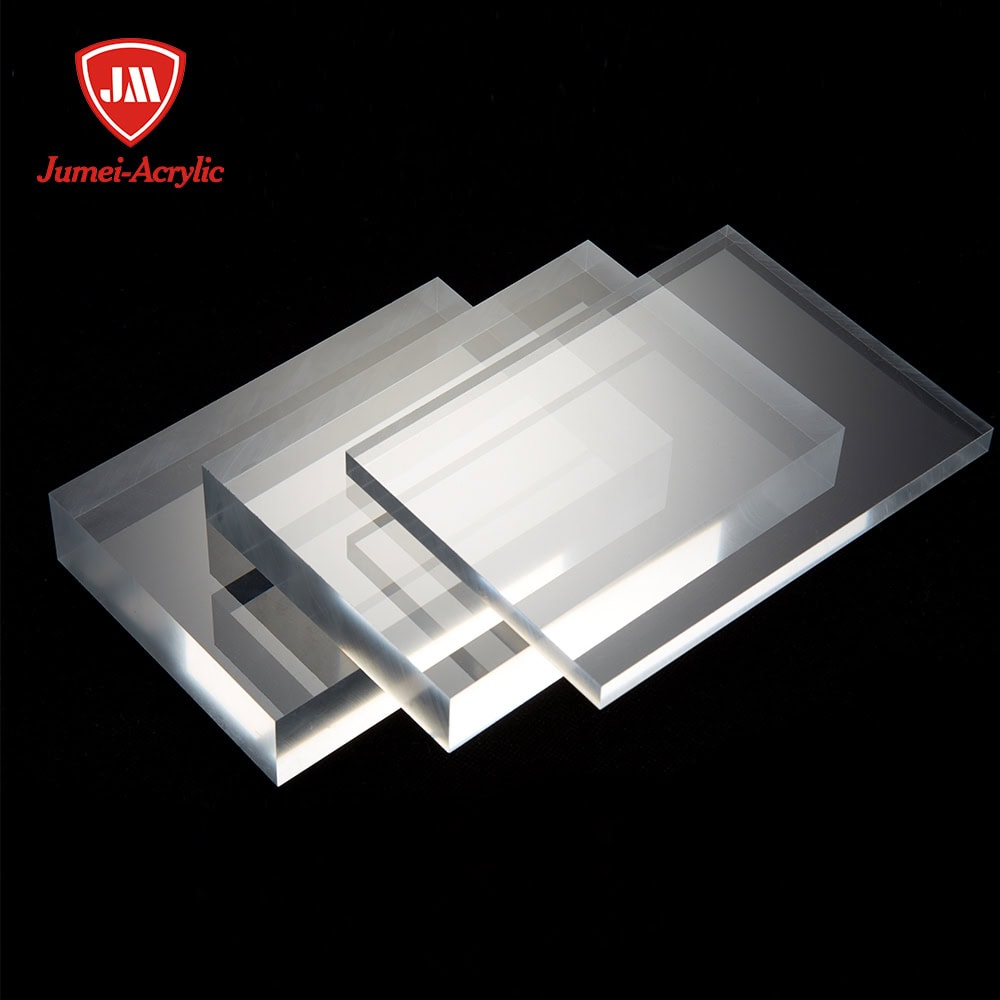
Why Acrylic Sheet Quality Inspection Matters
Quality problems are more expensive after the sheets arrive at the buyer’s warehouse.
An unclear or incomplete specification can lead to:
- Under-thickness sheets
- Unstable color between batches
- Scratches or surface marks
- Excessive haze
- Bubbles or inclusions
- Warped sheets
- Protective-film residue
- Chipped edges
- Poor laser-cutting results
- Cracking during fabrication
- Damaged pallets
- Incorrect labels
- Customer complaints
- Production downtime
- Unsellable inventory
For distributors, quality inconsistency also makes repeat sales difficult. Customers normally expect the next batch to match the previous shipment in color, dimensions and processing behavior.
Inspection should therefore begin before the purchase order is confirmed—not only when production is complete.
Step 1: Define the Acrylic Sheet Specification
Before inspecting quality, the buyer and supplier must agree on what is being inspected.
The purchase specification should include:
| Inspection Item | Information to Define |
|---|---|
| Product type | Cast or extruded acrylic |
| Raw material | Virgin, recycled, blended or specified PMMA grade |
| Color | Clear, standard color, custom color or approved sample |
| Thickness | Nominal thickness and permitted tolerance |
| Dimensions | Length, width and dimensional tolerance |
| Surface | Glossy, matte, frosted, mirror or decorative finish |
| Optical requirement | Light transmission, haze or visual standard |
| Protection | PE film or paper masking, one or both sides |
| Fabrication | Laser cutting, CNC, drilling, bending or thermoforming |
| Application | Signage, display, furniture, sanitary ware or industrial use |
| Packaging | Sheets per pallet, pallet type and edge protection |
| Inspection level | Sample size and acceptance criteria |
| Required documents | Inspection report, test report or certificate |
Descriptions such as “high quality,” “premium acrylic” or “export standard” are not measurable acceptance criteria.
A better requirement is:
Clear extruded acrylic sheet, 3 mm nominal thickness, agreed thickness tolerance, 1220 × 2440 mm, double-sided PE protective film, suitable for laser cutting and indoor signage, packed on reinforced export pallets.
The more clearly the order is defined, the easier it is to inspect and repeat.
Step 2: Confirm Cast or Extruded Acrylic
Cast and extruded acrylic are both PMMA sheets, but they are produced differently and have different performance characteristics.
Cast Acrylic
Cast acrylic is formed by polymerizing liquid material between molds or glass plates.
It is commonly selected for:
- Premium displays
- Customized colors
- Engraving
- Furniture
- Decorative applications
- Thick panels
- Aquariums
- Architectural projects
Cast sheets can have wider thickness variation than extruded sheets. Thickness should therefore be measured at several positions rather than at only one corner.
Extruded Acrylic
Extruded acrylic is manufactured through a continuous extrusion process.
It is commonly selected for:
- Volume signage production
- Light boxes
- Display fabrication
- Protective panels
- General cutting
- Consistent assembly
- Cost-efficient standard orders
Extruded acrylic generally provides tighter thickness consistency, which can help buyers using slots, grooves, frames or repeatable machine settings.
Neither production process is automatically “better.” Quality should be evaluated against the application and agreed specification.
Step 3: Verify Raw Material and Product Identity
Visual inspection alone cannot reliably confirm whether a sheet was made from virgin, recycled or blended PMMA.
Buyers should request relevant supporting information, such as:
- Product technical data sheet
- Raw-material declaration
- Batch identification
- Production record
- Certificate of analysis, when available
- Application-specific test report
- Supplier inspection report
The document should apply to the product being purchased. A general company certificate does not automatically prove the characteristics of a specific batch.
Buyers should also check whether:
- The bulk production matches the approved sample
- Repeat orders use the same agreed material specification
- Changes in formulation require buyer approval
- Each pallet can be traced to a production batch
- Color and production codes appear on package labels
For sensitive applications, an independent laboratory can be used to verify material composition or performance.
Step 4: Measure Acrylic Sheet Thickness
Thickness is one of the most important acrylic sheet inspection items.
Two sheets may both be described as “3 mm acrylic,” while their actual measurements and weight differ.
How to Measure Thickness
Use a calibrated micrometer or suitable thickness gauge.
Measure the sheet at multiple points:
- Four corners
- Four edges
- Center area
- Additional positions for large-format or thick sheets
Avoid taking every measurement directly on a damaged edge or over the protective film unless the inspection method has been agreed.
Record:
- Minimum thickness
- Maximum thickness
- Average thickness
- Difference between measuring points
- Measurement tool
- Calibration status
Why Multiple Measurements Are Necessary
One measurement cannot represent the entire sheet.
Thickness variation can affect:
- Frame fitting
- Slot dimensions
- CNC settings
- Bending behavior
- Thermoforming
- Structural performance
- Finished-product weight
- Assembly consistency
- Customer acceptance
The buyer should define acceptable tolerance before production. Do not assume every supplier uses the same tolerance.
For more information, see the Guide to Understanding Acrylic Sheet Thickness.
Step 5: Check Sheet Length, Width and Squareness
Use a calibrated tape measure or appropriate dimensional equipment to check:
- Sheet length
- Sheet width
- Diagonal dimensions
- Edge straightness
- Corner condition
- Cut accuracy
Comparing the two diagonal measurements can help identify whether a rectangular sheet is out of square.
Dimensional errors may cause:
- Reduced cutting yield
- Problems with automated feeding
- Misalignment in frames
- Insufficient usable area
- Higher waste
- Assembly failures
If the sheet will be cut into many identical components, dimension consistency can be more commercially important than a small difference in unit price.
Step 6: Compare Actual Sheet Weight
Sheet weight can help buyers check whether quotations and products contain a similar amount of material.
The theoretical acrylic sheet weight can be estimated using:
Weight (kg) = Length (m) × Width (m) × Thickness (mm) × Density
Using an estimated PMMA density of 1.19 kg/L:
Weight (kg) ≈ Length (m) × Width (m) × Thickness (mm) × 1.19
For example:
1.22 × 2.44 × 3 × 1.19 = approximately 10.63 kg
Therefore, a 1220 × 2440 × 3 mm sheet has an estimated theoretical weight of approximately 10.63 kg.
Actual weight may differ because of:
- Actual thickness
- Material formulation
- Dimensional tolerance
- Color pigments
- Performance additives
- Protective film
- Measurement accuracy
Weight cannot replace thickness measurement, but an unexpected weight difference can indicate that additional inspection is needed.
Buyers should ask whether the supplier’s stated weight is:
- Theoretical weight
- Actual measured weight
- Net material weight
- Gross weight including protection or packaging
Read the Acrylic Sheet Weight and Container Loading Guide for more calculation examples.
Step 7: Inspect Surface Quality
Acrylic surfaces should be inspected under suitable lighting.
Keep the protective film in place during general handling, but inspect selected sheets according to an agreed sampling method. If the film must be removed, the sheet should be handled carefully to avoid creating new scratches during inspection.
Check for:
- Scratches
- Dents
- Black spots
- Dust or inclusions
- Bubbles
- Water marks
- Roller marks
- Mold marks
- Surface waves
- Stains
- Edge chips
- Cracks
- Contamination
- Uneven finish
- Mirror-coating defects
Inspect sheets against both light and dark backgrounds because some defects are easier to see under different conditions.
The acceptance standard should distinguish between:
- Critical defects
- Major defects
- Minor defects
- Defects allowed only outside the usable cutting area
For fabricated products, the buyer can also define a minimum usable surface area.
Step 8: Check Transparency, Haze and Optical Distortion
Clear acrylic should be evaluated for more than whether it “looks transparent.”
Important optical characteristics may include:
- Light transmission
- Haze
- Yellow appearance
- Internal particles
- Bubbles
- Optical distortion
- Surface waviness
- Edge clarity
Visual Optical Inspection
Place the sheet in front of:
- A grid
- Straight lines
- Printed text
- A controlled light source
- A white background
Look through different areas of the sheet and check whether straight lines appear distorted or whether clarity changes across the surface.
Instrument Testing
For applications requiring measurable optical performance, use suitable calibrated equipment to test:
- Luminous transmittance
- Haze
- Color coordinates
- Yellowness index, when required
Test methods and acceptance values should be stated in the purchase specification.
A general claim such as “high transparency” is less useful than an agreed measurement method and minimum accepted result.
Step 9: Check Color Consistency
Color inspection is essential for signage, displays, furniture, sanitary products and decorative applications.
A buyer should not approve a custom color using only:
- A mobile-phone image
- A computer-screen sample
- A printed catalog
- A verbal color name
Screens, cameras and lighting can change the apparent color.
Better Color Approval Methods
Use one or more of the following:
- Physical master sample
- Approved color chip
- Recognized color reference
- Instrument-measured color coordinates
- Agreed color-difference tolerance
During inspection, compare samples:
- From different sheets
- From different pallets
- From the beginning and end of production
- Under controlled lighting
- Against the approved master sample
For transparent colors, thickness and lighting can affect perceived color. Compare samples with the same thickness, background and illumination.
For repeat orders, retain an approved reference sample and record the production batch.
Step 10: Inspect Flatness and Warpage
Lay the acrylic sheet on a verified flat surface or use an agreed measurement setup.
Check for:
- Bowing
- Twisting
- Edge lift
- Center lift
- Local waviness
- Uneven stacking
Warpage can create problems during:
- Printing
- Laser cutting
- CNC routing
- Frame installation
- Lamination
- Thermoforming
- Automated material feeding
- Display assembly
However, a warped pallet does not always prove that every sheet was produced incorrectly. Storage, pallet strength, temperature and transportation can also contribute.
The inspection should determine whether the issue affects:
- Individual sheets
- One pallet
- Multiple pallets
- Only the packaging
- The entire production batch
Step 11: Test the Protective Film
Protective film should protect the acrylic without creating new problems.
Check whether it:
- Adheres evenly
- Covers the full usable surface
- Remains attached during cutting
- Peels without excessive force
- Leaves no unacceptable adhesive residue
- Does not contain wrinkles or trapped contamination
- Has suitable labels or printing
- Matches the required side or surface
- Remains stable after normal transportation and storage
Film performance can change with:
- Storage time
- Temperature
- Direct sunlight
- Humidity
- Adhesive formulation
- Sheet surface
- Processing conditions
Buyers should test the film under their expected storage and fabrication conditions, especially if the material may remain in inventory for an extended period.
Step 12: Conduct Fabrication Tests
Acrylic sheets should be tested using the buyer’s actual processing method whenever possible.
A small visual sample cannot show how the material will behave during production.
Laser-Cutting Test
Check:
- Edge clarity
- Cutting speed
- Edge color
- Odor and smoke behavior
- Melting or edge deformation
- Protective-film performance
- Consistency across different positions
Laser parameters vary according to machine power, speed, focus, thickness and acrylic type. Use the same production setup that will be used for the final parts.
CNC-Routing Test
Check:
- Chipping
- Edge finish
- Tool marks
- Heat buildup
- Chip evacuation
- Dimensional accuracy
- Cracking around detailed features
Drilling Test
Check for:
- Edge cracking
- Chipping around holes
- Stress marks
- Hole accuracy
- Breakage near corners
Use suitable drill geometry, speed, feed and edge distance.
Bending Test
Check:
- Bend-line clarity
- Stress whitening
- Bubbles
- Cracking
- Spring-back
- Dimensional repeatability
Thermoforming Test
Check:
- Heating uniformity
- Sag behavior
- Mold definition
- Surface retention
- Whitening
- Bubbles
- Shrinkage
- Final wall thickness
- Release from the mold
The buyer should approve a sample using the actual process before placing a large order, particularly for sanitary ware and complex thermoformed components.
Step 13: Evaluate Outdoor and Application-Specific Requirements
A sheet that passes a visual inspection may still be unsuitable for its final environment.
Ask the supplier to evaluate the intended application:
- Indoor or outdoor
- Direct sunlight exposure
- Installation temperature
- Chemical contact
- Cleaning agents
- Humidity
- Wind load
- Impact risk
- Food display
- Sanitary use
- Structural or non-structural use
- Required service life
Depending on the application, additional tests may include:
- Accelerated weathering
- UV exposure
- Impact testing
- Heat resistance
- Chemical resistance
- Flammability testing
- Water absorption
- Tensile or flexural testing
- Application-specific regulatory testing
A laboratory result is meaningful only when the test method, sample specification and acceptance requirement are identified.
For outdoor applications, read UV Resistance in Acrylic Sheets: Performance Under Sunlight.
Step 14: Inspect Mirror and Specialty Acrylic Separately
Specialty acrylic requires additional inspection criteria.
Mirror Acrylic
Check:
- Reflective coating uniformity
- Distortion
- Pinholes
- Scratches
- Coating damage
- Backing protection
- Edge condition
- Film compatibility
Mirror acrylic should be inspected from normal viewing distances as well as close range. Some apparent distortion can also be caused by installation on an uneven substrate.
Frosted or Matte Acrylic
Check:
- Texture consistency
- Gloss level
- Surface contamination
- Uneven frosting
- Visible production lines
- Color consistency
Glitter, Marble and Decorative Acrylic
Pattern variation may be part of the design rather than a defect.
Before production, buyers should define:
- Whether every sheet must look similar
- Acceptable pattern variation
- Directional requirements
- Glitter density
- Color range
- Usable visual area
Day-and-Night Acrylic
Inspect the sheet under both conditions:
- Without backlighting
- With the intended light source
Check:
- Unlit appearance
- Illuminated color
- Brightness uniformity
- Hot spots
- Light leakage
- Required sign-face effect
Sanitary Acrylic
For bathtub, shower tray and sanitary applications, test:
- Surface gloss
- Color consistency
- Thermoforming behavior
- Heating uniformity
- Deep-draw performance
- Surface defects after forming
- Bonding compatibility
- Resistance to expected cleaning agents
The final performance may also depend on the backing structure, molding process and finished-product design.
Step 15: Inspect Packaging Before Shipment
Good product quality can still be lost through poor packaging.
Before shipment, inspect:
- Protective film or paper
- Sheet stacking
- Number of sheets per pallet
- Cover boards
- Corner and edge protection
- Waterproof wrapping
- Strapping
- Pallet strength
- Forklift access
- Pallet dimensions
- Net and gross weight
- Shipping marks
- Product labels
- Container loading
- Cargo securing
Package labels should normally identify:
- Buyer or order number
- Product type
- Color
- Thickness
- Sheet dimensions
- Sheet quantity
- Batch number
- Pallet number
- Net weight
- Gross weight
Photograph each pallet before loading. Loading photographs should show the package condition, pallet arrangement and container number.
Step 16: Use a Representative Sampling Plan
Inspecting only the top sheet of the first pallet does not represent a full order.
Samples should be selected from:
- Different production times
- Different pallets
- Top, middle and lower pallet positions
- Different parts of a master sheet
- Different colors and thicknesses
- Separate production batches
The inspection plan should define:
- Lot size
- Sample size
- Inspection level
- Critical-defect limit
- Major-defect limit
- Minor-defect limit
- Acceptance and rejection rules
For important orders, buyers may use an independent inspection company. The inspector should receive the purchase specification, approved sample, defect classification and packaging requirements before arriving at the factory.
Recommended Acrylic Sheet Inspection Checklist
| Category | What to Check | Suggested Method |
|---|---|---|
| Product identity | Cast/extruded, color and batch | Label and document review |
| Raw material | Agreed material specification | Declaration and traceability |
| Thickness | Minimum, maximum and average | Calibrated micrometer |
| Dimensions | Length, width and diagonals | Calibrated measuring equipment |
| Weight | Net weight per sheet or sample group | Calibrated scale |
| Surface | Scratches, particles and bubbles | Visual inspection |
| Optical quality | Transmission, haze and distortion | Visual and instrument testing |
| Color | Match and batch consistency | Master sample or color meter |
| Flatness | Bow, twist and local waves | Flat-surface inspection |
| Protective film | Adhesion, peeling and residue | Peel and processing trial |
| Fabrication | Cutting, drilling or forming | Actual production test |
| Packaging | Pallets, edges, wrapping and labels | Visual inspection |
| Quantity | Sheets and pallets | Physical count |
| Documents | Reports, labels and certificates | Document review |
Common Acrylic Sheet Defects and Possible Causes
| Problem | Possible Cause | What the Buyer Should Check |
|---|---|---|
| Sheet is lighter than expected | Lower actual thickness or different dimensions | Measure thickness, dimensions and weight |
| Uneven color | Batch or pigment variation | Compare multiple sheets with master sample |
| Excessive haze | Material, surface or production issue | Conduct visual and instrument tests |
| Surface scratches | Handling, film or packaging problem | Inspect film and different pallet levels |
| Bubbles or inclusions | Production or contamination issue | Check distribution and defect frequency |
| Warped sheets | Production, storage or pallet issue | Inspect sheets and packaging separately |
| Laser edge is poor | Material or machine-setting mismatch | Run controlled cutting trials |
| Cracking during drilling | Internal stress or incorrect processing | Compare material and drilling parameters |
| Film is difficult to remove | Storage, heat or adhesive issue | Test film from multiple sheets |
| Mirror coating is damaged | Handling or film incompatibility | Inspect front and back surfaces |
| Corners are broken | Weak pallet or cargo movement | Inspect edge protection and loading |
| Repeat order looks different | Specification or batch control issue | Compare retained samples and records |
This table helps identify where to investigate, but it does not prove the cause by itself. Several factors may create similar defects.

What Should Be Included in a Pre-Shipment Inspection Report?
A useful inspection report should include:
- Supplier name
- Buyer name
- Purchase-order number
- Product description
- Order quantity
- Finished quantity
- Batch numbers
- Inspection date
- Inspection location
- Sampling method
- Measuring equipment
- Calibration information
- Thickness results
- Dimensional results
- Weight results
- Surface inspection findings
- Color comparison
- Fabrication-test results
- Packaging findings
- Product and pallet photographs
- Defect classification
- Passed, failed or pending conclusion
- Corrective actions, when required
The report should show actual measurements rather than only stating “quality passed.”
How to Approve an Acrylic Sheet Sample
A sample should represent the final order specification.
Before approval, record:
- Acrylic type
- Raw material
- Thickness
- Dimensions
- Color
- Finish
- Protective film
- Production batch
- Date
- Approved application
- Inspection results
Test the sample under the buyer’s actual conditions.
For example:
- Laser-cut it with the production machine
- Print on it using the intended ink
- Bend it using the planned heating process
- Thermoform it using the actual mold
- Install it with the intended frame
- Clean it with the expected cleaning agent
- Illuminate it using the final LED system
Both buyer and supplier should retain matching reference samples when practical.
The purchase order should state that bulk production must conform to the approved reference and agreed measurable tolerance.
How to Compare Acrylic Sheet Suppliers by Quality
Do not compare suppliers only by their best sample.
Evaluate whether the supplier can reproduce the same result over multiple orders.
| Supplier Evaluation Item | Why It Matters |
|---|---|
| Production capability | Determines whether the supplier can make the required specification |
| Material control | Reduces unexplained formulation changes |
| Batch traceability | Helps investigate quality problems |
| Measuring equipment | Supports measurable inspection |
| Sample-to-bulk consistency | Prevents approval samples from differing from production |
| Color-management process | Supports repeat-order consistency |
| Packaging experience | Reduces transportation damage |
| Corrective-action process | Shows how problems are handled |
| Export experience | Supports documentation and loading |
| Communication accuracy | Reduces specification misunderstandings |
A reliable supplier should be willing to discuss measurable requirements, explain production limitations and record the final specification.
Mistakes Buyers Should Avoid
1. Approving Quality from Photographs Only
Photographs cannot reliably show actual thickness, optical haze, color accuracy or fabrication behavior.
2. Using Only a Product Name
“Clear acrylic sheet” does not define material, manufacturing process, thickness tolerance or application.
3. Comparing Price per Sheet Without Weight
A cheaper sheet may also contain less material.
4. Measuring Only One Position
Thickness and surface condition can vary across a sheet or pallet.
5. Testing Only One Perfect Sample
Inspection should represent different pallets and production stages.
6. Ignoring Protective Film
Poor film can damage otherwise acceptable material or interrupt processing.
7. Waiting Until Arrival to Test Fabrication
Processing trials should be completed before bulk production whenever possible.
8. Treating Certificates as Complete Quality Proof
Certificates should support—not replace—the product specification and inspection.
9. Leaving Packaging Undefined
“Export packaging” is not detailed enough for a high-value shipment.
10. Changing the Specification After Sample Approval
If material, thickness, color or film changes, the approval process should be repeated.
Frequently Asked Questions
How do you check the quality of an acrylic sheet?
Check the material specification, actual thickness, dimensions, weight, surface condition, transparency, haze, color, flatness, protective film and fabrication performance. Compare the results with a written specification and approved reference sample.
How can I tell whether acrylic is virgin or recycled?
Appearance alone cannot reliably confirm the raw-material composition. Request material documentation, traceability and relevant test data. For critical orders, use an independent laboratory.
Is heavier acrylic always better quality?
No. Weight mainly reflects dimensions, thickness and density. A heavier sheet is not automatically better, but weight can reveal a difference when two sheets are supposed to have identical specifications.
How should acrylic sheet thickness be measured?
Use calibrated measuring equipment and check multiple points across the sheet, including corners, edges and center areas. Record the minimum, maximum and average measurements.
What are common acrylic sheet defects?
Common defects include scratches, bubbles, particles, haze, uneven color, warpage, chipped edges, inconsistent thickness, film residue and poor fabrication performance.
Can I judge acrylic quality by burning it?
Informal burning tests are not a reliable or safe method for approving a commercial order. They do not measure the full product specification and may release hazardous fumes. Use documented material verification and appropriate laboratory testing instead.
What should I test before placing a bulk order?
Test thickness, dimensions, surface quality, color, optical performance, protective film and the actual cutting, printing, drilling, bending or thermoforming process used by your factory.
Should cast and extruded acrylic use the same thickness tolerance?
Not necessarily. Their manufacturing processes differ, and tolerance can also depend on thickness and supplier specification. Confirm the permitted tolerance for the exact product before ordering.
How do I check color consistency?
Compare samples from different sheets and pallets with an approved physical master under controlled lighting. For precise requirements, use instrument-measured color coordinates and an agreed color-difference tolerance.
What should a pre-shipment inspection include?
It should cover quantity, product identity, dimensions, thickness, weight, surface, optical appearance, color, protective film, packaging, labels and relevant fabrication tests.
Should I hire a third-party inspector?
Third-party inspection can be useful for first orders, high-value shipments, complex specifications or buyers who cannot inspect at the factory. The inspector must receive clear written acceptance criteria.
How many sheets should be inspected?
The sample size depends on the order quantity, risk and agreed sampling plan. Samples should come from different pallets, positions, batches and production stages—not only from the top of one pallet.
Can an approved sample guarantee bulk quality?
A sample reduces risk but does not guarantee the entire shipment. Bulk production still requires process control, representative sampling and final inspection.
Acrylic Sheet Inspection Specification Template
Buyers can use the following format when requesting a quotation or confirming an order:
Product: Clear acrylic sheet
Production method: Cast or extruded
Raw material: Please specify
Application: Outdoor illuminated signage
Nominal thickness: 3 mm
Permitted thickness tolerance: To be agreed
Sheet dimensions: 1220 × 2440 mm
Dimensional tolerance: To be agreed
Color: Clear
Optical requirement: Please state test method and result
Surface standard: No unacceptable scratches, bubbles or contamination in the usable area
Protective film: Double-sided PE film
Fabrication test: Laser-cutting trial required
Packaging: Reinforced export pallets with edge and moisture protection
Pallet label: Product, size, thickness, quantity, batch and weight
Inspection: Production sample plus final random inspection
Required documents: Inspection report and relevant test documentation
Destination: Port and country
Trade term: FOB or CIF
Request an Acrylic Sheet Sample or Inspection Plan
Jumei Acrylic manufactures cast, extruded, clear, colored, mirror, sanitary, decorative and thick acrylic sheets for international distributors, signage manufacturers, fabricators and project buyers.
Jumei can support buyers with:
- Product selection
- Sample evaluation
- Customized sizes and colors
- Thickness and dimensional inspection
- Surface-quality inspection
- Fabrication testing
- Export packaging
- Pallet and loading planning
- Pre-shipment documentation
To receive a suitable product recommendation, sample or quotation, send:
- Product application
- Cast or extruded acrylic requirement
- Thickness and dimensions
- Color or finish
- Required quantity
- Processing method
- Inspection requirements
- Destination port
- Preferred trade term
If you are comparing suppliers, also read:
- Acrylic Sheet Price Guide
- Acrylic Sheet Weight and Container Loading Guide
- How to Import Acrylic Sheets from China
- Cast vs Extruded Acrylic Sheets
Contact Jumei Acrylic to request a product catalog, sample, customized quotation or acrylic sheet quality-inspection proposal.