Improper cutting results in an uneven edge or crack, compromising the integrity and aesthetic value. This article digs up the different industrial methods of cutting Perspex with a clean edge and minimal risks.
Tools to Cut Acrylic Sheets
Employing the right gears and techniques is obligatory to cut acrylic sheets effectively. Proper gears also retain material quality to achieve a clean and straight edge. And the topmost gears categorized by functionality, material suitability, and versatility are –
A. Hand Tools
Hand-operated machinery is a cost-effective option that is ideal for thin plexiglass sheets or small-scale projects. They offer sufficient control with simplicity for beginners and DIY enthusiasts.
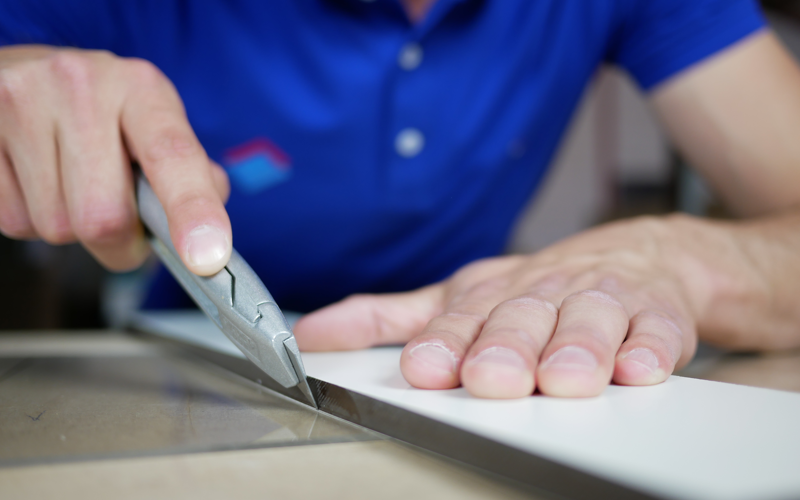
- Utility Knife or Scoring Tool: It’s suitable for thin sheets up to 5 mm in thickness. A scoring knife creates a deep groove along the cutting line after several passes. You can snap the acrylic sheet cleanly along the scored line.
Utility knives offer similar functionality for straight cuts or minor adjustments. The compact gear is easy to use, accomplishing simple tasks with precision.
- Hacksaw: A hacksaw is a manually operated saw with a fine-toothed blade. It’s suitable for moderate precision cuts on thinner acrylic sheets. The tool seems beneficial for projects where access to power is limited.
Its precise manual control initiates a straight line with curved details. But it takes physical effort. Also, cutting acrylic of thicker sheets may lead to rough edges.
B. Power Tools
A power tool (electrical saw) has been the go-to option for medium-thick to thick Perspex sheets. They offer immense efficiency and superior versatility for almost all large-scale projects.
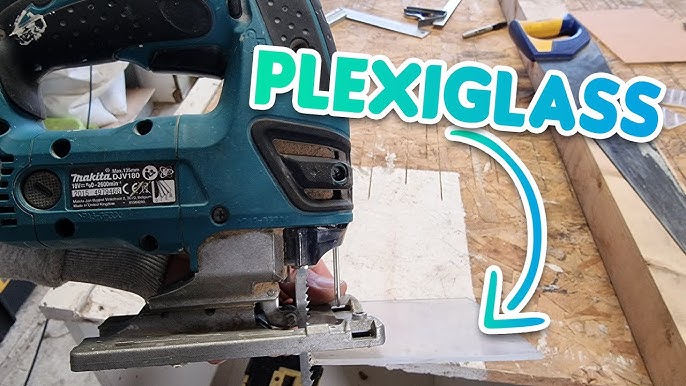
- Jigsaw: A jigsaw with the right blade seems ideal for cutting a curved edge and intricate designs. You’ll receive flexibility for non-linear shapes for creative or decorative projects.
Operating the jigsaw at a low-to-moderate speed can prevent heat buildup to protect the plexiglass edge. Curved and detailed work prevails through easy maneuverability upon proper blade selection.
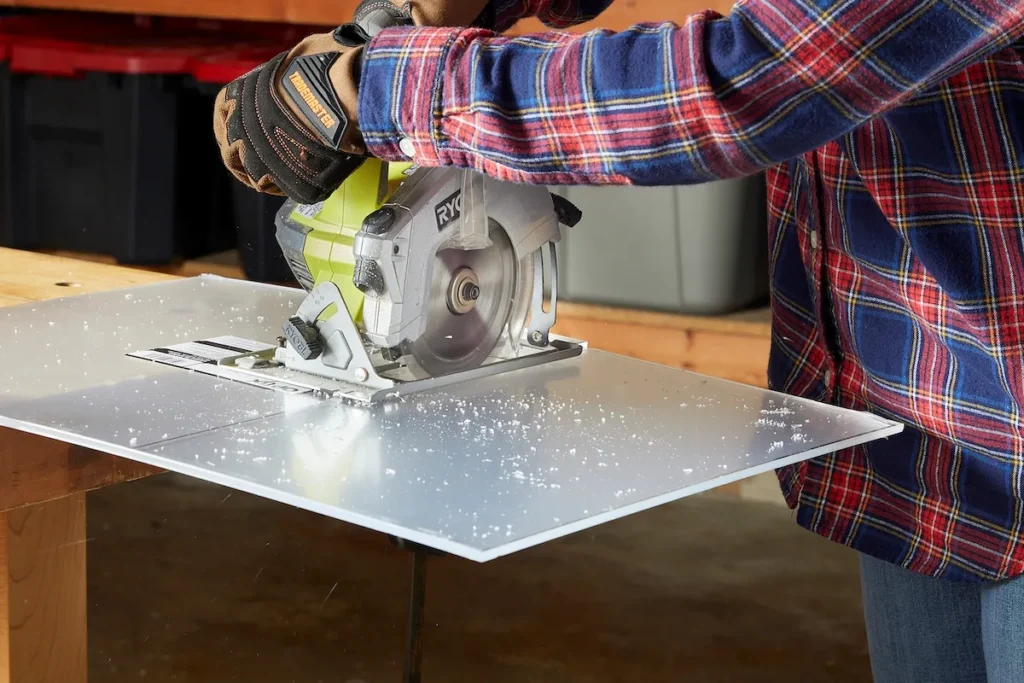
- Circular Saw: It comes with a fine-toothed carbide blade is highly effective for straight and precise cuts. The electric saw is suitable for medium-thick acrylic sheets, ensuring a smooth edge when used with consistent pressure.
The tool is perfect for cutting acrylic plastics (large pieces) of medium thickness without compromising precision. But it produces dust that requires a steady hand to avoid jagged edges.
- Table Saws: It’s an excellent option for cutting large or thick plexiglass sheets. A table saw offers stability and blade consistency for straight, clean cuts. You can operate on extended acrylic sheets of massive length.
It’s often equipped with an acrylic-specific blade to handle demanding projects. However, it requires expertise in terms of managing the heat with cooling measures.
C. Advanced Techniques for Cutting Acrylic
Modern techniques leverage scientific technology to achieve precision, efficiency, and versatility. They’re equally applicable for commercial, professional, or complex projects.
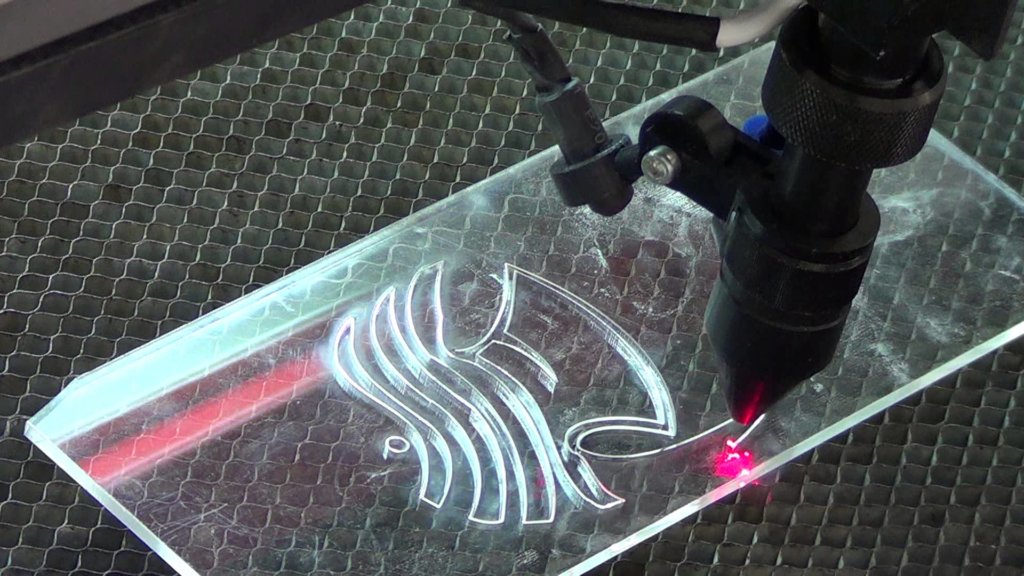
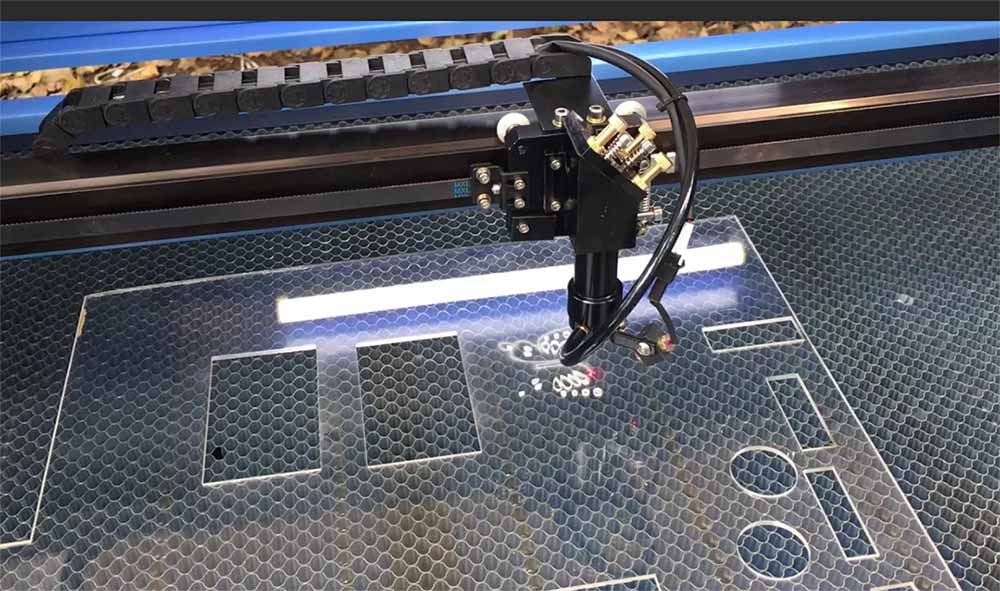
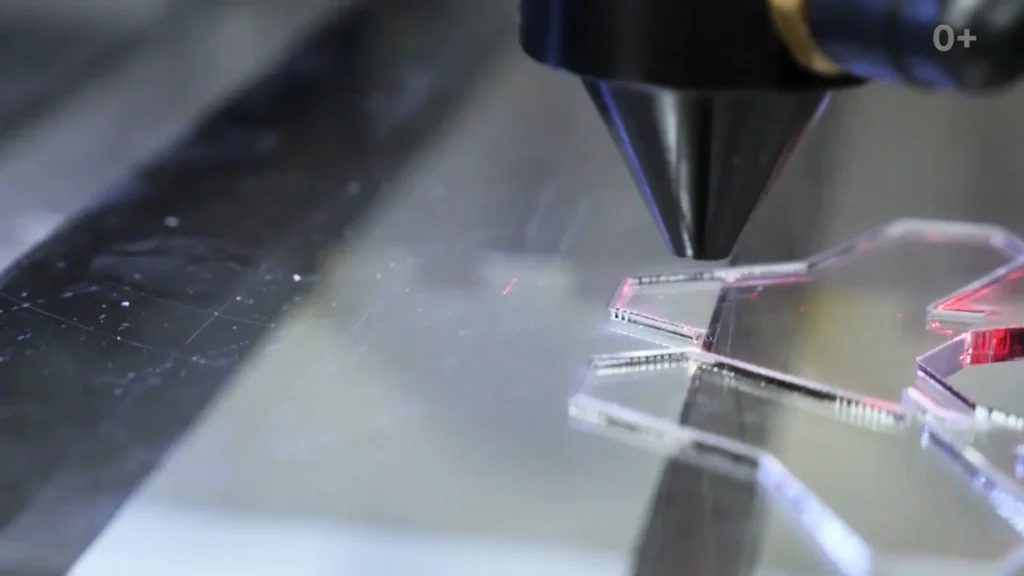
- Laser Cutting: The technology remains on top due to its ability to produce high-precision cuts with a smooth edge. Concentrated light beams cut acrylic sheets without physical contact to avoid chipping or cracking risks.
It’s particularly suitable for intricate designs, small patterns, or large-scale production with consistent results.
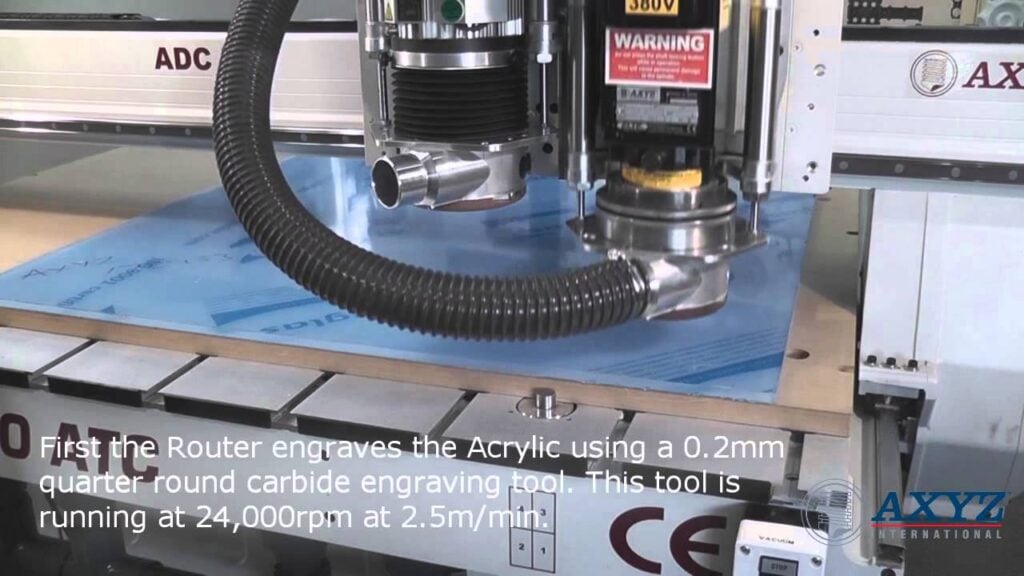
- CNC Routers: CNC routers feature automated tech to cut acrylic plastic based on programmed designs. It allows detailed and repeatable patterns with supreme accuracy.
CNC routers can handle more intricate cuts through computer-controlled precision. It requires technical expertise to operate even after a high initial investment.
Standard Cutting Process for Perspex: A Step-by-Step Overview
Cutting acrylic plastics is all about careful preparation, precise execution, and proper finishing. Only then it’s possible to achieve a professional-grade result upon navigating the entire process.
01. Preparation
- Clean the Sheet and Work Surface: Clean the plexiglass sheet to remove dust, fingerprints, and debris. Use a soft microfiber cloth with a mild soapy solution or an acrylic-safe cleaner to avoid scratches. Maintain a clean, flat, and organized workspace as a clutter-free surrounding minimizes distractions.
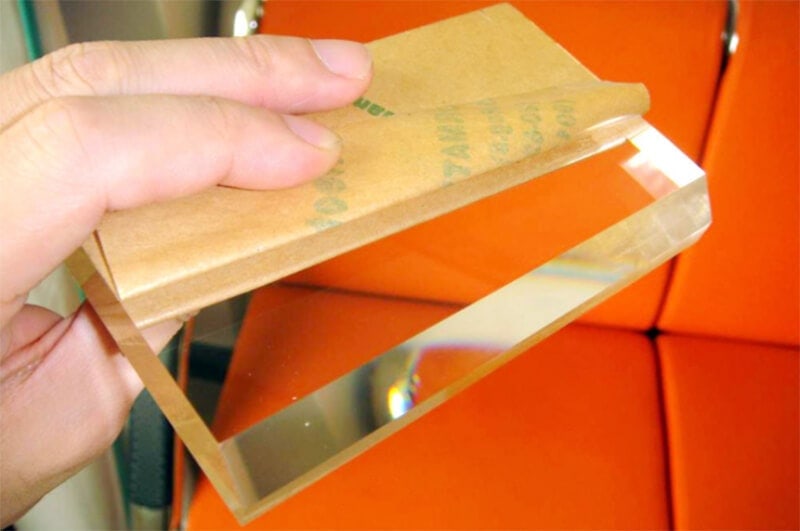
- Measure and Mark Cutting Lines: A measuring tape can determine and mark the desired dimensions on the protective film on Perspex. Apply masking tape over the cutting acrylic area to enhance visibility without scratches. Consider employing a non-permanent marker for clear and precise markings.
- Clamp the Sheet Securely: Position the acrylic sheet on a sturdy and flat surface (workbench). Use clamps to hold the acrylic sheet firmly in place. It should prevent shifting/moving during the cutting process. Place a protective layer (plywood pieces) beneath the acrylic sheet to let the blade pass through cleanly.
02. Cutting
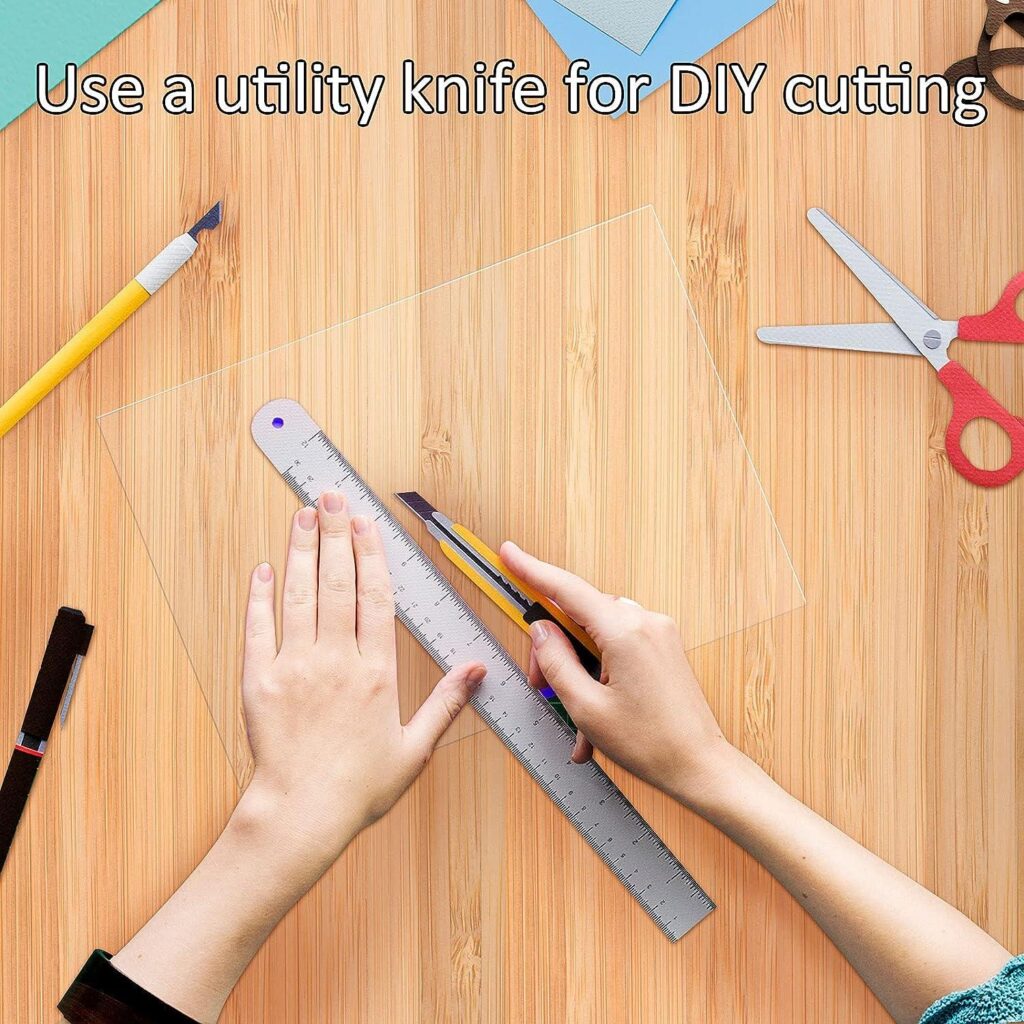
- Using Hand Tools (for Thin Sheets): Position the plexiglass sheet with the marked line aligned slightly over the edge for easy access. Use a utility or scoring knife to score along a straight line.
- Apply pressure steadily and repeat the scoring 5 – 10 times to create a deep groove. Place the edge along a straight surface to apply pressure uniformly to snap the sheet cleanly.
- Using Power Tools (for Medium and Thick Sheets): Attach a fine-toothed acrylic blade to the jigsaw. Cut acrylic sheets along the marking with a steady speed. Cut slowly to avoid potential heat buildup when possible.
Or, fit the circular saw with a carbide-tipped blade. Begin with a slow feed rate to maintain consistent pressure to achieve a straight and smooth cut.
- Alternatively, put the table saw blade aligned and sharp. Set the blade height slightly higher than the sheet to ensure a clean cut. Push the sheet gently through the blade using a guide or fence for stability.
Consider moderate speeds to control heat generation, which can melt or deform the edge. Keep the saw blade cool by pausing or throwing water as a coolant.
03. Post-Cutting Finishing
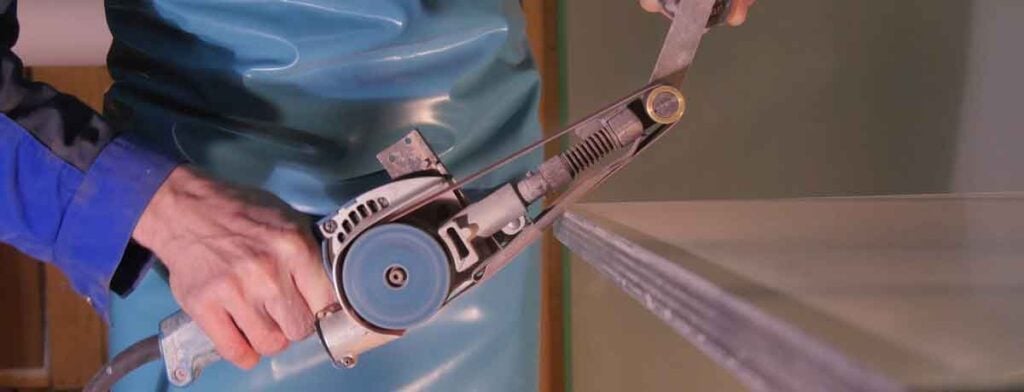
- Sanding the Edge: Start with coarse-grit sandpaper (120) to remove roughness and sharpness. Wrap the sandpaper around a sanding block for better control. Gradually switch to fine sandpaper grits (240, 400, 1200) to refine the finish.
Wet sanding with water gets better results while reducing dust. Sand in a consistent direction along the edge to maintain uniformity.
- Polishing Techniques: Apply an acrylic-safe polish or a fine polishing compound to the edge using a soft microfiber cloth. Also, you can use a rotary buffer with a polishing pad for larger projects.
Set the tool to low speed to prevent overheating and work along the edge line gradually. Use a butane or propane torch to heat the edge lightly for a perfectly clear outcome with no overheating.
Choosing the Right Cutting Method for Perspex Acrylic Sheets
Selecting the most effective cutting method depends on various factors. The foremost considerations associated with the choice include the following –
a. Thin vs Thick Sheets
The thickness of Perspex has a crucial role in determining the cutting approach. Each thickness category demands specific techniques.
- Thin Sheets (Up to 5 mm): Thin sheets are lightweight, flexible, and easy to cut. Such materials are ideal for simple DIY projects or delicate designs. Create a narrow groove along the marked straight lines by scoring.
Snapping the sheet along the groove should deliver a clean edge. Meanwhile, a manually operated hacksaw provides precise cutting for small adjustments.
- Thick Sheets (Above 6 mm): These sheets require stronger gears due to increased rigidity and resistance. Circular saws, equipped with a fine-toothed blade, ensure a clean and straight cut for thicker sheets.
A table saw provides stability and precision for extensive cuts on large and thick acrylic sheets. Whereas, laser cutting is highly effective for flawless edging and intricate designs.
b. Straight vs Curved Cuts
The design and shape of the desired cut influence the choice of techniques. Understandably, straight ones are simple whereas curved cutting relies on precise execution.
- Straight Cuts: Straight cutting requires equipment capable of maintaining precise linear movement. Scoring is the simplest method to achieve clean cuts on thin acrylic sheets. Circular saws are ideal for medium to thick sheets with a smooth edge. Meanwhile, a table saw is perfect for large-scale cuts with consistency.
- Curved Cuts: Curved or intricate cuts demand flexible and maneuverable machinery or equipment. A jigsaw can easily craft smooth curves and non-linear designs. Adjusting the speed can prevent cracking or edge roughness. Laser cuts ensure unparalleled accuracy and smooth finishes for professional-grade cuts.
c. DIY vs Professional Projects
The chosen methods should align with the skill level and project requirements. Industrial projects differ significantly from at-home DIY measures.
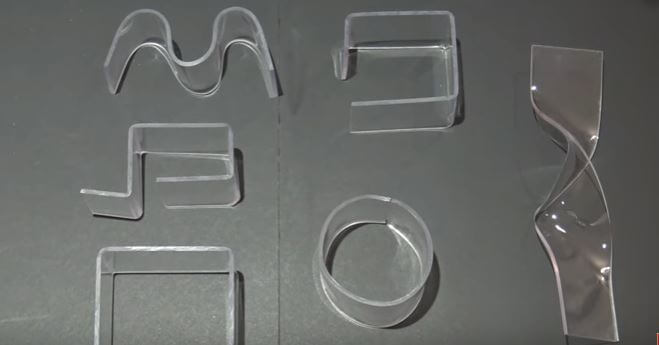
- DIY Projects: DIY enthusiasts often tackle smaller projects with simpler designs. Easy-to-use machinery is essential to ensure safety and achieve satisfactory results. Scoring knives, utility blades, hacksaws, and jigsaws are suitable for DIYers who want to experiment.
- Professional Projects: Professional projects typically involve larger scales, complex designs, or higher precision standards. A circular or table saw is efficient for straight cuts on medium to thick sheets. Laser cutter offers the highest precision for intricate designs at large volumes.
CNC router offers automated cutting with exceptional accuracy. It seems perfect for industrial-grade projects or detailed patterns. Consider investing in high-quality gears and/or equipment to meet professional standards and minimize material waste.
Laser Cuts for Perspex Acrylic Sheets
As you should notice, the laser has been at the forefront of advanced methods to make Perspex cuts. It is actually one of the most effective and versatile options for professionals and hobbyists.
Advantages of Laser Cuts
- Absolute Precision: The concentrated light beam ensures ultra-fine cuts with accuracy up to fractions of a millimeter. This level of precision is unmatched by manual or mechanical cutting methods.
- Smooth Edge Finish: Unlike saws or blades, laser cuts produce a highly polished edge. That, too, often requires little to no post-cut finishing.
- Versatility: Laser can handle complex designs, intricate patterns, and even text. It’s equally good on straight and curved marks without sacrificing or compromising the quality.
- Minimal Material Waste: The method is highly efficient from start to finish. It reduces the likelihood of errors, uneven cuts, or wasted material.
- Contactless Cutting: The laser never actually touches the acrylic sheet. Therefore, the potential risks of dealing with chipping, cracking, or other mechanical damage become zero.
- Customization: It’s a method with extensive customization. Manufacturers can create detailed, unique, and intricate designs for specific projects.
Applications of Laser to Cut Acrylic
- Signage and Display Panels: Sharp shapes for logos, promotional signs, and display panels.
- Architectural Models: Complex structures and fine details for prototypes and models.
- Decorative Art: Intricate patterns for wall art, lighting fixtures, or jewelry designs.
- Industrial Components: components with tight tolerances for machinery to shield/casings.
- Packaging and Branding: a clean edge and polished appearance for professional packing.
Best Practices Involving Laser Cuts
- Choose the Right Laser Cutter: CO₂ laser cutters are recommended for Perspex sheets due to efficiency and precision. The machine should have adjustable speed and power settings for varying thicknesses.
- Optimize Settings: Adjust the power, speed, and focus based on thicknesses. Higher power is required for thicker sheets, while thinner sheets benefit from lower intensity.
- Ventilation and Safety Precautions: Acrylic cutting generates fumes. A well-ventilated work surface or extractor fan can remove odors and gases. Don’t forget to wear safety glasses along with your PPE and gloves.
- Regular Maintenance of Equipment: Clean the lens and bed regularly for maximum precision. Check the alignment of the laser beam to prevent errors or imperfections during cuts.
Limitations of Cutting with Laser
- Cost: Installation and maintenance are expensive for occasional users or hobbyists.
- Learning Curve: Operating a laser requires familiarity with CAD and machine settings.
- Restrictions: Extremely thick Perspex sheets may require specialized adjustments.
Mistakes to Avoid While Cutting Perspex Sheets Effectively
- Using Inappropriate Tools: Dull or incorrect blades (coarse-toothed saws) may cause chipping, cracking, or jagged edges. Always implement tools specifically designed for acrylic.
Fine-toothed carbide blades work great for power saws. And scoring knives or utility blades are ideal for thin sheets. No matter what, keep your tools sharp and well-maintained for clean cuts.
- Misjudging Sheet Thicknesses: You may attempt to score and snap thick sheets. The same goes for using excessive force on thin sheets to cause damage. Always tailor the method to thicknesses to cut acrylic sheets.
- Excessive Force while Cutting Acrylic: Too much pressure while cutting can cause cracks or an uneven edge. It’s a common phenomenon with manual tools or low-speed power tools.
Stick to controlled and steady pressure while letting the tool’s sharpness and speed do the work. Avoid forcing the tool through the material to avoid unnecessary stressing of Perspex.
- Ignoring Heat Management: Friction generated during cutting can overheat Perspex to cause melted edges and deformations. It often occurs from cutting acrylic at high speeds or ignoring cooling techniques.
- Overlooking Safety Measures: Ignoring safety precautions can result in injuries or accidents during the cutting process is a serious concern. Always wear safety glasses, gloves, and a dust mask to protect yourself.
Don’t spare room for encountering sharp shards, acrylic dust, and fumes. Keep the workspace well-ventilated and free of clutter to minimize hazards.
- Skipping Precise Measurements: Incorrect measurements often lead to wasted material or uneven cuts. Take your time to measure carefully. Mark cutting lines clearly and double-check the measurements.
Tips for Straight Edge (Best Perspex Cutting Results)
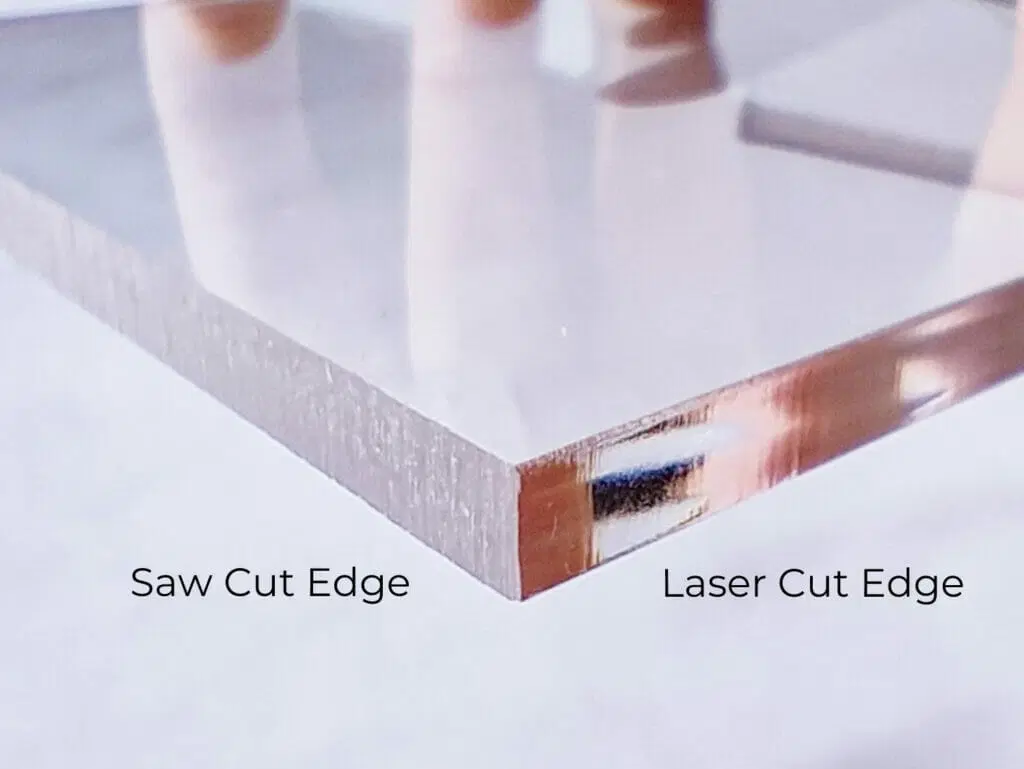
- Invest in the Right Tools: Use acrylic-based blades with fine teeth to minimize chipping and cracking. Go for acrylic-specific drill bits with a shallow point angle to reduce stress on the material with a power drill.
- Practice Before Working: Use scrap pieces to test your gear, methods, and settings. Practice scoring, drilling, or polishing techniques on smaller sections. Fine-tune machine settings (cutting speed or blade depth) to suit the material.
- Mitigate Heat Build-Up: Heat is one of the biggest challenges with Perspex. Excessive friction can cause melting, warping, or rough edging. Use slow-to-moderate speeds on power tools to reduce friction.
- Achieve Superior Edge Finishes: Polished edges are crucial for professional-grade results. Consider wet sanding for smoother results. It involves using water with the sandpaper to minimize dust and improve the quality of the flat surface.
- Optimize Bonding Techniques: Select acrylic-specific adhesives (solvent cement) for seamless bonding. Employ a small brush or syringe to apply the adhesive evenly to prevent air bubbles or excess glue.
- Maintain Protective Films: Perspex sheets mostly feature a protective film on both sides. Keep the films intact for as long as possible during processing. Remove the film only after all processing is complete to preserve the surface quality.
Conclusion
That should answer your query on how to cut acrylic plastic effectively. Industrial and professional measures combine precision and patience with the right gear that is specified for individual project needs. Advanced methods like laser cuts enable flawless precision for complex designs. Whatever method you choose, always prioritize safety from every aspect.
JUMEI ACRYLIC Employs the Best Methods and Techniques
Do you need premium acrylic cutting solutions? Jumei Acrylic Manufacturing is ready with the best experts, tools, and standards. We have years of experience that put the company ahead of others. Contact us for a quote or direct consultation from industry-leading professionals.
]]>That’s where cutting plexiglass is necessary for a custom fit to specific DIY dimensions and designs. Precise cutting is mandatory to maintain the overall integrity of plexiglass. This blog explores the essential cutting methods for a flawless cut like a professional.
What Makes Plexiglass Unique?
Plexiglass also goes by Perspex, acrylic glass, and Plexiglas. The acrylic plastic features an impressive combo of durability and appeal. Its transparency is directly comparable to glass, offering up to 92% light transmission.
The density is about 50% less than traditional glass, making it a favorite for applications involving visual clarity and reduced weight. That’s why plexiglass windows, display cases, and signage boast superb weather resistance against harsh outdoor conditions.
Beyond these foremost characteristics, plexiglass is also incredibly flexible. You can mold the plastic into various shapes upon heating. It makes the plastic a shatterproof substitute to glass for customized designs.
In addition, it’s a cost-effective alternative to glass while offering similar aesthetics at lower price points. Despite its light weight, acrylic glass demonstrates sufficient strength and impact resistance, making the plastic a reliable option for protective enclosures.
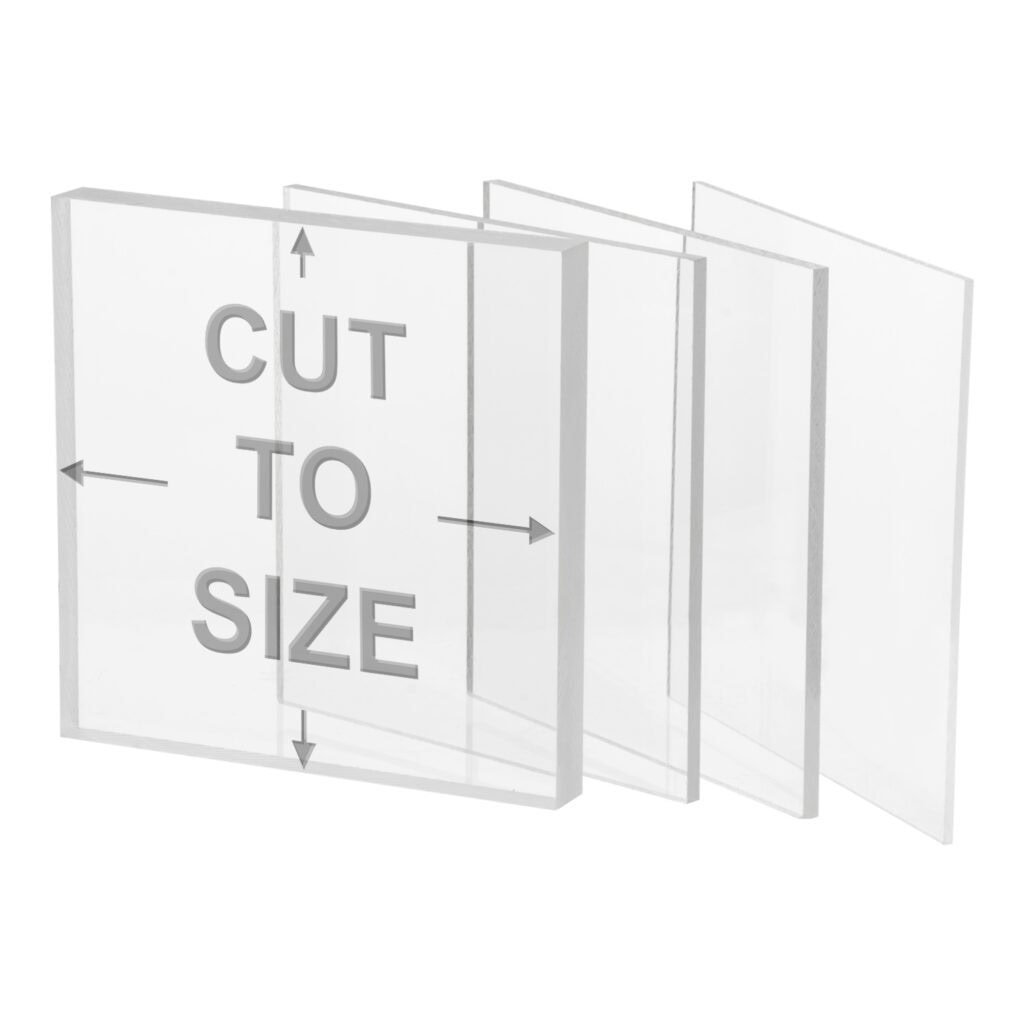
Challenges in Cutting Plexiglass
As you should understand by now, plexiglass comes with remarkable properties. However, its cutting process can present significant challenges. One primary concern is associated with its brittleness.
Improper handling or unsuitable tools can easily lead to cracks, chips, or fractures. The material is prone to heat buildup during cutting, which causes melting and deformation at the edges. Uneven cuts and rough finishes are common when the techniques or tools aren’t precise.
That’s where cutting Plexiglass requires specialized tools and methods tailored to its properties. For instance, employing a fine-toothed blade can minimize chipping. Meanwhile, cooling techniques, like applying water or air, can prevent heat-related damage.
Proper preparation, including securing the material and marking accurate guidelines, also plays a key role in ensuring a precise and clean cut. Understanding the unique attributes should drive your approach to professional results.
Essential Tools for Cutting Plexiglass
A. Standard Cutting Tools
- Utility Knife: It’s ideal for lightweight tasks and thin plexiglass (about 1/8 inch or less). A scoring knife is precise for straight cuts on smaller projects. Scoring the sheet multiple times with a box cutter allows easy snapping.
- Circular Saw: It’s suitable for larger projects or thicker acrylic. The setup has a fine-toothed blade for clear acrylic sheets. Maintaining a steady cutting pace is obligatory to avoid overheating or melting the plastic.
- Table Saw: It’s the go-to option for highly accurate and straight cuts. Proper saw blade selection (fine teeth or carbide-tipped blades) is crucial. Only then, a table saw can deliver top-quality results, even on thick plexiglass.
- Jigsaw: It’s perfect for making curved cuts or intricate shapes. The saw is equipped with a fine-tooth blade. That’s how a jigsaw offers versatility and precision. A slow and steady speed is mandatory to prevent chipping.
- Handsaw: It’s another practical choice for manual cutting, especially on thinner plexiglass. It demands more manual effort and a certain degree of expertise. Still, a handsaw can definitely offer clean cuts with careful use.
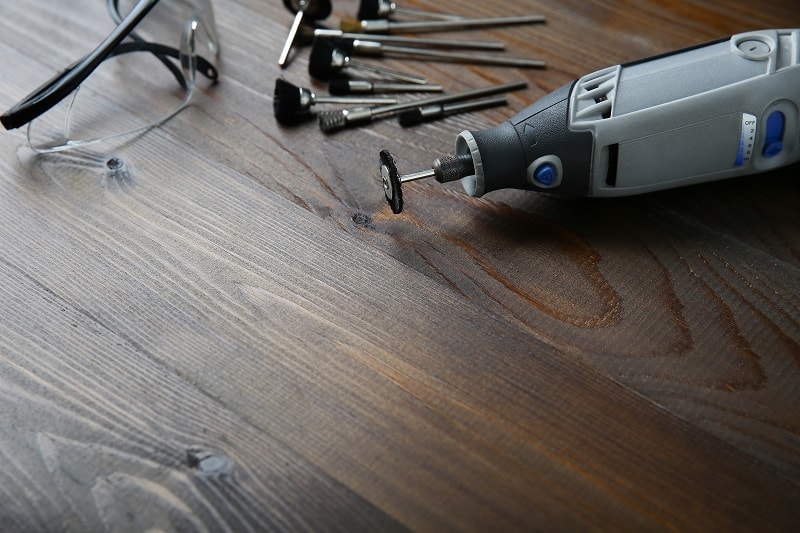
- Dremel Tool: It’s a rotary tool for detailed cutting tasks. The same size goes for handling small yet intricate plexiglass pieces. The versatile equipment is capable for a cut portion, engravings, and smoothing out rough edges.
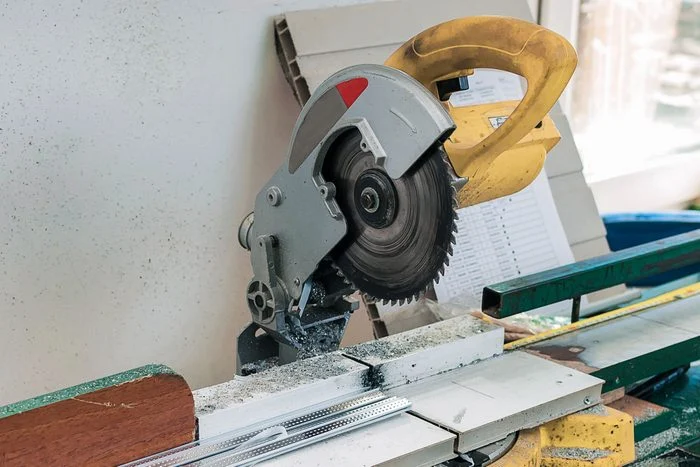
B. Measuring and Marking Tools
- Tape Measure/Steel Ruler: Always ensure accuracy with a deep groove. A metal ruler is beneficial for marking every straight line.
- Pencil or Marker: Use a pencil for light and erase-able marks. Alternately, choose a dry erase marker for clearly visible straight lines on a protective film.
- Clamps: Secure the plexiglass to a stable work surface to prevent movements during cutting. It can minimize errors and accidents.
- Edge Guides: It’s essential with tools like jigsaws or circular saws for straight cuts. Such guides can help maintain consistency regarding precision.
Preparing Plexiglass for Cutting
a. Sheet Thickness
Selecting the appropriate sheet thickness is critical in preparing plexiglass for cutting. Standard thicknesses include 1/8-inch and 1/4-inch sheets based on project requirements. Light applications like picture frames or DIY tasks can rely on thinner sheets (1/8-inch).
In contrast, thicker sheets (1/4-inch or above) are suitable for durable projects like protective shields, aquariums, or architectural designs. Understanding the material in the final phase helps to avoid waste for optimal performance.
b. Safety Precautions
Prioritizing your safety is a must-follow factor while working with plexiglass. Cutting can produce debris and fine particles. Upon inhalation, they can pose serious risks to the eyes, skin, and respiratory system.
Always wear safety glasses to shield your eyes, gloves to protect your hands, and a dust mask to prevent inhalation. For indoor cutting, maintain ventilation to dissipate heat and fumes effectively. Such precautions can create a safe environment conducive to a successful cutting process.
c. Surface Protection
Preserving the integrity during cutting is highly overlooked across at-home cutting. Consider applying masking or painter’s tape along the cutting line to minimize the risks of chipping and cracking. It cushions the material against the immense tool vibrations.
Moreover, placing the plexiglass on a soft work surface like foam, cardboard, or wood provides stability. It also prevents scratches or damage to the underside. Securing the plastic with clamps further keeps the sheet stationary during cutting.

Technique 1: Utility Knife or Scoring Knife (for Thin Plexiglass)
A scoring knife, box cutter, or utility knife is an effective cutting tool for working with thin sheets (1/8″ or less). You can achieve a clean cut with minimal effort.
- Step #01 – Measure and Mark the Cutting Line: Determine the dimensions first. Use a tape measure or metal ruler for exact measurements. Mark the cutting line using a pencil or permanent marker.
- Step #02 – Apply Masking Tape Along the Line: Prevent chipping or cracking by masking or painter’s tape along the cutting line. It provides stability through reduced sheet vibrations.
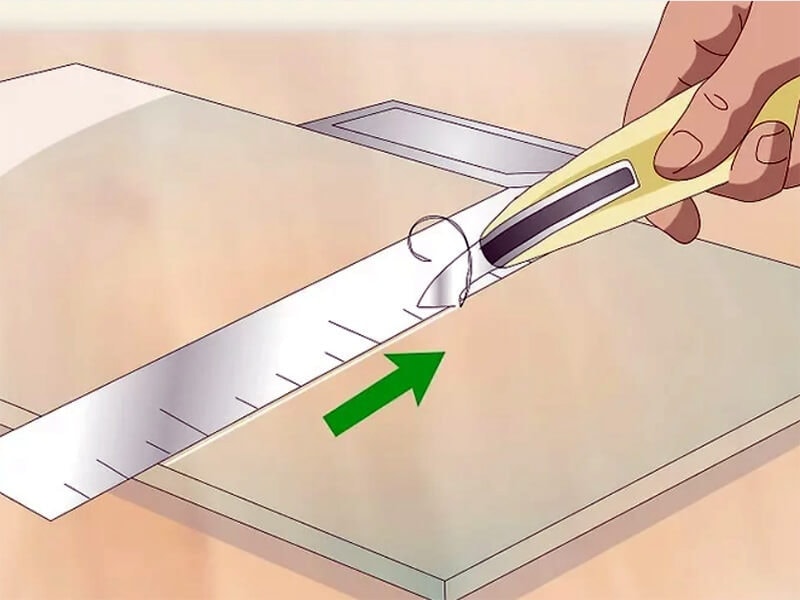
- Step #03 – Score the Plexiglass with the Utility Knife: Secure the acrylic on a foamy or wooden surface to prevent scratches. Score the marked line with a glass cutter to make several passes with uniform pressure.
- Step #04 – Snap the Plexiglass Along the Scored Line: Gently lift and position the scored line over the edge by the opposite side of a steady work surface. Hold it firmly to apply sharp downward pressure for snapping.
Technique 2: Circular Saw (for Straight Cuts on Thicker Sheets)
Working with thicker plexiglass calls for power tools like a circular saw for professional cuts. The steps involved in sawing the material properly include –
- Step #01 – Secure the Acrylic with Clamps: Place the plastic on a stable work surface to prevent movements. Use clamps to hold the sheet securely. But avoid over-tightening that may create stress points.
- Step #02 – Set Up the Saw with a Fine-Toothed Blade: Equip the circular saw with a fine-toothed blade designed for acrylic plastics. It minimizes chipping to deliver a clean and straight edge.
- Step #03 – Mark Your Cut and Align the Saw: Accurately measure and mark the cut line using a tape measure or steel ruler. A pencil or permanent marker works well for creating visible guidelines.
- Step #04 – Cut Along the Line with Moderate Speed: Begin cutting along the marked line at a steady and moderate speed. Skip excessive speed or force to avoid overheating to melted edges.
Technique 3: Using a Jigsaw (for Curved Cuts on a Plexiglass Sheet)
Your project may require intricate shapes or curved cuts more often. And a jigsaw is the ultimate choice due to its versatility and precision.
- Step #01 – Clamp the Plexiglass to a Flat Surface: Place the plexiglass on a firm, stable work surface. Secure the material using clamps to prevent movements during cutting. Consider placing a layer of foam or wood underneath the surface for further protection.
- Step #02 – Mark the Curved Lines with a Pencil: Use a tape or ruler to measure and outline the desired curves with a pencil or marker. Draw the lines directly on the cover for plexiglass with a protective film. Take your time to make every curve exact.
- Step #03 – Use a Fine-Toothed Jigsaw Blade at Low Speed: Equip your jigsaw with a fine-toothed blade to cut acrylic or plastics. It ensures minimal for a smoother finish. Set the jigsaw’s speed to low, as higher speeds can generate excessive heat, causing distortion.
- Step #04 – Carefully Guide the Jigsaw Along the Curve: Position the saw at the starting point and cut slowly and steadily. Avoid rushing and/or applying too much force. Let the jigsaw do the work to maintain smooth and consistent movements for clean cuts.
Technique 4: Using a Table Saw (for Precision and Straight Cuts)
A table saw feels like the absolute choice when precision and straight cuts are critical. Table saws are Known for accuracy and ability to handle thicker plexiglass sheets.
- Step #01 – Secure the Plexiglass with a Clamp: Place the plexiglass on the saw’s cutting table. Secure the material firmly using clamps to prevent vibrations, leading to uneven cuts or cracks.
- Step #02 – Set the Right Blade Height and Angle: Equip the table saw with fine teeth or carbide tips designed for plastics. Adjust the blade height to extend it slightly above the thickness.
- Step #03 – Slowly Feed the Plexiglass with Even Pressure: Carefully feed into the blade along marked lines. Employ a steady pace to apply consistent pressure without forcing on the power saw.
- Step #04 – Follow the Marked Lines for a Precise Power Drill: Focus on the marked guidelines to keep the blade aligned with the cutting path. It prevents deviations that could compromise overall accuracy.
Technique 5: Using a Dremel Tool (For Intricate or Detail Work)
A rotary tool provides excellent control and versatility. That’s why it’s an ideal option for projects with complex shapes or fine cuts.
- Step #01 – Secure the Plexiglass Piece in Place: Stabilize the plexiglass on a soft yet sturdy surface (foam or wooden board). Use clamps for a firm holding to allow zero movements. Also, protect the plexiglass from scratches with protective padding under the clamps.
- Step #02 – Attach a Cutting Wheel to the Dremel Tool: Select a cutting wheel designed for plastics or acrylics for smoother cuts with minimal chipping. Carefully fasten the cutting wheel to the Dremel tool. Inspect it for any wear or damage to avoid uneven cutting.
- Step #03 – Proceed Along the Cut Line with Control: Measure and mark the desired cutting lines or intricate designs with a pencil or permanent marker. Power up and position the wheel at the starting point to guide the Dremel tool along the lines in a steady hand.
What About Laser Cutting? Why It’s Not as Simple as It Looks?
It’s a precise and advanced method of shaping plexiglass using high-powered laser beams. The technique has widespread adoption across industries due to its ability to produce intricate designs with supreme accuracy and minimal waste.
One particular benefit concerns clean and smooth finishes upon cutting. It eliminates extensive post-cutting (sanding or polishing). Its versatility goes well with intricate patterns, complex curves, and even engraving in high-quality professional projects.
i. Complexity of Laser Cutting
Although laser cutting seems straightforward, it comes with significant complexities. Laser cutters need specialized equipment and training to operate effectively. The settings (power, speed, and focus) must be precisely calibrated for different plexiglass types and thickness levels.
Incorrect calibration can result in burned edges, material warping, or incomplete cuts. The unique thermal properties of plexiglass make laser cutting tricky. The heat generated by laser beams can cause localized damage. It also involves higher costs due to the sophistication involved.
ii. When to Choose Laser Cutting?
Laser cutting suits projects requiring intricate designs, delicate patterns, or high precision. Plexiglass projects may involve engraving logos, creating complex shapes, or having a professional finish. That’s when laser cutting becomes an excellent option.
However, relying on experienced professionals specializing in laser cutting is advisable. Professional services ensure the machinery is operated correctly and the settings are optimized for exact product specifications.
Post-Cutting Steps: Smoothing and Polishing the Edges
The edges often appear rough or uneven after the cutting. It can compromise the final aesthetics and safety. Enhance the appearance with a polishing compound through the following measures.
- Sanding the Edges: Select fine-grit sandpaper within 400 – 600 grit to refine rough surfaces. For heavily uneven edges, start with medium-grit sandpaper (200 – 300 grit) to progress to finer grits.
Hold the sandpaper gently against the edges to use consistent and circular motions. Continue sanding until the edges feel smooth to the touch. Consider attaching the sandpaper to a rubber sanding block for thicker sheets.
- Polishing the Edges: Apply a small amount of perfect polish to a soft microfiber cloth. Buff the edges of the plexiglass in a gentle and circular motion. It should initiate an evenly spaced polish.
Use a heat gun a few inches away from the edges and move it steadily along the surface. The heat gently melts and smooths the straight edge for a seamless look. Don’t overheat the plastic; it may lead to warping or discoloration.
Common Mistakes to Avoid
- Overheating: It’s one of the most frequent issues as plexiglass is prone to melting or cracking. It may occur due to high blade speeds or prolonged friction. Use the right blade specifically for plastics and maintain a moderate cutting speed. Pause intermittently during long cuts to cool down the tools.
- Wrong Blade: A wrong or dull blade can cause chipping, rough edges, or even damage. Use fine-toothed or carbide-tipped blades for acrylic instead of a metal cutting blade. Inspect the blade before use for sharpness and damage. Avoid wood-cutting or metal-cutting blades, as they can generate excessive friction.
- No Guide or Clamp: Failing to secure plexiglass properly can result in slipping, uneven edges, and potential accidents. Always clamp firmly to a stable surface. Use edge guides with tools like jigsaws or circular saws for straight cuts. Employ multiple clamps to ensure stability across the entire sheet.
- Cutting Too Quickly: Rushing the process may lead to jagged edges with reduced control. Quick cuts also increase overheating. Work at a steady pace to let the tool glide naturally. Apply light and uniform pressure to avoid forcing. Take your time with intricate shapes or tight curves for precision.
Conclusion
Mastering the art of cutting plexiglass is no simple task, especially for beginners. You’re to select the right tools, measurements, and techniques. It’s the same for all, whether scoring with a utility knife for thin sheets, precision cuts with a table saw, or creating intricate designs with a jigsaw. Never forget your safety gear, such as wearing glasses, securing the material, and working in a ventilated space, which can save you unwanted troubles.
Enjoy The Best Possible Professional Cuts at JUMEI ACRYLIC
Large-scale projects will require extensive tools, advanced technologies, and optimum tolerance. That’s where you should consult a professional acrylic plexiglass service.
Jumei Acrylic Manufacturing excels in the global competition through industry-leading metrics, from tools to methods and experience. Contact us to drop your project ideas/specifications/problems for top suggestions/recommendations from our experts.
]]>