A compelling visual setup can elevate mood, reinforce brand identity, and spark engagement. Acrylic stands out for its clarity, durability, and elegance. Innovative setups with creative acrylic displays can transform spaces immediately.
Exclusive Benefits of Acrylic Displays

a. Visual Clarity and Elegance
Acrylic’s crystal-clear transparency rivals glass but with added resilience. Such clarity allows products, signage, or décor items to stand out without visual obstruction. It’s ideal for retail displays, museum exhibits, and minimalist home setups.
Experts often dub acrylic as “plastic glass”. It’s because the thermoplastic can transmit up to 92% of visible light. It’s one of the most transparent alternatives available within most project budgets.
b. Durability and Safety
Unlike glass, acrylic is impact-resistant and shatterproof. Acrylic plexiglass is safer and more reliable in high-traffic or outdoor environments.
Acrylic is 17 times more impact-resistant than glass, reducing the risk of breakage and injury. In outdoor exhibitions at the Melbourne Convention Center, acrylic sheets withstood weather fluctuations and heavy traffic.
c. Lightweight and Easy to Move
Acrylic’s lightweight nature makes it ideal for portable setups, pop-up shops, and trade shows. It’s the go-to choice for anything that involves frequent rearrangement.
Acrylic weighs less than half of glass, making transportation and installation significantly easier. Brands at international expos often choose acrylic for modular booth designs that can be assembled and disassembled quickly without specialized tools.
d. Customizable and Versatile
Acrylic can be laser-cut, UV-printed, thermoformed, or edge-lit. That’s where you’ll get endless creative possibilities.
Design options are available in clear, frosted, colored, mirrored, and even LED-illuminated formats. Jewelry brands use colored acrylic blocks to match seasonal themes, while tech expos use illuminated acrylic signage to attract attention.
e. Cost-Effective Longevity
Acrylic displays offer long-term value with minimal upkeep. They resist yellowing, scratching, and weathering, making them a smart investment.
Businesses report up to 40% longer lifespan for acrylic displays compared to traditional materials like wood or cardboard.
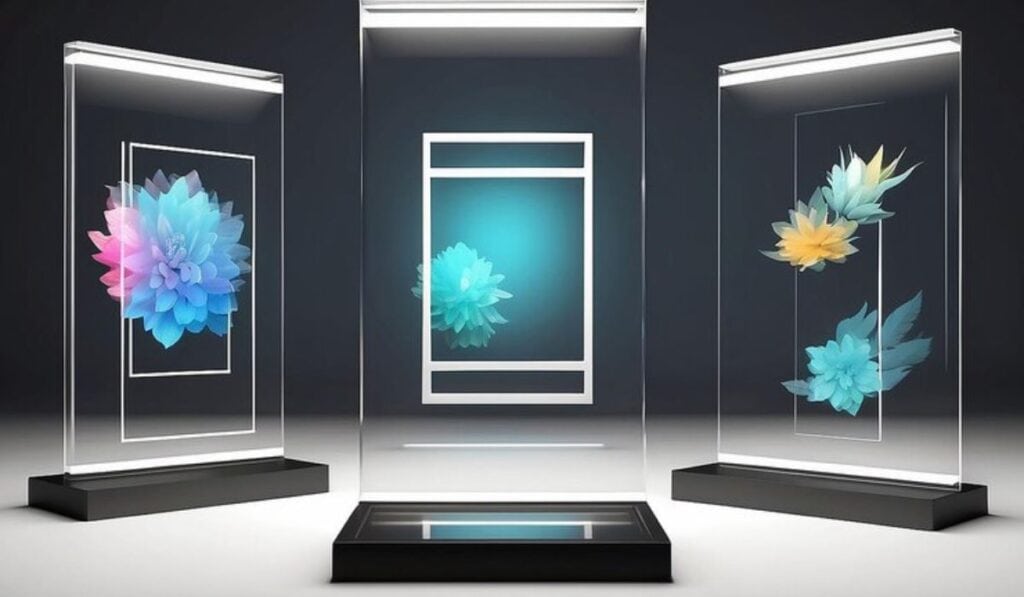
Different Types of Acrylic Displays
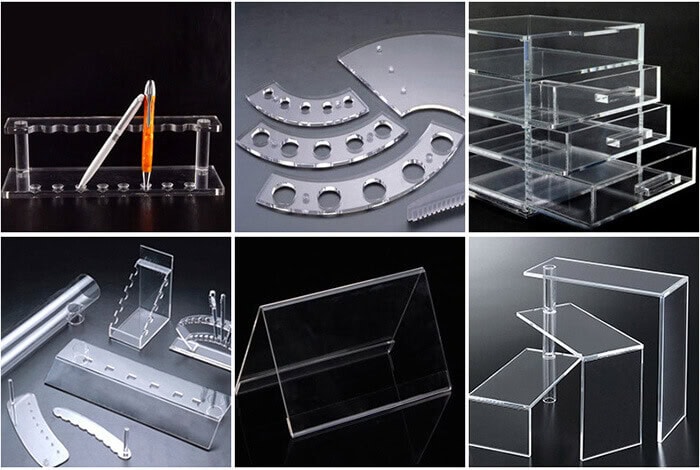
Acrylic displays come in diverse forms to suit specific requirements. Each one can elevate visibility, organization, and aesthetics across retail, events, homes, and offices when appropriately installed.
01. Acrylic Sign Holders and Frames
They’re more like mandatory elements in restaurants, offices, and retail counters for showcasing menus, promotions, or artwork.
Opt for double-sided holders in high-traffic areas to maximize visibility. Clear signage increases customer engagement by up to 30% in retail environments.
02. Acrylic Display Stands
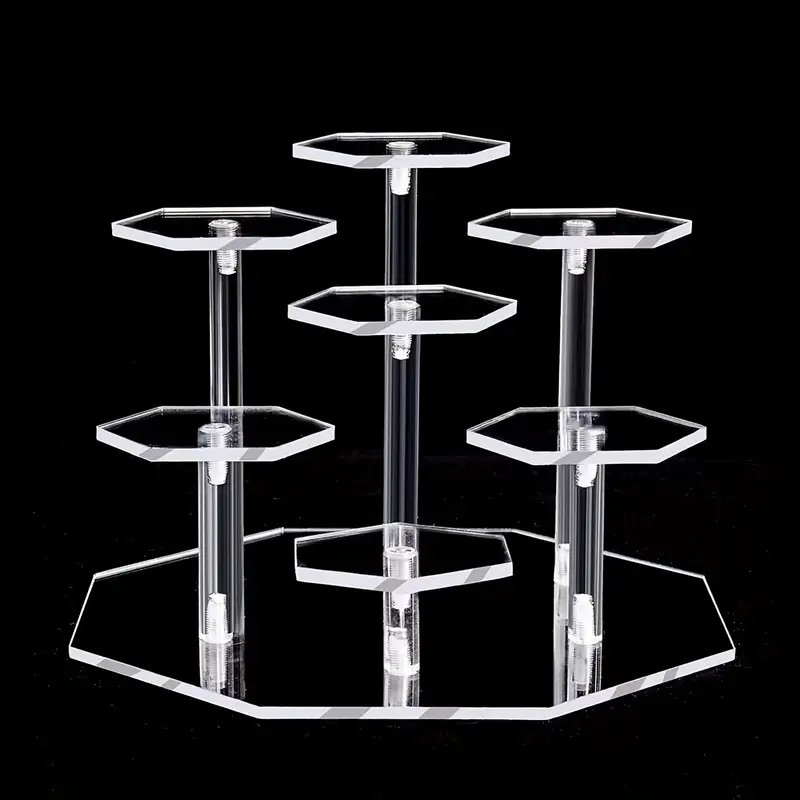
Tiered and multi-level stands are ideal for presenting products with hierarchy and elegance. Jewelry stores in Dubai and Tokyo use tiered acrylic stands to highlight premium pieces without visual clutter.
Use black or frosted acrylic for luxury items to create contrast and focus. Acrylic cosmetic displays have been shown to boost product interaction by 25% in beauty retail setups.
03. Acrylic Boxes and Cases
These protective yet stylish enclosures are used to display delicate or high-value items. Museums in Berlin and Seoul use UV-resistant acrylic cases to preserve artifacts while maintaining visibility.
Acrylic’s impact resistance makes it ideal for safeguarding collectibles without the fragility of glass. Add lockable lids or LED bases for added security and flair.

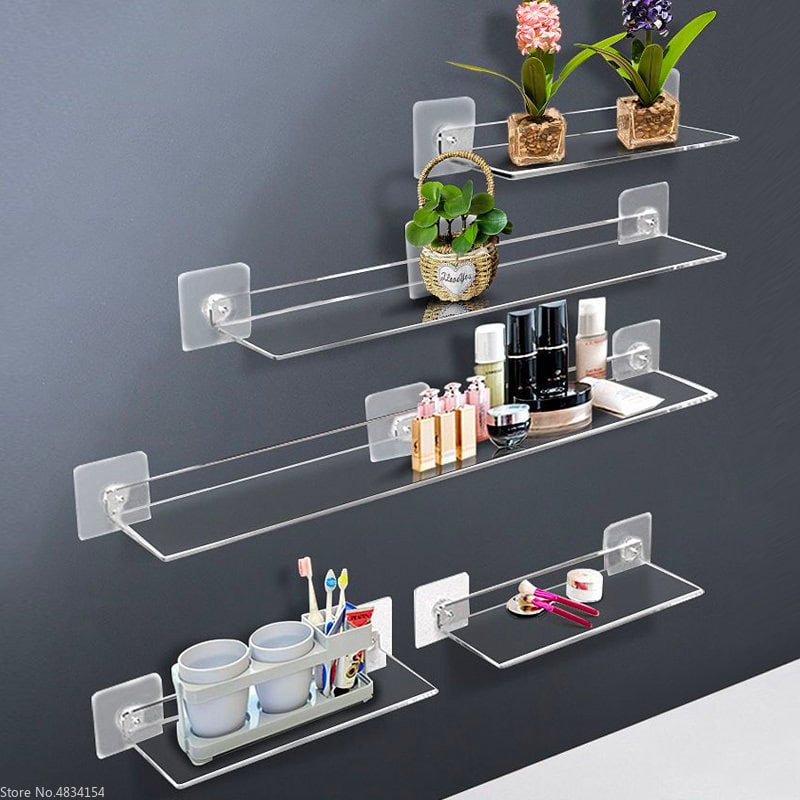
04. Acrylic Wall Panels and Shelves
Wall-mounted acrylic solutions combine storage and style, perfect for modern homes and retail interiors. IKEA’s modular acrylic shelving systems are popular in urban apartments.
Use floating acrylic shelves to create a clean, gallery-like display for books, plants, or merchandise. Transparent shelving reduces visual clutter and enhances perceived space, especially in small rooms.
05. Tabletop and Counter Displays
Compact and customizable, these displays are perfect for receptions, trade booths, and personal décor. At CES Las Vegas, tech brands use acrylic tabletop displays to showcase gadgets with embedded QR codes.
Choose modular designs that allow quick updates for seasonal or campaign changes. Counter displays influence impulse purchases in 60% of retail transactions.
06. Custom and Thematic Acrylic Designs
From engraved panels to illuminated logos, custom acrylic designs offer branding and personalization. Luxury brands like Chanel and Apple use edge-lit acrylic signage in stores to reinforce brand identity.
For weddings/parties, personalized acrylic nameplates or centerpieces add elegance and memorability. Acrylic can be laser-cut into logos, shapes, or thematic motifs, available in PMS-matched colors and LED-integrated formats.
Displays for Different Occasions and Spaces
Acrylic displays adapt beautifully across retail, corporate, event, hospitality, and personal spaces. You can expect optimal clarity, elegance, and branding power in every setting.
a. Retail and Commercial Spaces
Acrylic displays are a staple in retail environments for showcasing premium products with sophistication and clarity. Examples: Jewelry risers, cosmetic tiered stands, and promotional signage.
Retailers using acrylic displays report up to 30% higher product engagement due to improved visibility. Use tiered acrylic stands to create visual hierarchy and maximize shelf space.
b. Corporate Offices
In professional settings, acrylic adds polish and brand cohesion through signage, awards, and organizational tools. Examples: Desk nameplates, brochure holders, branded wall panels.
Combine frosted acrylic with engraved logos for a premium, understated look. Offices with branded acrylic elements see a 15% – 20% boost in visitor perception of professionalism.
c. Events and Exhibitions
Portable, customizable, and elegant, acrylic displays elevate the ambiance and branding of any event. Examples: Podiums, illuminated signage, display cases for products or awards.
Use clear acrylic podiums for speakers to maintain visual openness while adding prestige. Exhibitors using acrylic signage report 25% more booth traffic compared to traditional materials.
d. Restaurants and Cafés
Acrylic enhances the dining experience by presenting menus and promotions with clarity and style. Examples: Tabletop menu holders, promotional inserts, decorative panels.
Use angled acrylic holders to reduce glare and improve readability under ambient lighting. Clear menu displays can increase upsell rates by 12% – 18% in casual dining environments.
e. Homes and Personal Spaces
Acrylic adds a minimalist, modern touch to home décor while offering practical organization. Examples: Wall-mounted shelves, makeup organizers, photo frames, desk accessories.
Use acrylic drawer inserts for organizing cosmetics or stationery without visual clutter. Transparent organizers improve daily task efficiency by 20% in home offices.
f. Hospitality and Service Environments
Hotels, salons, and service desks benefit from acrylic’s clean look and branding flexibility. Examples: Front desk signage, nameplates, brochure racks, and room number panels.
Use backlit acrylic panels for nighttime visibility in lobbies or outdoor service counters. Branded acrylic signage contributes to higher guest satisfaction scores in hospitality surveys.
Creative Design Ideas to Elevate Space with Acrylic Displays
01. Mix Transparency with Color Accents
Acrylic’s inherent clarity makes it a perfect canvas for subtle color play. Tinted or frosted acrylic adds vibrancy without overwhelming neutral interiors.
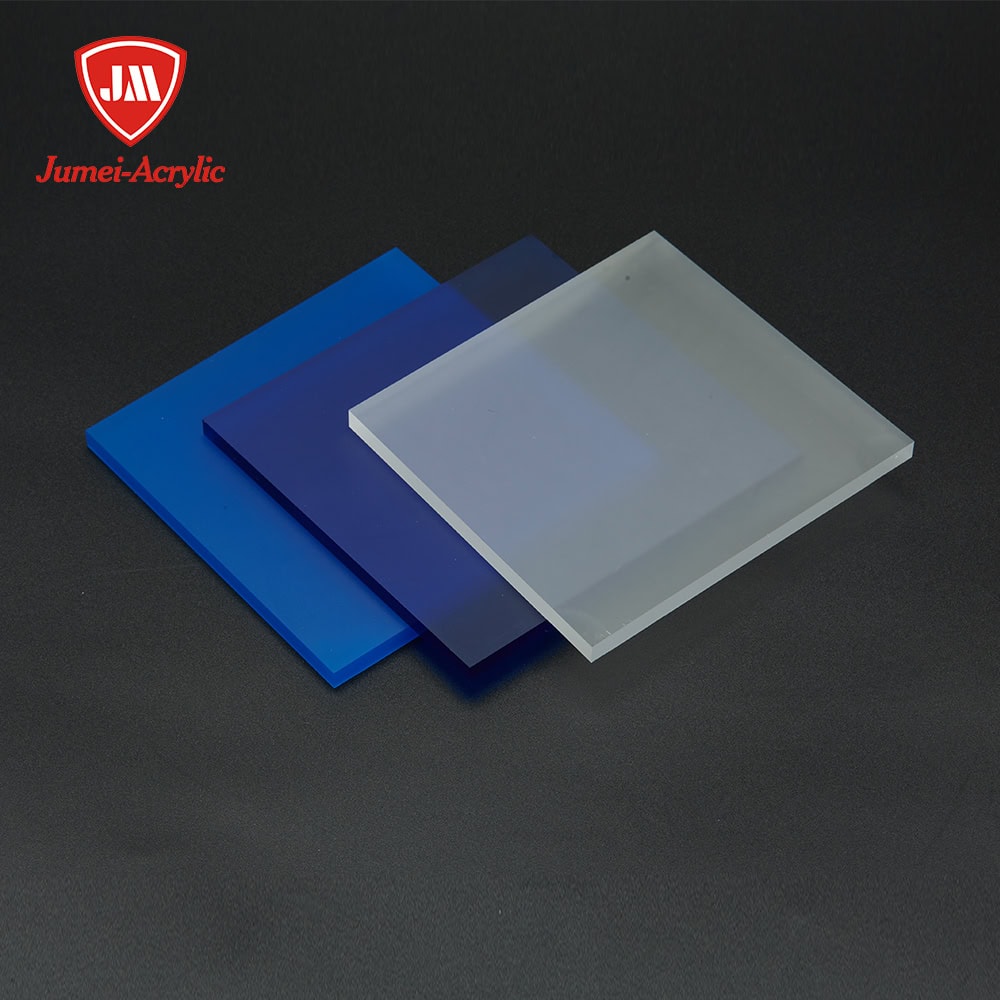
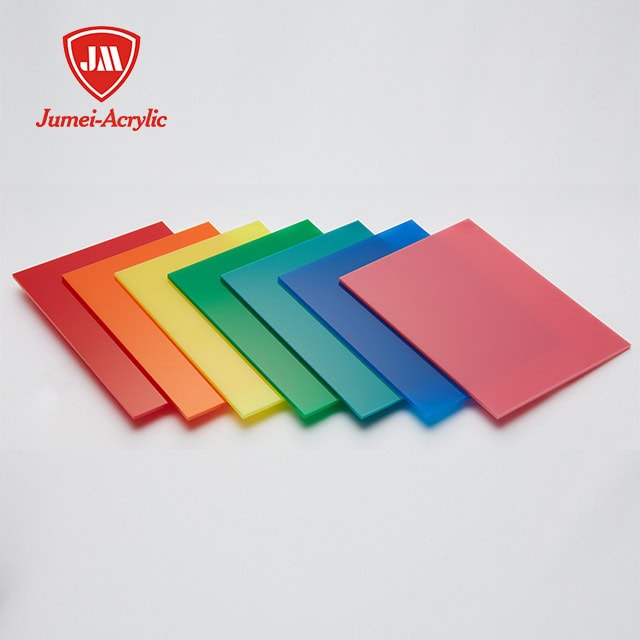
Use pastel-tinted acrylic panels in homes or frosted blue holders in minimalist offices. Colored acrylic sheets are available in over 40 hues, including translucent, opaque, and mirrored finishes.
02. Integrate Lighting
LED integration transforms acrylic into a glowing centerpiece. The idea is perfect for signage, awards, or ambient décor. Edge-lit acrylic signs use embedded LEDs to illuminate engraved text or logos.
Such a collaboration creates a floating glow effect. Use warm white LEDs for cozy environments and cool tones for tech-forward or gallery spaces.

03. Play with Shapes and Layers
Layering acrylic sheets or using geometric cuts adds dimensionality and visual intrigue. Stack clear and frosted layers with offset shapes to create depth in wall art or signage.
Retail stores use hexagonal acrylic panels layered in honeycomb patterns to display accessories. Laser cutting enables precision shaping of acrylic into circles, triangles, waves, and custom silhouettes.
04. Combine Materials
Acrylic pairs beautifully with natural and industrial materials. It creates a balanced and contemporary aesthetic. Wood adds warmth, metal introduces edge, and greenery softens the look.
Acrylic shelves are mounted on reclaimed wood backdrops with embedded succulents. Use brushed brass with clear acrylic for luxury, or matte black metal with frosted acrylic for minimalism.
05. Personalized Engraving
Laser engraving allows for intricate personalization – logos, quotes, patterns, or even illustrations. Consider custom nameplates, wedding signage, branded awards, or inspirational wall panels.
Laser engraving on acrylic produces polished, permanent etching without ink or wear over time. Combine engraving with edge lighting to make quotes/logos glow (reception desks or gallery walls).
Placement and Styling Tips for Maximum Impact
The ultimate goal is to make your space, brand, or products glow enough to grab attention. That’s where strategic placement and styling of acrylic displays come into mind.
a. Eye-Level Placement
Positioning acrylic displays at eye level naturally captures attention and encourages interaction. In retail, eye-level placement increases product visibility and impulse purchases by up to 35%.
Use eye-level acrylic frames for menus in cafés or promotional inserts at reception desks to maximize readability and engagement.
b. Highlight Key Items
Acrylic displays work best when used to spotlight premium or priority items. It turns them into visual focal points.
Use tiered acrylic stands or illuminated signage to draw attention to bestsellers, new arrivals, or limited-time offers.
c. Keep It Minimalist
Acrylic thrives in minimalist setups. Overcrowding reduces impact and creates visual noise. Allow for negative space around each display to enhance clarity and sophistication. Minimalist displays are associated with higher perceived value and better brand recall.
d. Optimize Lighting
Acrylic’s reflective surface amplifies ambient and direct light, making it ideal for brightening dim areas. Use spotlights or LED strips to create glowing edges or highlight engraved elements.
Position acrylic near natural light sources or use warm LEDs to soften the glow against harsh reflections.
e. Coordinate with Brand or Room Theme
Styling acrylic displays to match your brand identity or interior theme ensures cohesion and professionalism. Align acrylic color tints, typography, and layout with your brand palette or room décor.
Consistent visual branding across displays can improve customer trust and recognition by up to 80%. For events, match acrylic signage with floral arrangements or table linens to create a unified aesthetic.
Choosing the Right Acrylic Display for Your Needs
01. Purpose Identification: Decorative, Promotional, or Functional
- Decorative: Opt for engraved panels, illuminated signs, or artistic shapes for homes, weddings, or galleries.
- Promotional: Use tiered stands, sign holders, or branded podiums to highlight products and offers in retail or events.
- Functional: Offices, hospitality, or service desks benefit from brochure holders, nameplates, and organizational tools.
02. Size and Space Considerations
Choosing the right size ensures your display complements the environment without overwhelming it.
- Small Spaces: Use compact tabletop displays or wall-mounted shelves.
- Large Venues: Opt for freestanding acrylic towers, illuminated signage, or multi-tiered stands.
- Proportional Design: A display that’s too small may go unnoticed; too large can disrupt flow and aesthetics.

03. Customization Options: Branding, Shape, and Color
- Branding: Laser engraving, UV printing, and logo-shaped cutouts.
- Shape: Geometric, organic, or thematic silhouettes.
- Color: Clear, frosted, tinted, mirrored, or LED-integrated options.
04. Budget and Quality Balance
Acrylic displays range from budget-friendly to premium-grade. The key is balancing durability with cost.
- Low Budget: Opt for standard clear acrylic with basic cuts.
- Mid-Range: Choose anti-scratch finishes and modular designs.
- High-End: Invest in thick, polished acrylic with lighting and engraving.
05. Supplier Credibility
What to Look For: CNC-cutting capabilities, UV printing, anti-yellowing guarantees, and global client portfolios.
Suppliers like Jumei serve international brands, offering modular, transport-friendly designs for trade shows and retail chains.
Frequently Asked Questions (FAQs)
1) How can acrylic displays enhance my space?
Acrylic displays add elegance, improve product visibility, and create a modern, clutter-free aesthetic. They’re ideal for organizing, promoting, or decorating any environment.
2) What types of acrylic displays are best for retail stores?
Retail stores benefit from acrylic risers, tiered stands, sign holders, and display boxes. These highlight products while maintaining a clean, professional look.
3) Are acrylic displays suitable for weddings and events?
Yes. Acrylic is widely used for weddings and events in the form of table numbers, welcome signs, seating charts, and centerpieces. It adds a modern, elegant touch to any theme.
4) Can I customize acrylic displays with my logo or design?
Absolutely. Acrylic can be laser-engraved, UV-printed, or cut into custom shapes. You can include logos, quotes, or patterns for branding or personalization.
5) What’s the difference between clear, frosted, and colored acrylic?
Clear acrylic offers maximum transparency, frosted acrylic provides a soft matte finish, and colored acrylic adds visual interest. Each serves different aesthetic and functional purposes.
6) Are acrylic displays durable for outdoor use?
Yes. High-quality acrylic is UV-resistant and weather-tolerant. They’re particularly suitable for outdoor signage, display cases, and event décor.
7) How do I clean and maintain acrylic displays?
Use a microfiber cloth and mild soap solution to keep things clean. Avoid ammonia-based cleaners, which can cause clouding or scratches.

Conclusion
Acrylic displays hold elegance, versatility, and impact. Its crystal-clear beauty, customizable design, and functional strength make it perfect for storytelling, branding, and transformation. A creative styling unlocks the power to elevate any space – visually, emotionally, and experientially.
Redefine Your Space through Creative Acrylic Displays with JUMEI
Shape your creative designs in acrylics with captivating options from Jumei Acrylic. We specialize in acrylics as all our products feature top-tier designs. Check the stock and contact us about the services.
]]>Even the slightest misstep can lead to delays, defects, or budget overruns. In contrast, the right choice can unlock innovation, reliability, and long-term growth. This article serves as your strategic guide to selecting the ideal manufacturing partner for your acrylic-based project.
Quality Consistency
Consistency in quality marks a strategic advantage for the end user. In manufacturing, even minor deviations can lead to product failures, costly recalls, or damage to reputation.
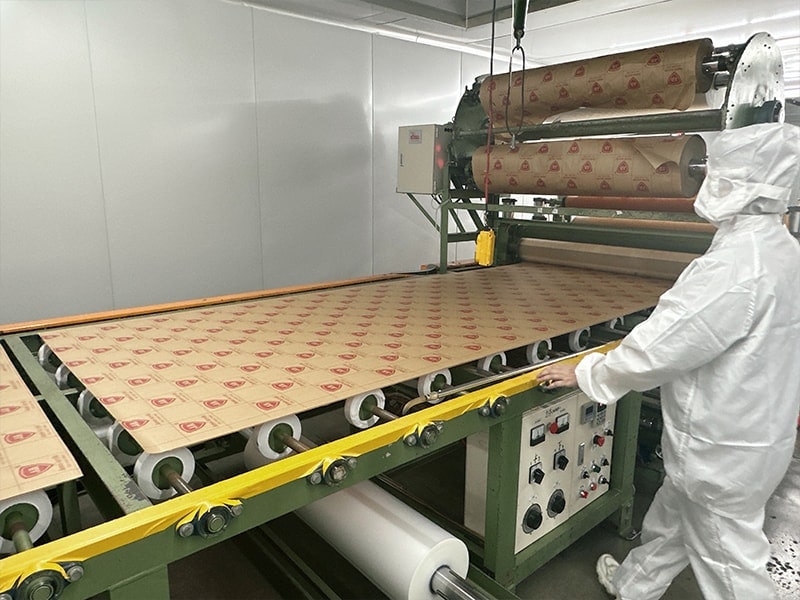
Robust quality control reduces waste, boosts customer satisfaction, and ensures product reliability. Such privileges prevail throughout the entire production cycle with a top-tier acrylic sheet manufacturer.
Consistency in quality safeguards brand reputation while minimizing potential rework requirements. You can expect full compliance with customer expectations and regulatory demands.
Industry Standards and Certifications
Certifications like ISO 9001, ASTM, and ISO 14001 hold operational blueprints for acrylic sheets.
- ISO 9001: The most widely adopted quality management standard globally. It mandates a process-driven approach to ensure products consistently meet customer and regulatory requirements.
Manufacturers with ISO 9001 certification demonstrate commitment to continual improvement, customer focus, and traceable documentation.
- ASTM International: Sets technical standards for materials, products, systems, and services. For example, ASTM standards in construction ensure that acrylic sheets and plastic materials like polycarbonate meet performance benchmarks.
- ISO 14001: Focuses on environmental management. Manufacturers with this certification show they’re using recycled acrylics to reduce waste, manage resources responsibly, and comply with environmental regulations.
Quality Assurance Practices
Quality assurance (QA) goes beyond inspection. It’s also about preventing defects before they occur. While quality control (QC) identifies issues post-production, QA embeds quality into the process itself. Effective QA practices include –
- Incoming Material Inspection: Verifying raw materials meet specifications before entering production.
- In-Process Testing: Close monitoring during the production of plexiglass sheets to catch deviations early.
- Final Product Inspection: Ensuring finished goods meet dimensional, functional, and aesthetic standards.
- Statistical Process Control (SPC): Using data analytics to monitor and control production variability.
Companies that implement ISO 9001 and rigorous QA practices report up to 30% reduction in defects and 20% improvement in customer satisfaction.
Industry Experience: Why Sector Familiarity Matters?
Manufacturers with proven experience in cast acrylic sheets bring more than precision over glass. They understand sector-specific challenges, regulatory requirements, and customer expectations.
67% of procurement leaders prioritize industry-specific experience when selecting suppliers, citing reduced onboarding time and fewer production errors.
In the renewable energy sector, Vestas partners with manufacturers who specialize in composite materials and turbine blade aerodynamics for performance and durability in harsh environments.
Specialized Knowledge: Materials, Technologies, Techniques
Beyond general experience, manufacturers must demonstrate technical mastery in the materials and processes your project demands.
- Materials Expertise: It can be thick, glazed, or colored acrylic sheets. The right manufacturer understands sourcing, handling, and performance characteristics.
- Technology Proficiency: From CNC machining and injection molding to AI-powered quality inspection and additive manufacturing, specialized capabilities ensure precision and innovation.
- Production Techniques: Techniques like lean manufacturing, Six Sigma, or just-in-time (JIT) production can drastically improve efficiency and reduce waste.

Track Record of Success: Proof Over Promises
A manufacturer’s portfolio tells you more than any pitch. It’s not something that you can glue together with solvent-based adhesives. Look for –
- Projects similar in thickness, complexity, and compliance requirements.
- Documented outcomes: delivery timelines, defect rates, and client satisfaction.
- Repeat clients or long-term partnerships (a sign of reliability).
84% of buyers consider the past performance and client references as critical decision factors. A strong track record reduces risk and builds confidence in the manufacturer’s ability to meet your expectations.
Customization and Flexibility
One-size-fits-all manufacturing rarely delivers a competitive advantage. You can produce seasonal retail goods, industrial components, or tech-enabled devices. The manufacturer must be a collaborative problem-solver to create what you need.
Every project has distinct timelines, specifications, heat requirements, lighter, compliance needs, and customer expectations. A manufacturer’s ability to tailor production processes, workflows, and delivery schedules is critical to ensuring alignment with your goals.
72% of buyers said supplier flexibility was a top factor in repeat business, especially in sectors with seasonal or custom product (sheets) cycles. Flexibility is a strategic necessity for adapting to evolving project demands and market shifts.
Range of Customization Options: Recycled Acrylic
Customization goes beyond aesthetics as it’s also about functional alignment. The right manufacturer should offer variety and versatility within properties –
- Design: Ability to modify shapes, patterns, branding elements, and structural features.
- Materials: Access to diverse material grades, finishes, and sustainable alternatives.
- Size and Dimensions: Precision in scaling components to fit specific use cases or regulatory constraints.
- Functionality: Integration of smart features, modularity, or enhanced durability based on application.
Companies offering product customization through flexible manufacturing saw 20% – 30% higher customer retention and 15% faster market penetration. A manufacturer’s customization capabilities directly impact product-market fit, brand differentiation, and compliance.
Design and Prototyping Services
Before mass production begins, prototyping bridges the gap between concept and reality. Manufacturers who offer in-house design support and rapid prototyping help refine ideas, identify flaws early, and reduce costly revisions.
- Design Support: CAD modeling, material selection guidance, and compliance consulting.
- Mockups: Visual or functional samples to validate the designer form, fit, and usability.
- Prototyping: 3D printing, CNC machining, or low-volume runs to test performance under real-world conditions.
Companies that prototype early in the product lifecycle reduce development costs by up to 35% and improve launch success rates by 25%. Prototyping isn’t optional as it validates design, optimizes performance, and ensures manufacturability.
Modern Manufacturing Techniques: Efficiency Meets Precision
Advanced and smart manufacturers leverage state-of-the-art equipment such as automation, robotics, and additive manufacturing. They offer distinct advantages –
- Automation and Robotics: Reduce human error, accelerate throughput, and ensure consistent quality. In the automotive and electronics sectors, robotic arms handle precision assembly with micron-level accuracy.
- 3D Printing (Additive Manufacturing): Enables rapid prototyping, design iteration, and low-volume production with minimal tooling costs. Ideal for custom components, medical devices, and aerospace parts.
- CNC Machining and Laser Cutting: Deliver high-precision parts with tight tolerances, essential for industrial, shop signage, and infrastructure applications.
Modern techniques drive speed, precision, and repeatability for pre- and post-production. Free care and an easy start may not be the most popular approach.
Innovation in Manufacturing: Future-Ready Partnerships
Innovation is all about mindset. Manufacturers who embrace new technologies and continuous improvement can help you stay ahead of market demands.
- Smart Factories: Use IoT sensors, AI-driven analytics, and real-time monitoring to optimize production and predict maintenance needs.
- Digital Twins: Virtual replicas of production systems allow simulation and testing before physical execution to reduce risk and improve design accuracy.
- Sustainable Manufacturing: Adoption of energy-efficient machinery, closed-loop systems, and biodegradable materials aligns with ESG goals and consumer expectations.
Manufacturers investing in digital innovation see up to 40% improvement in operational efficiency and 25% faster product development cycles.
Capacity for Scaling: From Prototype to Production
Whether you’re launching a niche product or preparing for mass-market rollout, your manufacturer must be able to scale production seamlessly.
- Small Batch Flexibility: Ideal for startups, seasonal retail, or pilot runs. Look for low MOQ (minimum order quantity) and agile tooling setups.
- Mass Production Readiness: For large-scale projects, assess throughput capacity, workforce strength, and supply chain integration to ensure optimal readiness.
- Scalability Infrastructure: Warehousing, logistics support, and ERP systems that can handle volume fluctuations and multi-region distribution.
68% of buyers cited scalability as a top factor in long-term supplier relationships, especially in consumer goods and industrial manufacturing.
Production Timeframes: Planning for Scale and Complexity
Understanding a manufacturer’s production timeframe is essential, especially for large-scale or technically complex projects. Lead time includes everything from raw material procurement and tooling setup to actual production and quality checks.
- Standard vs Custom Orders: Off-the-shelf products may take 2 – 4 weeks. But custom components or multi-stage assemblies can stretch to 8 – 12 weeks or more.
- Tooling and Setup Delays: For injection molding or CNC machining, initial tooling can take 3 – 6 weeks, depending on complexity. This must be factored into your project timeline.
Always align your project milestones with realistic production timelines to ensure effective project management. Visit the best possible options today for a happy hunt towards the most reliable choice.

On-Time Delivery: Reliability Over Promises
A manufacturer’s ability to consistently meet delivery deadlines is a hallmark of operational excellence. Late deliveries turned to issues like missed launch windows, stockouts, contractual penalties, and reputational damage.
Delivery Metrics to Track –
- Fill Rate: Percentage of order quantity fulfilled without backorders.
- OTD (On-Time Delivery) Rate: Percentage of orders delivered on or before the promised date.
- Lead Time Variability: Consistency in delivery across multiple orders.
Companies with high OTD performance (above 97%) experience 23% higher customer retention and 15% lower logistics costs due to reduced expediting and rework. On-time delivery is about logistics, trust, planning, and customer satisfaction.
Supply Chain Reliability: The Hidden Backbone
Even the most capable manufacturer can falter if their supply chain is fragile. Projects that rely on specific raw materials, rare components, or global sourcing must assess the manufacturer’s upstream resilience.
- Raw Material Availability: For example, high-grade acrylics, lithium-ion cells, or specialty alloys may face seasonal or geopolitical supply constraints.
- Supplier Diversification: Manufacturers with multiple vetted suppliers are less vulnerable to disruptions.
- Inventory Management: Look for manufacturers with buffer stock, safety stock policies, and real-time inventory tracking.
70% of supply chain disruptions in manufacturing stem from Tier 2 and Tier 3 supplier failures. A reliable supply chain ensures continuity, cost control, and resilience against market shocks.
Competitive Pricing: Value Beyond the Numbers
Competitive pricing isn’t synonymous with “cheap.” It means getting the best value for your investment. It’s more like a point where quality, service, and reliability align with cost.
- Evaluate Total Cost of Ownership (TCO): Factor in not just unit price, but defect rates, lead times, warranty terms, and post-sale support. A lower upfront cost may lead to higher downstream expenses if quality suffers.
- Benchmark Across Suppliers: Use RFQs (Request for Quotes) to compare pricing across 3 – 5 manufacturers. Include identical specs to ensure apples-to-apples comparison.
61% of buyers prioritize value-added services (quality assurance, logistics support) over the lowest price when selecting manufacturers. Competitive pricing is about strategic cost-efficiency, not bargain hunting. Prioritize reliability, quality, and long-term ROI.
Transparent Pricing: Cast Acrylic Sheets
A trustworthy manufacturer provides a clear and itemized pricing structure, detailing every cost component –
- Material Costs: Type, grade, and source of raw materials.
- Labor Charges: Breakdown by process (assembly, finishing, inspection).
- Tooling Fees: One-time setup costs for molds, dies, or jigs.
- Shipping and Logistics: Freight charges, packaging, customs duties (if applicable).
- Additional Charges: Rush fees, design revisions, and compliance testing.
78% of buyers prefer suppliers who offer transparent, itemized quotes over bundled pricing, citing better budgeting and fewer disputes. Transparent pricing reduces ambiguity, improves budgeting accuracy, and fosters long-term trust.
Bulk Discounts and Flexibility: Scaling with Strategy
Manufacturers who offer pricing flexibility, especially for bulk orders or long-term contracts, signal a willingness to grow with your business.
- Bulk Discounts: Tiered pricing based on volume thresholds (5%, 10%, or 15% off for 1000+ units).
- Contractual Incentives: Lower rates for multi-year partnerships or recurring orders.
- MOQ Negotiation: Willingness to adjust minimum order quantities for startups or pilot runs.
Companies leveraging volume-based pricing saved an average of 18% on procurement costs annually. Flexible pricing structures support scalability, improve cash flow, and strengthen supplier relationships.
Responsive Communication: Clarity Prevents Costly Missteps
Clear, timely communication is the backbone of effective project management. Manufacturers who maintain open lines of dialogue, from RFQ to final delivery, help prevent misunderstandings, delays, and costly rework.
Miscommunication about specs, timelines, or revisions can lead to defective batches or missed deadlines. Real-time updates allow for agile decision-making, especially when market conditions or design requirements shift.
- Dedicated account managers or project liaisons.
- Multichannel access (email, phone, project dashboards).
- Response time benchmarks (<24 hours for inquiries).
86% of B2B buyers consider responsiveness a top factor in supplier satisfaction, especially during the prototyping and revision phases. Responsive communication builds trust, reduces risk, and keeps your project aligned with evolving needs.
Customer Service and Support: Beyond the Purchase
Manufacturing doesn’t end at delivery. Issues can arise during production, transit, or post-installation. A manufacturer’s after-sales support is critical for troubleshooting, warranty claims, and continuous improvement. Support services to expect –
- Technical assistance for installation or integration.
- Warranty coverage and defect resolution protocols.
- Spare parts availability and reordering systems.
- Feedback loops for quality improvement.
72% of buyers are more likely to renew contracts with manufacturers who offer proactive post-sale support and issue resolution. Strong customer service ensures continuity, protects your investment, and fosters long-term loyalty.
Project Management Team: Acrylic Sheets for Management
For large-scale or customized projects, a manufacturer’s ability to assign a dedicated project management team can be a game-changer. Benefits of dedicated oversight –
- Centralized coordination across design, production, QA, and logistics.
- Faster issue resolution and milestone tracking.
- Better alignment with client-side teams and third-party vendors.
What to Look For?
- Named project manager with direct contact.
- Weekly progress reports and Gantt charts.
- Escalation protocols for delays or design changes.
Projects with dedicated oversight are 28% more likely to meet deadlines and 35% more likely to stay within budget. A dedicated project team ensures accountability, transparency, and strategic alignment from concept to completion.

Proximity to Your Business: Local Advantage, Strategic Agility
Working with local manufacturers offers tangible benefits, especially for startups, seasonal retail planners, and teams managing tight timelines.
- Reduced Shipping Costs: Local acrylic sourcing minimizes freight charges, fuel surcharges, and packaging costs. For example, domestic trucking is significantly cheaper than air freight from China or Europe.
- Faster Delivery: Shorter transit times mean quicker turnaround, enabling agile inventory management and faster market response.
- Ease of Communication: Shared time zones, language, and cultural context improve collaboration, reduce miscommunication, and streamline approvals.
64% of US buyers preferred domestic suppliers for improved lead times and reduced freight complexity. Local manufacturing enhances speed, control, and communication, ideal for projects requiring rapid iteration or regional compliance.
Global Manufacturing Capabilities: Scaling Across Borders
For large-scale or international projects, manufacturers with a global footprint offer scalability, cost optimization, and access to specialized capabilities.
- Global Reach: Manufacturers with facilities in multiple countries can balance cost, capacity, and proximity to end markets.
- Cross-Border Logistics Expertise: They manage customs, duties, and international compliance—critical for electronics, pharmaceuticals, and industrial goods.
- Risk Diversification: Global suppliers can shift production between regions during disruptions (natural disasters, political unrest, or pandemics).
Companies with globally distributed manufacturing networks were 33% more resilient during the COVID-19 supply chain crisis. Global manufacturers offer reach and redundancy—ideal for scaling, international distribution, and risk mitigation.
Transportation and Freight Considerations: Cost, Compliance, and Time
Logistics revolves around moving goods and managing complexity. Whether local or global, freight decisions impact cost, delivery reliability, and regulatory compliance.
- Shipping Costs: Compare air, sea, and land freight options. Sea freight is cost-effective for bulk orders but slower; air freight offers speed at a premium.
- Customs and Duties: Understand import/export regulations, HS codes, and tariff structures. Misclassification or incomplete documentation can cause delays or fines.
Transit Timeframes –
- Local Trucking: 1 – 3 days
- Regional Sea Freight: 10 – 20 days
- International Air Freight: 3 – 7 days
70% of supply chain delays stem from poor freight planning and customs mismanagement—not production issues. Evaluate freight options, customs expertise, and transit reliability to avoid hidden costs and delivery disruptions.
Conclusion
Finding, evaluating, and selecting the right manufacturer is a move that can shape the success of your project from concept to completion. Key factors discussed right above act like the essential pillars of a reliable manufacturing partnership.
Choose JUMEI as the Ultimate Acrylic Sheet Manufacturer
Not many manufacturers can initiate and/or maintain a balance between all the factors. That’s where Jumei Acrylic shines bright with the best minds, technology, and commitment. Contact us to know how our acrylic service guarantees satisfaction.
]]>A trusted supplier ensures superior sheet quality, precise specifications, careful implementation, and cost-efficient project closure. Therefore, you can always stay on schedule and within budget.
This article explores what sets top acrylic sheet suppliers apart in a competitive market. It guides you through the key factors that define supplier excellence in terms of complete satisfaction.
Key Qualities of a Top Acrylic Sheet Supplier
A top supplier stands out through consistent quality, reliable delivery, and responsive service. It offers many distinctive sheet types, sizes, and finishes to meet diverse project needs. Competitive pricing, technical support, and customization options further enhance their value.
01. High-Quality Products
Product quality remains at the core of trust, performance, and long-term value. Premium-grade acrylic sheets elevate the visuals + structural integrity against reduced rework, waste, and compliance risks.
Key Features
- Optical Clarity: Optical-grade acrylic transmits 92–93% of light with <1% haze.
- Impact Resistance: Acrylic is up to 17x more impact-resistant than glass. Ideal for safety barriers, retail fixtures, and signage.
- UV Protection: UV-stabilized sheets resist yellowing and degradation in outdoor settings.
- Consistent Thickness: Uniformity ensures accurate fabrication. Premium cast sheets vary by ±0.2% across standard formats.
Why High-Quality Acrylics?
i. Project Success: High-quality sheets ensure precision in cutting, bonding, and thermoforming. It minimizes defects for an enhanced finish.
ii. Cost Efficiency: Superior material reduces breakage, warping, and discoloration. You don’t have to deal with cutting replacement and maintenance costs.
iii. Compliance: Certified sheets meet fire ratings, UV stability, and impact resistance standards. They’re critical for public installations/outdoor use.
02. Wide Range of Acrylic Types and Options
A top-tier supplier is further distinguished in the market by versatility. It holds a wide array of acrylic types in its inventory. Such versatility empowers buyers across industries to select the right material.
Acrylic Sheets Types
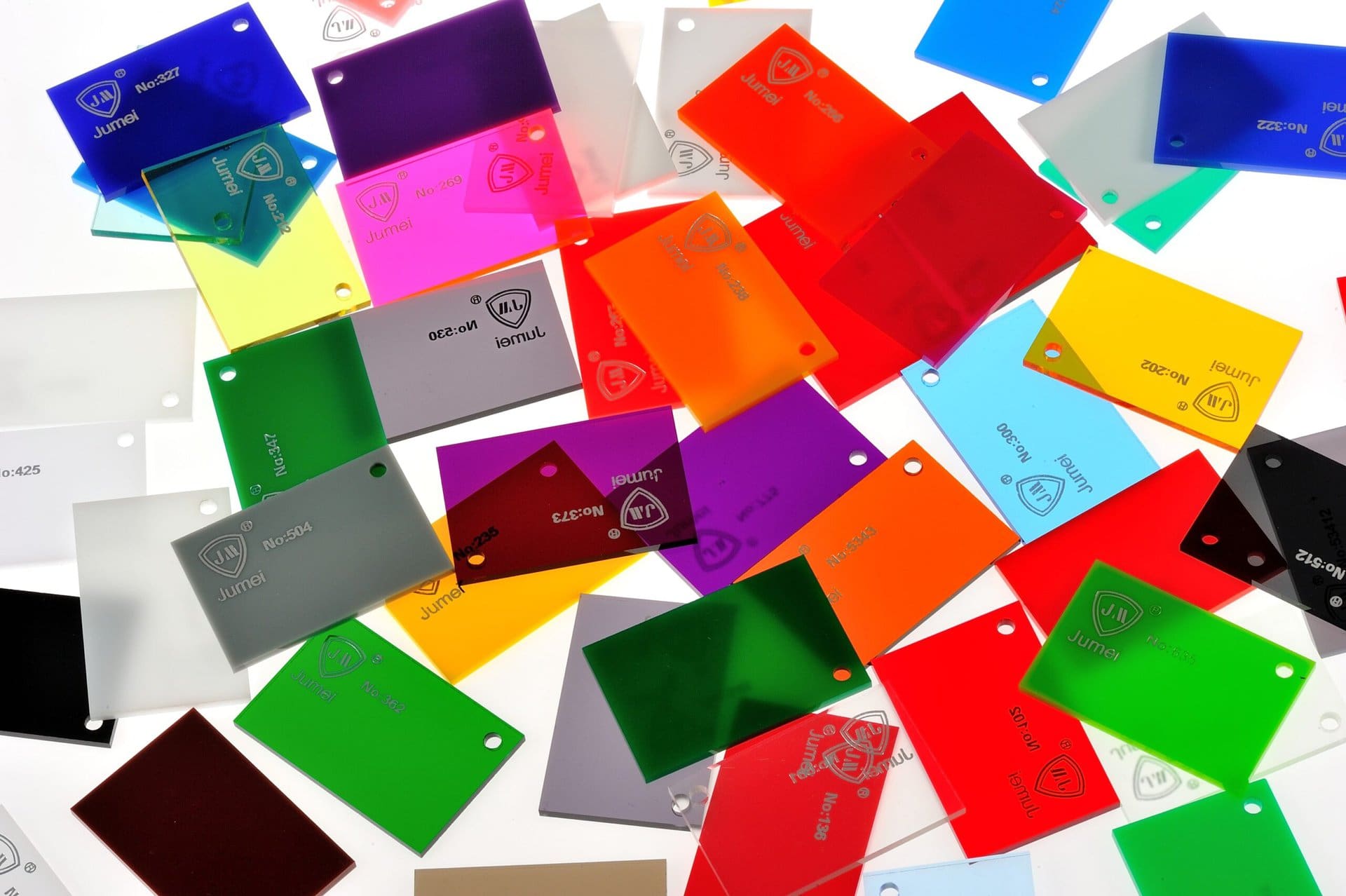
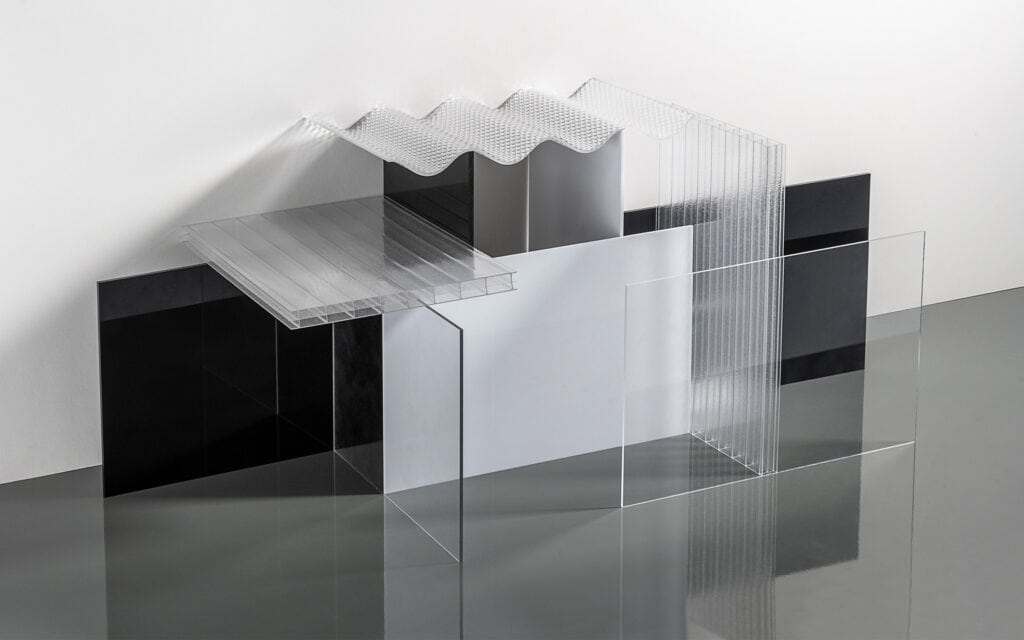
a. Clear Acrylic: Superb optical clarity (up to 92% – 93% light transmission). Ideal for glazing, displays, and barriers.
b. Colored Acrylic: Available in opaque, translucent, and fluorescent tones. Used in branding, décor, and retail.
c. UV-Resistant Acrylic: Engineered for outdoor use. Resists yellowing and degradation for 5 – 10 years.
d. Frosted (Matte) Acrylic: Diffuses light while maintaining privacy. Perfect for partitions, lighting, and signage.
e. Mirror Acrylic: Lightweight alternative to glass mirrors; used in retail, exhibitions, and safety zones.
f. Textured/Patterned Acrylic: Adds visual depth. Preferred in interior design, signage, and architectural panels.
g. Anti-Static Acrylic: Prevents eventual dust/dirt buildup. Used in electronics, cleanrooms, and packaging.
Why Sheet Variation is Important?
- Design Flexibility: Architects and designers rely on color, texture, and finish options to match brand aesthetics and spatial goals.
- Functional Precision: UV-resistant sheets are essential for outdoor signage. Meanwhile, anti-static variants serve electronics and cleanroom environments.
- Cost Optimization: Choosing the right type avoids over-specification. Frosted acrylic may cost 15% – 20% less than etched glass for similar diffusion.
- Customization and Branding: Colored and patterned sheets enable brand-specific installations, seasonal retail displays, and thematic signage.
03. Customization Capabilities
One-size-fits-all acrylic solutions rarely meet the nuanced demands of the end users. A top supplier distinguishes itself through robust customization in sizes, shapes, colors, finishes, and fabrication.
Custom Sizes (1/8), Shapes, Colors, Finishes
- Custom Sheet Sizes: Micro-panels (100×100 mm) to oversized formats (2×3 meters). It minimizes offcuts to maximize the yield.
- Precision Shapes: CNC-cut circles, polygons, lettering, and complex contours for retail displays, architectural panels, and branded signage.
- Color Matching: Pantone-matched acrylic sheets for brand consistency, seasonal campaigns, or thematic installations.
- Special Finishes: Matte, gloss, frosted, textured, anti-glare, or mirror finishes tailored to specific lighting conditions and aesthetic goals.
Fabrication Expertise: Cutting, Engraving, Molding
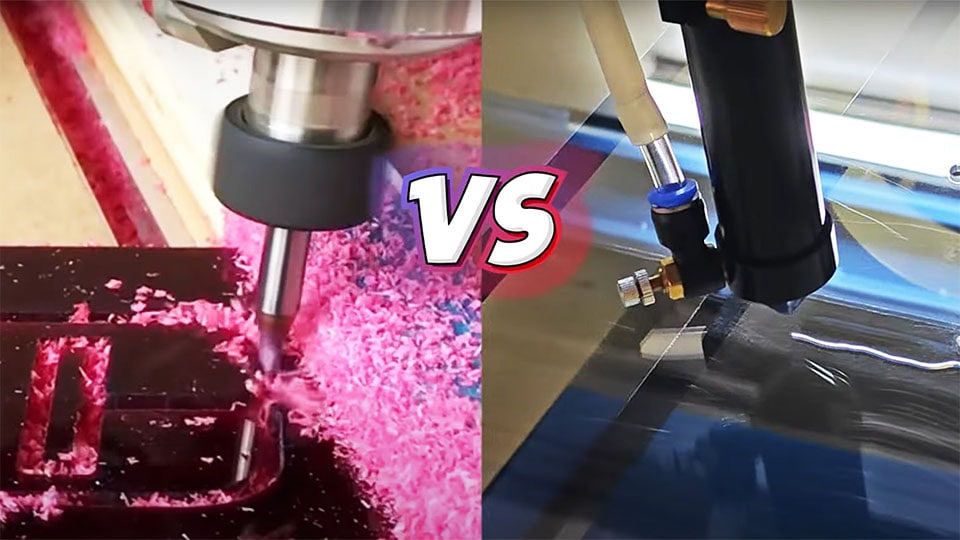
i. Laser Cutting: Delivers clean edges and intricate shapes; ideal for signage, logos, and retail fixtures.
ii. CNC Routing: Enables high-volume precision cutting for industrial panels and architectural designs.
iii. Engraving: Adds branding, instructions, or decorative elements across awards, panels, and displays.
iv. Thermoforming and Molding: Shapes acrylic into curves, domes, or enclosures in lighting and kiosks.
04. Timely Delivery and Reliable Shipping
In fast-paced industries, timely delivery marks a competitive advantage. A top supplier understands that missed deadlines can lead to stalled installations, lost revenue, and strained client relationships.
Why Timely Delivery is Mandatory?
a. Project Continuity: On-time delivery ensures fabrication, installation, and launch phases proceed without costly delays.
b. Cost Control: Delays can trigger expedited shipping fees, overtime labor, and missed promotional windows, especially in retail and event-driven sectors.
c. Client Trust: Consistent delivery can widely build credibility with procurement teams, contractors, and brand managers.
Reliable Shipping Logistics
i. Fast Turnaround Times: Standard sheets are shipped within 24–72 hours. Custom orders within 5 – 10 days.
ii. Global Fulfillment: Multi-location warehouses and export capabilities for international buyers.
iii. Real-Time Tracking: GPS-enabled tracking and automated updates for transparency and planning.
iv. Cost-Effective Options: Tiered shipping (standard, express, bulk freight) to match budget and urgency.
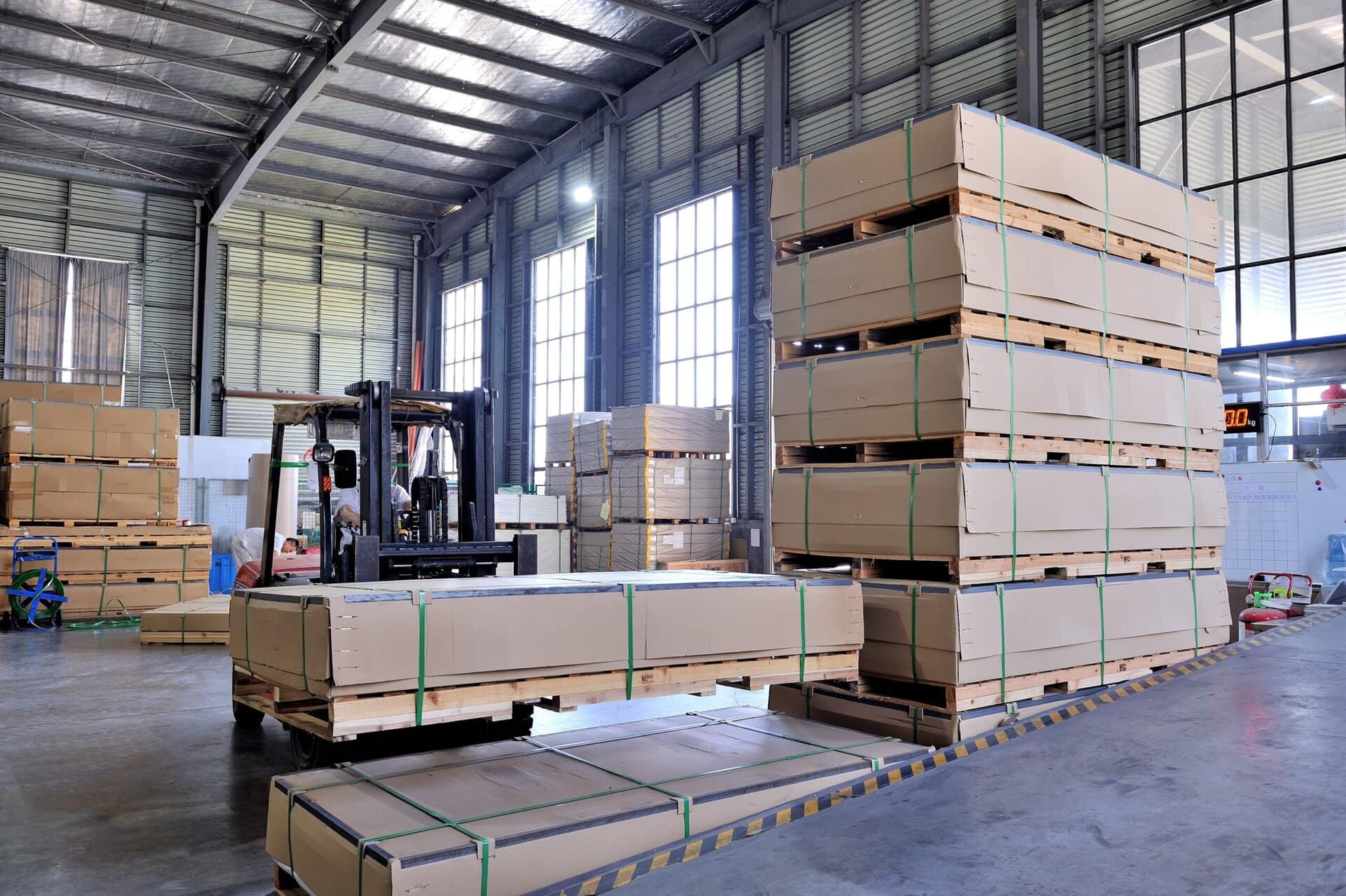
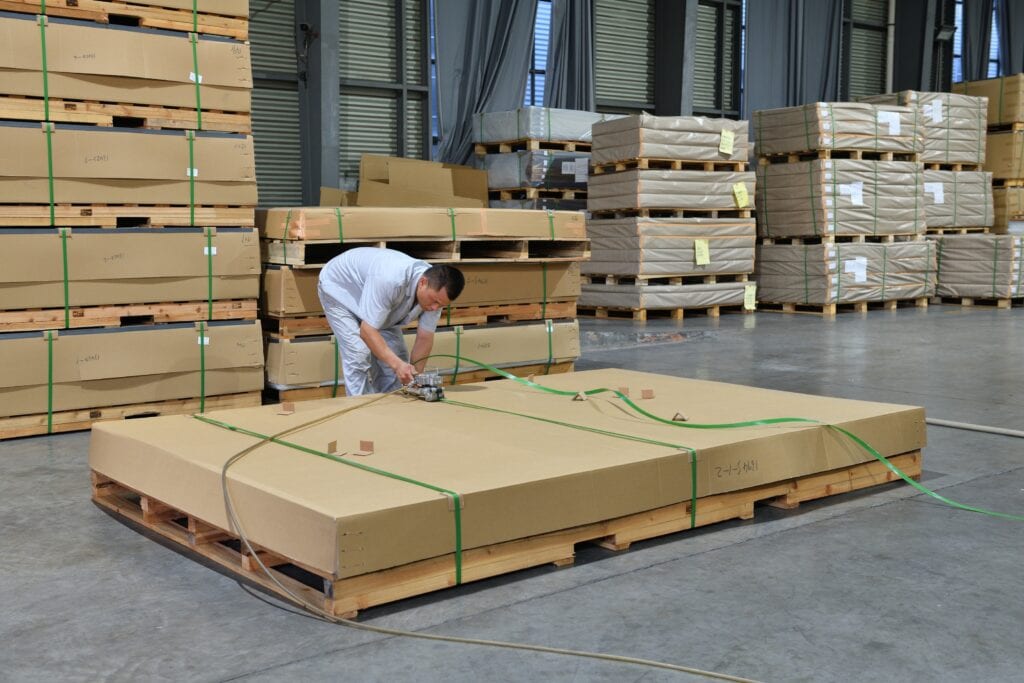
v. Damage-Free Packaging: Protective film, edge guards, and reinforced crates to prevent transit damage.
06. Competitive Pricing and Transparent Costing
Pricing in procurement is about numbers to induce value, predictability, and trust. A top supplier strikes the right balance between affordability and quality to offer competitive rates without cutting corners.
Competitive Pricing Without Compromising Quality
- Economies of Scale: Bulk sourcing and high-volume production reduce per-unit costs.
- Efficient Manufacturing: Advanced extrusion or casting processes minimize waste and optimize yield.
- Smart Logistics: Regional warehousing and consolidated shipping lower freight costs.

Transparent Costing: No Hidden Fees + No Surprises
a. Itemized Quotations: Clear breakdown of sheet cost, customization, packaging, and shipping.
b. Upfront Customization Fees: Engraving, cutting, or molding charges disclosed before order confirmation.
c. Tax and Duty Clarity: For cross-border buyers, import duties and VAT are clearly stated.
d. No Hidden Surcharges: No surprise fees for handling, rush orders, or minimum quantity gaps.
07. Customer Support and After-Sales Service
A top supplier stands out by delivering exceptional customer support and after-sales service. It ensures buyers receive the right product along with the guidance, troubleshooting, and technical expertise.
Pre-Purchase Support
i. Consultative Sales: Helping buyers choose between cast vs extruded acrylic, thickness grades, finishes, and UV protection based on use case.
ii. Application Matching: Recommending sheet types for specific environments (frosted acrylic for privacy partitions, mirror acrylic for retail décor).
iii. Technical Datasheets: Providing ASTM, ISO, and RoHS compliance documentation to support engineering, safety, and procurement audits.
After-Sales Services
a. Installation Advice: Guidelines on cutting, bonding, and mounting to avoid stress cracks or warping.
b. Care and Maintenance Tips: Instructions for cleaning, polishing, and UV protection to extend sheet lifespan.
c. Issue Resolution: Responsive handling of defects, delivery damage, and/or specification mismatches.
d. Warranty and Replacement: Clear policies for material failure, discoloration, or dimensional inconsistencies.
08. Sustainability Practices
Global industries shift toward greener operations. No wonder sustainability has become a defining benchmark for supplier credibility. And a top acrylic sheet supplier demonstrates a clear commitment.
Eco-Friendly (Recycled) Acrylic Options
- Recycled Acrylic Sheets: Post-industrial or post-consumer waste, these sheets reduce landfill impact. Some offer up to 100% recycled content.
- Bio-Based Acrylic Alternatives: Emerging technologies now allow partial substitution of petroleum-based monomers with plant-derived sources, reducing fossil dependency.
- Take-Back Programs: Some suppliers offer end-of-life recycling services. It allows customers to return the used sheets for reprocessing.
Responsible Manufacturing Processes
a. Closed-Loop Water Systems: Reduce water waste in cooling and polishing processes.
b. Low-VOC Emissions: Minimizes air pollution during sheet extrusion and thermoforming.
c. Energy-Efficient Equipment: Cuts electricity usage by 15–25% in casting and cutting operations.
d. Waste Segregation and Reuse: Recycles offcuts and scrap into new sheet batches.
Certifications Regarding Eco-Friendly Credentials
I. ISO 14001: Environmental management certification ensuring systematic reduction of ecological impact.
ii. RoHS Compliance: Restriction of hazardous substances, especially relevant for electronics and signage applications.
iii. REACH Registration: Ensures chemical safety and transparency across the supply chain.
iv. GreenGuard or LEED Contributions: Acrylic sheets that contribute to building certifications through low emissions and sustainable sourcing.
Why Choose the Right Acrylic Sheet Supplier?
Selecting the right acrylic sheet supplier is more like a strategic investment. Otherwise, your project’s success, quality assurance, cost control, and creative flexibility can be hampered.
01. Ensures Project Success
A dependable supplier delivers high-quality materials on time. You can avoid costly delays, rework, and client dissatisfaction. Inferior sheets are prone to warping, cracking, or inconsistent thickness. They can derail fabrication schedules and compromise structural integrity.
02. Enhances the Quality of Work
Premium acrylic or plexiglass sheets offer superior optical clarity, impact resistance, and UV stability. They create a professional and polished finish, unlike plastics like polycarbonate. You can glue multiple sheets with solvent adhesives for stock shopping.
03. Cost-Effectiveness
The right supplier optimizes costs through durable materials that reduce replacement frequency. You can enjoy bulk discounts for high-volume orders (10% – 25% savings). Precise cuts can minimize offcuts and fabrication waste.
04. Better Customization and Versatility
- Sizes/Shapes: CNC-cut panels, logos, and contours for signage, architecture, and retail.
- Colors and Finishes: Pantone-matched tones, frosted, matte, gloss, and mirror options.
- Fabrication: Laser cutting, engraving, and thermoforming for branded or curved elements.
How to Evaluate the Quality of a Top Acrylic Sheet Supplier?
Evaluating a top acrylic sheet supplier starts with assessing quality, consistency, and compliance. Look for suppliers with a wide range of sheet types. Reliable delivery, transparent pricing, and responsive customer support are essential.
01. Requesting Samples
Request product samples before committing to bulk orders or custom fabrication. Samples offer a tangible preview of the supplier’s material quality, finish consistency, and production standards.
Why are Samples Necessary?
a. Material Quality: Check for brittleness, surface defects, and edge integrity.
b. Thickness Consistency: Use calipers to verify uniformity across the sheet (±0.2% for cast acrylic).
c. Finish and Texture: Assess gloss, matte, frosted, or patterned surfaces under varied lighting.
d. Optical Clarity: For clear sheets, test light transmission and haze levels (target: >92%).
e. Color Accuracy: Match against Pantone or brand standards for retail and signage applications.
Can Samples Validate Supplier Quality?
i. Benchmarking: Compare samples from multiple suppliers to assess the overall clarity, rigidity, and finish uniformity.
b. Risk Mitigation: Identify potential issues like warping, yellowing, or inconsistent thickness before full-scale production.
c. Customization Verification: Confirm color matching, engraving depth, or pre-drilled holes for project-specific needs.
d. Fabrication Testing: Run small-scale cutting, bonding, or thermoforming trials to ensure compatibility with your workflow.
What to Ask?
- Can you provide samples of both cast and extruded acrylic?
- Are samples available in multiple finishes (gloss, matte, frosted)?
- Can you include technical datasheets with the samples?
- Will the sample reflect the exact specs of bulk/custom orders?
02. Customer Reviews and Case Studies
Technical specs and pricing only tell part of the story. To truly assess reliability, responsiveness, and long-term value, buyers must examine customer reviews, testimonials, and real-world case studies.
Why Go through Reviews and Case Studies?
- Performance Validation: Reviews reveal how well suppliers deliver on promises – timely shipping, consistent quality, and customization accuracy.
- Service Assessment: Testimonials highlight responsiveness, technical support, and after-sales service toward a happy outcome.
- Risk Mitigation: A variety of case studies expose potential red flags like recurring defects, poor packaging, or communication gaps.
- Industry Fit: Real-world examples are an easy way to know how suppliers adapt to signage, retail, architectural, or industrial cases.

What to Look for in Reviews?
a. Star Ratings: General satisfaction, but dig deeper into written feedback.
b. Delivery Feedback: Timeliness, packaging quality, and damage rates.
c. Product Quality Notes: Clarity, thickness consistency, finish accuracy, and durability.
d. Service Experience: Responsiveness, issue resolution, and technical guidance.
e. Repeat Business: Indicates trust and long-term supplier relationships.
What to Ask?
- Can you share recent client testimonials or case studies?
- Do you have references from similar industries or project types?
- How do you handle negative feedback or delivery issues?
- Are your reviews verified on third-party platforms?
03. Certifications and Industry Standards
Sourcing acrylic sheets from certified suppliers is essential for certain sectors. Certifications and adherence to industry standards signal that a supplier’s products meet rigorous benchmarks.
Key Certifications
i. ISO 9001: Quality management systems; consistent production and customer satisfaction.
ii. ISO 14001: Environmental management; sustainable manufacturing and waste reduction.
iii. ASTM D4802 / D1003: Acrylic sheet specifications; clarity, thickness, and mechanical properties.
iv. RoHS Compliance: Restriction of hazardous substances; safe for electronics and public spaces.
v. REACH Registration: Chemical safety and transparency across the supply chain.
vi. UL 94 / EN 13501: Fire resistance ratings for acrylic used in public or architectural settings.
Why Certifications Matter?
- Quality Assurance: Certified suppliers follow standardized production protocols, reducing variability and defects.
- Regulatory Compliance: For public installations, architectural builds, and export projects, certified materials help meet fire safety, chemical safety, and environmental regulations.
- Risk Mitigation: Certifications reduce liability in case of product failure, discoloration, or structural compromise.
- Procurement Confidence: Buyers can trust that certified suppliers meet international benchmarks. It’s mandatory for cross-border sourcing and large-scale rollouts.
How to Verify Supplier Certifications?
i. Request Documentation: Ask for ISO, ASTM, RoHS, or REACH certificates and recent audit reports.
ii. Check Validity: Confirm certification numbers and expiration dates via issuing bodies (ISO.org, UL.com).
iii. Review Technical Datasheets: Ensure sheets meet dimensional tolerances, clarity benchmarks, and mechanical strength standards.
iv. Ask About Testing Protocols: Top suppliers conduct in-house or third-party testing for haze, tensile strength, and UV resistance.
What to Ask?
- Are your acrylic sheets certified under ISO 9001 or ASTM D4802?
- Can you provide RoHS or REACH documentation for chemical safety?
- Do you offer fire-rated acrylic for public or architectural use?
- How often are your products tested for compliance and performance?
04. Return and Warranty Policies
Even the most meticulous planning can encounter unexpected issues. That’s why evaluating a supplier’s return and warranty policies reflects the supplier’s confidence and their commitment to client satisfaction.
Why Return + Warranty Policies Matter?
- Risk Mitigation: Defective or damaged sheets can halt fabrication, delay installations, and inflate costs. A responsive return policy helps recover quickly.
- Quality Assurance: Strong warranties signal that the supplier stands behind their materials, especially for UV-resistant, fire-rated, or custom acrylic.
- Procurement Confidence: Clear terms reduce ambiguity, enabling buyers to plan budgets and timelines with greater certainty.

What to Look for?
a. Return Window: Typical range of 7 – 30 days post-delivery; longer windows reflect flexibility.
b. Defect Coverage: Includes cracks, warping, discoloration, or spec mismatches.
c. Transit Damage Protocol: Supplier may offer replacements or refunds if damage is reported within 48 hours.
d. Warranty Duration: Often 1 – 3 years for UV-resistant or specialty sheets.
e. Custom Order Clauses: Clarifies whether customized sheets are eligible for partial refunds or rework.
f. Repair/Exchange Options: Indicates willingness to resolve issues without full returns.
What to Ask?
- What is your return window for standard and custom acrylic sheets?
- Do you cover transit damage, and how should it be reported?
- What defects are covered under your warranty?
- Are partial returns or exchanges allowed for bulk orders?
- Do you offer repair or rework services for minor defects?
Conclusion
Selecting the right acrylic sheet supplier lays the foundation for project success. The best ones stand out through constant quality, diverse options, responsive service, and reliable delivery. They have materials and solutions tailored to your design, timeline, and performance needs.
Set JUMEI as Your Top Acrylic Supplier
Matching so many specifications against complex industry standards doesn’t have to get messed up. Jumei Acrylic is ready to meet your satisfaction with optimal quality, absolute precision, and steadfast services. Contact us to know more about our comprehensive acrylic production.
]]>Bulk acrylic sourcing is essential for large-scale projects. Wholesale purchases unlock significant cost savings, ensure material consistency across batches, and open the door to customization options.
However, identifying the correct product specifications is key to aligning with your project goals. This guide helps you navigate the top acrylic wholesale options available with key selection criteria.
Market Structure and Distribution Channels
The acrylic sheet market operates through a multi-tiered distribution system to meet diverse needs. Understanding the structure is a must for anyone seeking cost-effective, high-quality bulk sourcing.
a. Primary Distribution Levels
- Major producers like Röhm (Plexiglas), Mitsubishi Chemical (Lucite), and Plaskolite often sell directly to large-volume buyers or through exclusive partnerships.
- Direct sales typically involve custom formulations, bulk pricing, and long-term supply contracts, ideal for OEMs and large-scale fabricators.
- Example: Plaskolite’s partnership with Home Depot and Lowe’s enables direct-to-retail distribution, while its B2B channel supports industrial clients with unique requirements.
b. Master Distributors + Regional Wholesalers
- These intermediaries purchase in massive quantities (often 100K+ lbs/month) and redistribute to smaller wholesalers or end-users.
- They offer regional inventory access, logistics support, and volume-based pricing tiers.
- Example: Laird Plastics and Sabic Polymershapes operate as master distributors across North America, with dozens of regional branches.
c. Specialty Distributors by Industry Sector
- They remain focused on niche markets like signage, aquarium fabrication, or medical with adhesives.
- You can go for industry-specific grades (UV-resistant, anti-static, impact-modified) and technical consulting.
- Example: Some carry specialized solutions for customers shop-grade displays and architectural glazing.
d. Online Wholesale Platforms + Marketplaces
- Platforms like Alibaba, IndiaMART, and Global Sources let buyers message suppliers to decide on Perspex from China, Taiwan, and India.
- The versatility of these channels offers competitive pricing, MOQ flexibility, and global shipping. But the matter requires careful vetting for quality assurance.
- Example: On Alibaba, cast acrylic sheets range from $1.20 to $2.50 per kg depending on thickness and finish, with minimum orders starting at 500 kg.
Wholesale vs Retail Distinctions
01. Volume Threshold Requirements
Wholesale orders typically start at 500+ lbs or $1,000+, though some online platforms allow lower MOQs for trial batches. Retail channels cater to DIYers and small businesses, offering plexiglass sheets in cut-to-size formats or packs under 50 lbs.
02. Pricing Tier Structures + Volume Discounts
Tiered pricing models can notably reward your bulk purchases. It includes –
- Tier 1: 500 – 1000 lbs → ~5% – 10% discount.
- Tier 2: 1000 – 5000 lbs → ~15% – 20% discount.
- Tier 3: 5000+ lbs → Mostly Custom pricing.
Distributors may also count rebates, contract pricing, or seasonal promotions for a buy. Partner with such kinds a team to find or fit your perfect items.
03. Payment Terms + Credit Requirements
Wholesale buyers often access net 30/60/90 terms, subject to credit checks. International suppliers may require LCs (Letters of Credit) or TT (Telegraphic Transfer) for large orders. Some platforms offer escrow services to protect buyers from fraud.
04. Technical Support and Value-Added Services
Services include CNC cutting, laser engraving, custom packaging, and material certification (ISO, ASTM). Distributors like Piedmont Plastics and Regal Plastics provide on-site consultations, CAD file integration, and project-specific recommendations.
Wholesale Acrylic Sheet Market
- Demand spikes in Q2–Q3 due to construction and retail display cycles. Smart buyers plan bulk purchases in Q1 to avoid lead time delays and price surges.
- Prices vary by region due to freight costs, local taxes, and distribution density. The global acrylic market is highly concentrated, with a few producers controlling raw MMA supply.
- Disruptions (factory shutdowns in China or Germany) can ripple through the supply chain, affecting availability and pricing.
- Tariffs on acrylic imports (US-China trade tensions) have led to price volatility. Buyers increasingly source from Vietnam, India, and Mexico to mitigate risks.
- As of Q3 2025, global demand for impact-modified acrylic sheets has grown 18% YoY, driven by retail and public infrastructure upgrades.

Acrylic Wholesale Category #01: Sheet
a. Cast Acrylic
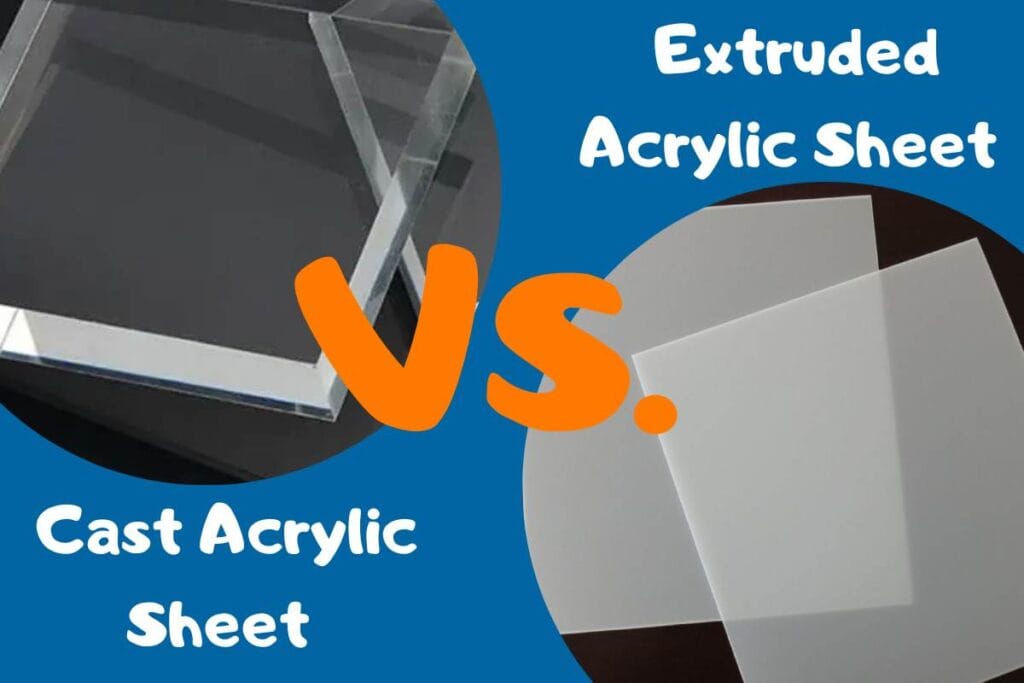
Produced via a batch cell casting process. Ideal for displays, aquariums, lenses, and high-end signage. Thickness ranges from 1.5 mm to 50 mm, with tolerances tighter than ±5%.
Example: Röhm’s Plexiglas® GS offers light transmission up to 92%. Read or deliver questions for information on how they outperform traditional glass in clarity and weight.
b. Extruded Acrylic
Manufactured through continuous extrusion, offering cost efficiency, uniform thickness, and easy thermoforming. Commonly used in POP displays, sanitary ware, and interior partitions.
Example: Plaskolite’s OPTIX® extruded sheets are widely used in retail and construction, with prices 20–30% lower than cast alternatives.
c. Specialty Sheets
Includes frosted, mirror-finish, fluorescent, and impact-resistant variants. Designed for aesthetic applications, branding, or high-traffic environments. Available in custom colors, UV-stable formulations, and anti-glare finishes.
d. Custom Options (Like 1/8)
Wholesale suppliers offer cut-to-size services, oversized panels (up to 2000 mm × 3000 mm). Custom thicknesses from 0.5 mm to 100 mm. Ideal for bespoke installations, machinery guards, and architectural glazing.
Acrylic Wholesale Category #02: Rod, Tube, and Profile Products
01. Standard Sizes and Custom Extrusions
Acrylic rods and tubes are available in diameters from 3 mm to 300 mm, with wall thicknesses tailored to pressure or load requirements. Used in light fixtures, fluid transport, and decorative elements.
02. Specialty Profiles for Specific Uses
Includes U-channels, L-profiles, edge trims, and hinged extrusions for cabinetry, signage frames, and display systems. Custom profiles can be extruded to match CAD specifications or industry standards.
03. Fabricated and Semi-Finished Goods
Wholesale distributors often supply pre-drilled panels, laser-cut shapes, and assembled units for OEMs. Acrylic manifolds for medical devices or LED diffusers for lighting systems.
04. Value-Added Processing Services
Services include CNC routing, polishing, annealing, UV bonding, and screen printing. These services reduce downstream labor and ensure spec compliance for regulated industries.
Acrylic Wholesale Category #03: Quality Grades and Specifications
a. Optical Grade for Precision Applications
Used in lenses, instrument panels, and scientific equipment. Must meet ISO 7823-1 or ASTM D4802 standards for clarity, refractive index, and surface uniformity.
Example: Acrylic used in flight simulators or laser enclosures requires optical-grade cast sheets with <1% distortion.
b. General Purpose Grades for Standard Uses
Suitable for signage, furniture, POP displays, and protective barriers. Balances cost, formability, and moderate impact resistance. Often available in bulk packs with standard thicknesses (1/16 to 1/4).
c. Weather-Resistant Formulations
Designed for outdoor use, with UV stabilizers, anti-yellowing agents, and enhanced tensile strength.
Example: Acrylite® Alltop sheets used in greenhouses offer 10+ years of UV resistance and light transmission >90%.
d. Specialty Grades
Flame-Retardant: Meets UL 94 V-0 or FMVSS 302 standards for automotive and aerospace.
Anti-Static: Used in cleanrooms, electronics packaging, and lab enclosures.
UV-Filtered: Blocks up to 99% of UV rays, ideal for art preservation, medical shielding, and photographic equipment.

Pricing Mechanisms and Cost Factors
Wholesale acrylic pricing is a complex interplay of raw materials, production efficiency, distribution logistics, and buyer volume. For large-scale projects, having a good command of the cost drivers can secure competitive rates.
01. Base Pricing Components
MMA is the primary monomer used in acrylic sheet production. Its price volatility directly impacts acrylic pricing. As of Q3 2025, global MMA prices range between $1650 – $1850/MT, influenced by –
- Crude oil fluctuations.
- Petrochemical feedstock availability.
- Environmental regulations.
02. Manufacturing and Processing Costs
Cast acrylic involves batch processing, higher labor input, and longer curing times. It results in 20% – 30% higher production costs than extruded sheets. Additives (UV stabilizers, impact modifiers) and specialty finishes (frosted, mirrored) further increase unit costs.
03. Transportation and Logistics Expenses
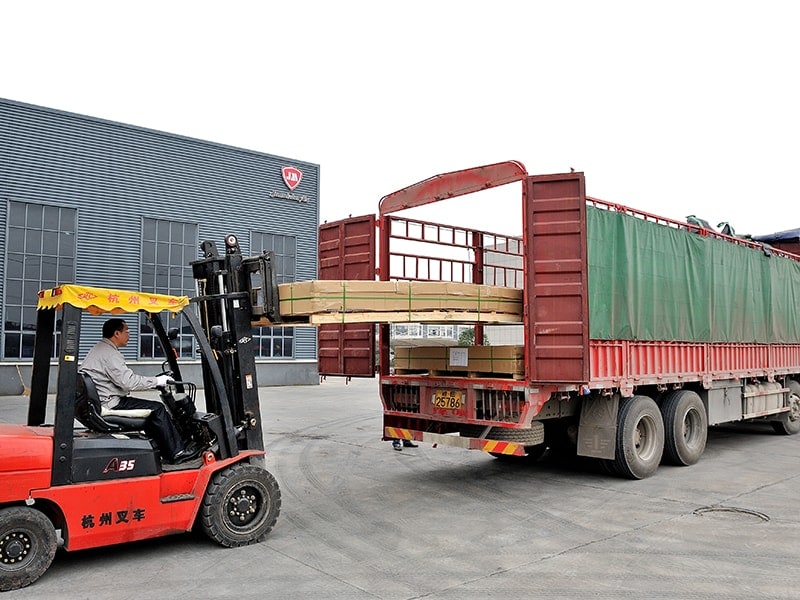
Freight costs vary by region, mode (sea vs. land), and fuel prices. Bulk orders often require containerized shipping. LCL (Less-than-Container Load) incurs higher per-unit costs than FCL (Full Container Load).
04. Distributor Margins and Markup Structures
Master distributors mainly apply a 10% – 25% markup over landed cost. It depends on –
- Inventory holding duration.
- Value-added services.
- Regional demand elasticity.
Specialty distributors may charge higher margins (up to 35%) for niche grades or technical support.
05. Entry-Level Wholesale Thresholds
Minimum order quantities (MOQs) usually start at –
- 500 lbs or $1000 USD for domestic suppliers.
- 1000 kg for international platforms like Alibaba.
These thresholds unlock base wholesale pricing but may exclude customization or credit terms.
06. Mid-Volume Discount Brackets
Orders between 1000 – 5000 lbs often qualify for 10% – 15% discounts. Distributors may offer bundled pricing for mixed SKUs (transparent + colored plexiglass sheets) to encourage larger purchases.
07. High-Volume Contract Pricing
Buyers exceeding 10,000 lbs/month or committing to quarterly volumes can negotiate –
- Fixed pricing contracts.
- Rebate programs.
- Priority inventory access.
08. Custom Pricing for Major Accounts
Large buyers (OEMs, infrastructure firms) receive tailored quotes based on –
- Forecasted demand.
- Custom specs (oversized panels, flame-retardant grades).
- Payment reliability.
Such accounts may bypass distributors and work directly with manufacturers for factory-direct pricing.

09. Additional Cost Considerations
- Freight and Shipping Charges: Domestic freight adds further costs per kg, depending on volume and urgency. International buyers must factor in port handling fees, customs duties, and insurance.
- Custom Cutting and Fabrication Fees: CNC cutting, polishing, and packaging services add $0.50–$1.50/sq ft for basic cuts and $2.00–$4.00/sq ft for precision machining or engraving.
- Rush Order Premiums: Expedited production or shipping can incur 10–25% surcharges, especially during peak seasons (Q2–Q3).
- Payment Terms and Early Payment Discounts: Standard terms range from 30/60, with credit checks for new buyers. Early payment incentives can get you 2% discount for payment within 10 days.
Key Considerations When Choosing Bulk Acrylic Sheets
a. Thickness
It’s one of the most critical factors influencing both performance and presentation. Thickness directly affects the strength, flexibility, weight, and visual impact.
- Strength: Thicker acrylics offer greater impact resistance and structural integrity. For example, a 3/8” sheet can withstand moderate mechanical stress in architectural panels.
- Flexibility: Thinner sheets (like 1/8”) are more flexible, easier to cut, and ideal for curved or layered designs. They may warp under pressure or temperature changes without support.
- Aesthetics: Thinner sheets maintain maximum optical clarity in signage, lightboxes, and display cases. Thicker sheets may slightly distort light transmission against a premium look.
- Installation: Thicker sheets are heavier and may require reinforced mounting or framing. This affects shipping costs, handling, and installation complexity, especially in bulk orders.

b. Finish and Texture
The two factors go way beyond simple aesthetic choices. You’re dealing with functionality, user experience, and brand perception. The proper treatment can elevate a design to an exceptional level.
- Visual Appeal: A glossy finish amplifies color vibrancy in high-visibility signage and retail displays. Matte finishes offer a professional look in corporate environments or art installations.
- Light Control: Frosted acrylics scatter light while obscuring visibility. It makes them a top choice for privacy screens, bathroom dividers, and office cubicles.
- Tactile Experience: Texture affects how users interact with the material. Matte and frosted finishes are less prone to fingerprints and smudges, making them ideal for high-touch surfaces.
- Light Diffusion: Transparent and frosted finishes behave differently in LED signage or lightboxes. Transparent sheets allow complete light transmission, while frosted sheets diffuse light evenly.
Acrylic Sheet Finishes
Acrylic sheets are available in a range of finishes. Each offers distinct visual effects, light behavior, and tactile qualities.
- Glossy (high shine + mirror-like): Reflective, vibrant, easy to clean. Example: retail signage, display cases, furniture.
- Matte (soft + non-reflective): Reduced glare for subtle elegance. Example: wall panels, art backdrops, branding boards.
- Frosted (translucent + diffused): Light-filtering and privacy-enhancing. Example: office partitions, décor, bathroom panels.
- Transparent (crystal-clear + glass-like): Maximum transmitting clarity. Example: windows, aquariums, LED lightboxes.
c. Color Options
Don’t underestimate color as a visual detail. It’s a choice to shape experience, identity, and performance. You must understand the broad spectrum of available options and their influence.
- Visual Identity: Color is a powerful branding tool. Retailers often use opaque acrylic sheets in signature brand colors to reinforce identity across displays, kiosks, and fixtures.
- Mood/Atmosphere: Color influences emotional response. Cool tones like blue or grey evoke calm and professionalism, while warm tones like red or orange energize and attract attention.
- Privacy Control: Tinted and translucent sheets strike a balance between openness and privacy. Bronze-tinted acrylic panels are popular in office partitions and restaurant dividers.
- Visual Contrast: White text on a glossy black acrylic background offers high readability and visual impact. Similarly, backlit translucent red or green sheets are commonly used in emergency signs.
Acrylic Colors
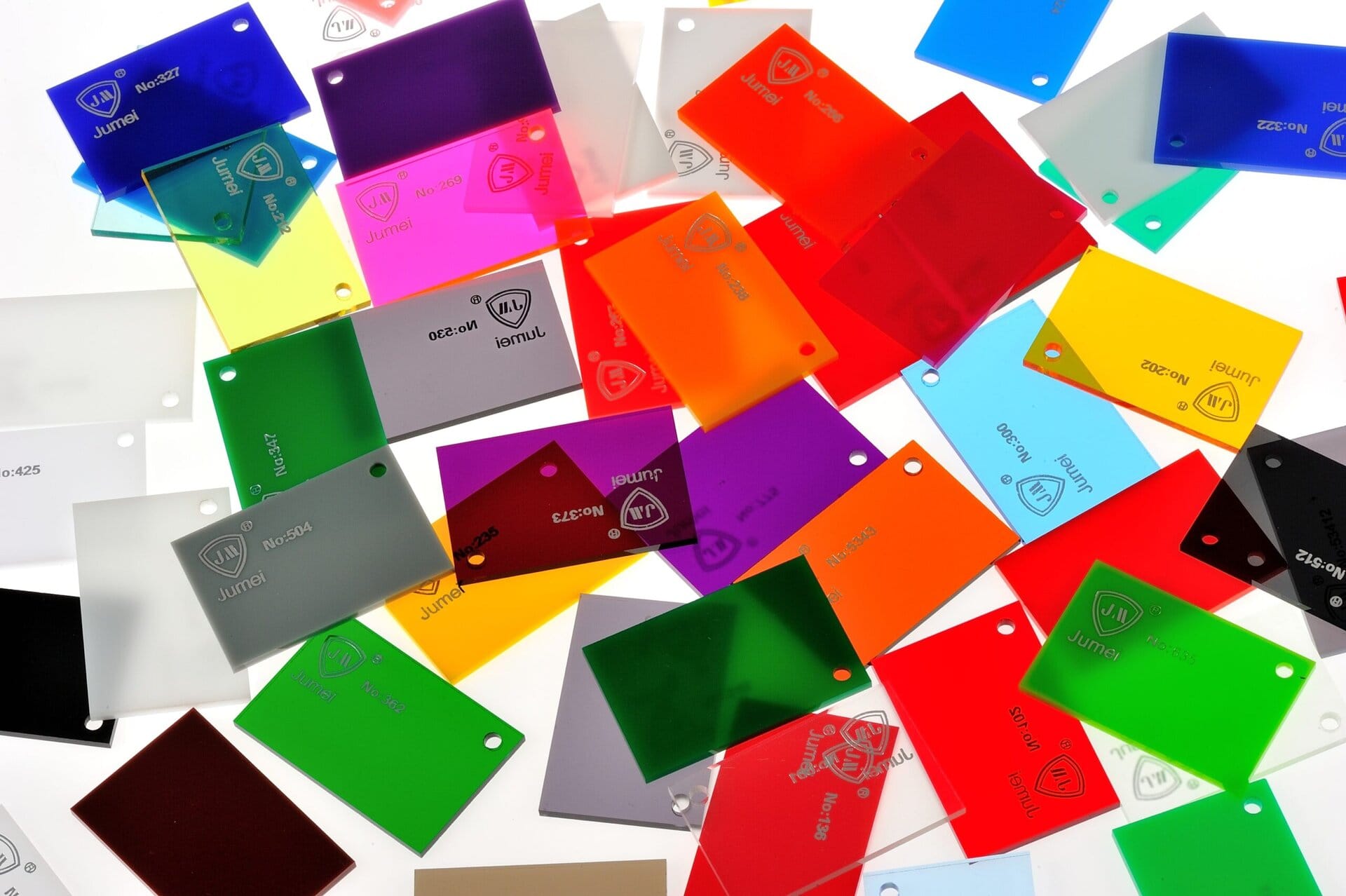
Bulk acrylics are available in a wide range of finishes and hues. Each one suits distinctive applications.
- Clear (crystal-clear + glass-like transparency): Display cases, aquariums, signage, lightboxes.
- Tinted (lightly colored but still transparent [grey, bronze, blue]): Sunglasses, privacy panels, modern interiors.
- Opaque (solid color with no light transmission): Wall panels, branding boards, furniture facades.
- Translucent (light transmission with obscure visibility ([frosted white, neon colors]): LED signage, ambient lighting, partitions.
- Custom Colors (tailored to brand palettes or design themes): Retail environments, art installations, product design.
d. UV Resistance
Some acrylic products are meant for outdoor use, sunlit environments, or long-term installations. That’s where UV resistance becomes a non-negotiable feature to retain aesthetics and performance.
- Yellowing + Discoloration: UV rays break down chemical bonds, causing the sheet to turn yellow or cloudy.
- Loss of Mechanical Strength: Exposure leads to brittleness, cracking, and reduced impact resistance.
- Surface Degradation: Chalky textures and micro-fractures emerge, especially in humid or high-heat zones.
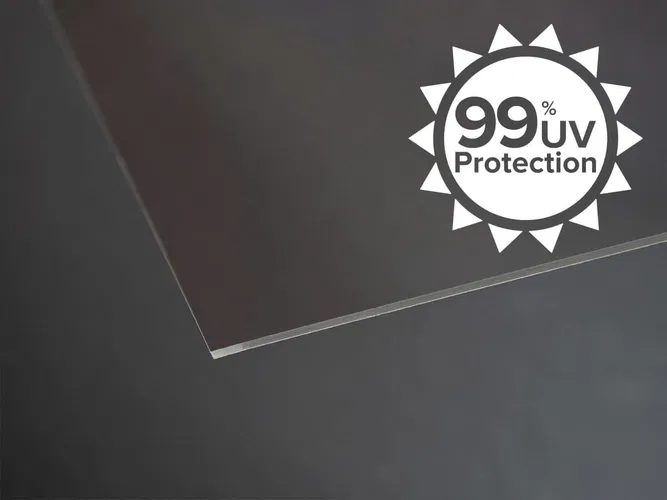
Standard UV-resistant acrylic can block up to 98% – 99% of UV rays. Thus, it maintains clarity and strength for years under direct sunlight for hours. It makes UV-resistant acrylic ideal for –
- Outdoor signage and billboards.
- Rooftop skylights and domes.
- Greenhouse panels.
- Solar reflectors and light diffusers.
- Protective covers for electronics or artwork.
e. Durability (Impact Resistance)
It has long been a core performance metric when selecting acrylics for high-traffic, high-impact, or long-term installations. You can opt for acrylics with enhanced impact resistance as well.
- Safety: Shatter-resistant acrylic can still crack under pressure. Impact-resistant sheets reduce the chance of sharp fragments or sudden failure.
- Longevity: Durable sheets withstand repeated use, reducing the need for frequent replacements and lowering lifecycle costs.
- Maintenance: Tougher acrylic resists scratches and surface wear, maintaining a clean, professional appearance over time.
- Structural Integrity: In architectural or industrial settings, durable acrylic maintains load-bearing capacity and visual clarity even under stress.
Durability Across Different Acrylics
- Standard Acrylic (Cast/Extruded): Good clarity, moderate impact resistance, cost-effective. Indoor displays, low-traffic partitions, decorative panels.
- UV-Resistant Acrylic: Enhanced weatherability, resists yellowing and brittleness from sunlight. Outdoor signage, skylights, greenhouses.
- Impact-Modified Acrylic: Engineered for high impact resistance, often comparable to polycarbonate. Stadium shields, safety barriers, transportation hubs.
Cast acrylics are generally more durable than extruded ones. Impact-modified acrylic incorporates additives that increase toughness without compromising clarity.
Conclusion
The wholesale acrylic market lets you choose from a diverse range of solutions based on project scale and specification. There are different product categories and multiple concerning factors to unlock a well-valued performance.
Get the Most Satisfying Acrylic Wholesale from JUMEI
Not many suppliers/manufacturers can handle the diverse specifications for large projects satisfactorily. That’s where Jumei Acrylic shines bright with the most pioneering techs, innovations, and experts. Contact us to know why you should stick with us.
]]>There are many variations available. More importantly, they suit distinctive purposes better than one another. Likewise, retail options may not seem enough to suffice your creative project requirements.
That’s where you should go for the best bulk acrylic sheet options to enjoy some greater advantages. Explore the list of the top bulk acrylic sheet options available in today’s market through this article.
Option #01: Standard Clear Acrylic Sheets
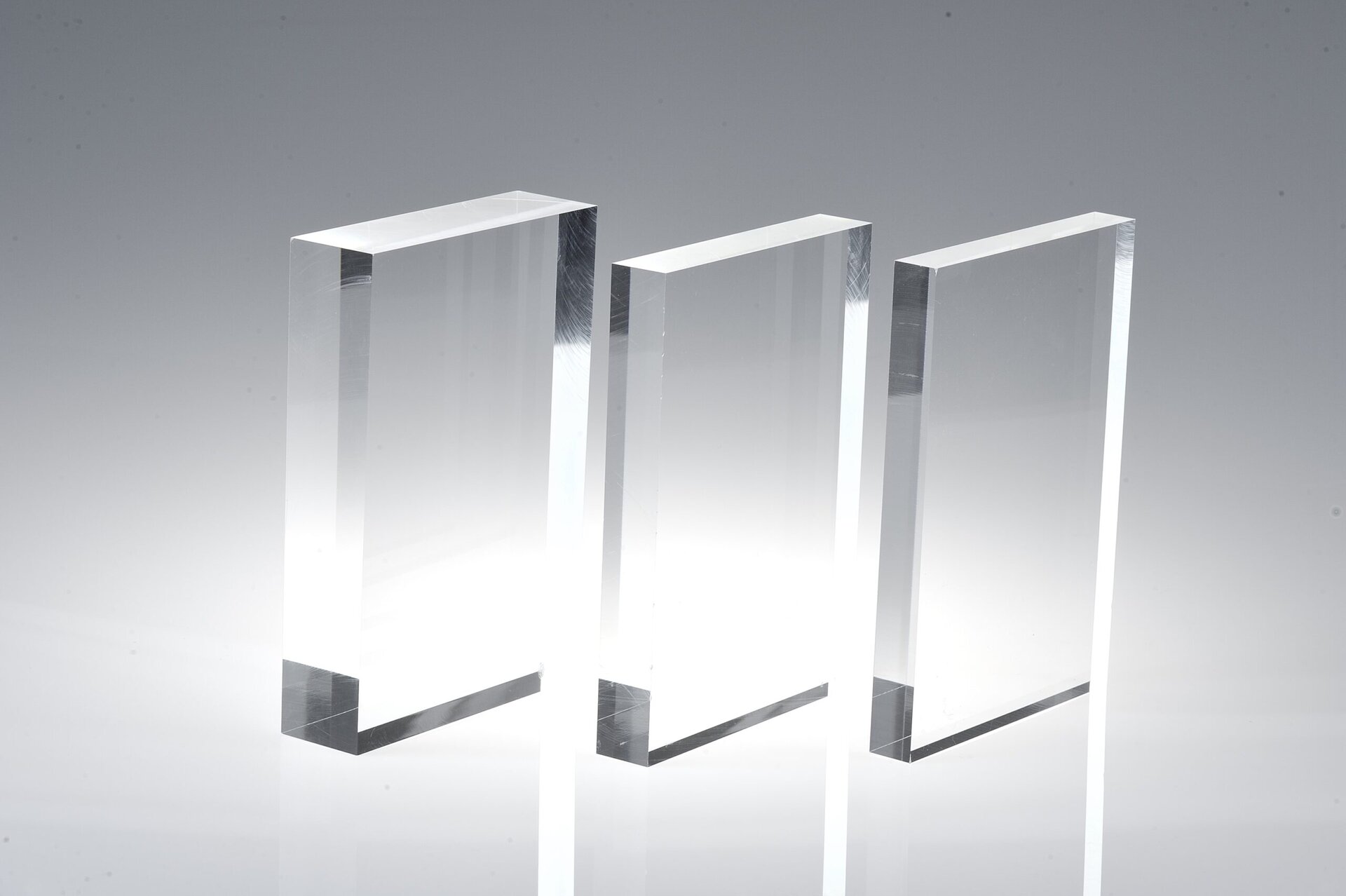
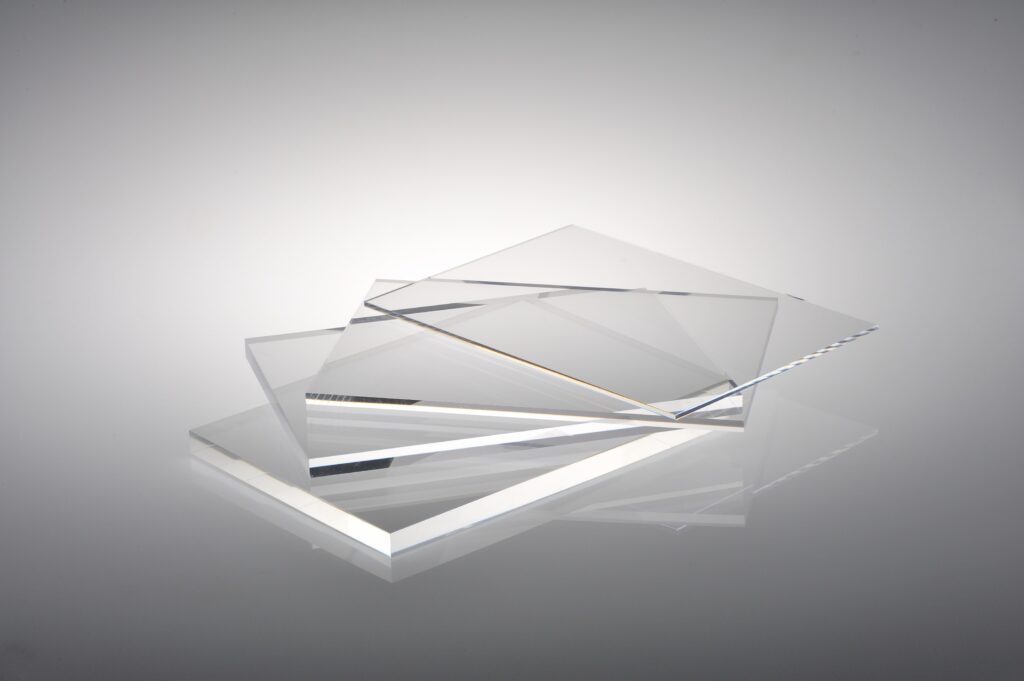
These sheets are extensively made of plexiglass or PMMA (Polymethyl Methacrylate). It’s the go-to choice for lots of creative as well as commercial projects. The immense optical clarity, with other features, makes those standard sheets almost unmatched.
Best Applications in Creative Projects
- Framing + Photo Frames: Light (half the weight of glass) and shatter-resistant option in galleries, homes, and commercial displays.
- Clear Display Cases: Perfect for showcasing collectibles, retail products, or museum artifacts with unobstructed visibility.
- Signage + Branding: Laser-cut or engraved acrylic signs offer crisp edges and a professional finish for indoor and outdoor use.
- Windows + Partitions: Used in temporary installations, greenhouses, or modern interiors where safety and clarity are key.
- DIY and Craft Projects: From wedding table numbers to LED-lit art pieces, clear acrylic sheets deliver endless customization.
Amazon alone lists over 10,000 variations of clear acrylic sheets for crafting and display projects. Top sellers have options like pre-cut sizes for photo frames, signage, and laser engraving.
Advantages for Creative Designers
- Affordability: The most ideal choice for bulk purchasing. You’ll get a lower upfront cost than glass or versatile plastics.
- Ease of Fabrication: The sheets can undergo cutting with saws, routers, or laser cutters. It’s suitable for CNC machining.
- Customizability: You can print, engrave, and/or paint clear acrylics easily. It should help with branding and personalization.
- Eco-Friendly Options: Top-tier manufacturers can even supply ISO14001-certified sheets for sustainability projects.
Common Limitations (with Solutions)
- Scratch Sensitivity: The clear surface can be scratched easily under friction. Apply anti-scratch coatings or protective films during handling.
- UV Yellowing Over Time: Prolonged sun exposure may cause discoloration. Get UV-resistant clear acrylic for outdoor or sunlit applications.
- Lower Impact Resistance: Acrylic seems more brittle than options like polycarbonate. Choose the impact-modified option to resist stress.
- Static Attraction: The sheet surfaces can attract dust and particles. Introduce anti-static cleaners or equivalent coatings for pop displays.
Some Real-World Examples
- Retail Displays: Electronics brands use standard clear acrylic sheets for transparent product risers and signage. The clarity and ease of laser cutting enable rapid prototyping and consistent branding.
- Educational Installations: Makerspaces and STEM labs use pre-cut clear acrylic panels. It ranges from robotics enclosures to interactive store displays due to their safety, affordability, and customizability.
- Art + Decor: Many local artists have adopted cast acrylic sheets for layered light sculptures and engraved wall art. Such tasks can significantly leverage the material’s optical depth and polished edging.
Option #02: Frosted Acrylic Sheets
These feature a sophisticated blend of form and function. It makes them excellent for creative projects involving visual appeal and practical privacy. The semi-opaque surface diffuses light beautifully to create a soft glow. Such conditions enhance ambiance without sacrificing design clarity.
Best Applications in Creative Projects
- Privacy Screens: Used in corporate interiors to separate workspaces while maintaining an open feel. The diffused light softens harsh lighting and adds a calming tone.
- Modern Signage: Ideal for laser-engraved or backlit signs with a hot air weld. Frosted acrylic enhances readability and adds a premium aesthetic to brand displays.
- Backlit Displays + Lightboxes: The matte surface diffuses LED light evenly. It eliminates hotspots to create a smooth glow for retail, exhibitions, and hospitality.
- Decorative Panels and Furniture Accents: Used in cabinets, shelving, and wall features to add texture and visual interest without overwhelming.
Advantages for Creative Designers
- Elegant + Contemporary Look: Matte finish adds a refined, high-end feel to any space.
- Privacy Without Isolation: It allows light through while obscuring direct visibility. The feature seems ideal for collaborative zones.
- Low Maintenance: The sheets resist fingerprints and smudges; easy to clean with mild soap and water.
- Fabrication-Friendly: Frosted acrylics can accommodate laser cutting, CNC machining, or thermoforming for custom shapes/sizes.
Frosted sheets can maintain their performance throughout hot and cold environments. It makes them suitable for climate-variable regions.
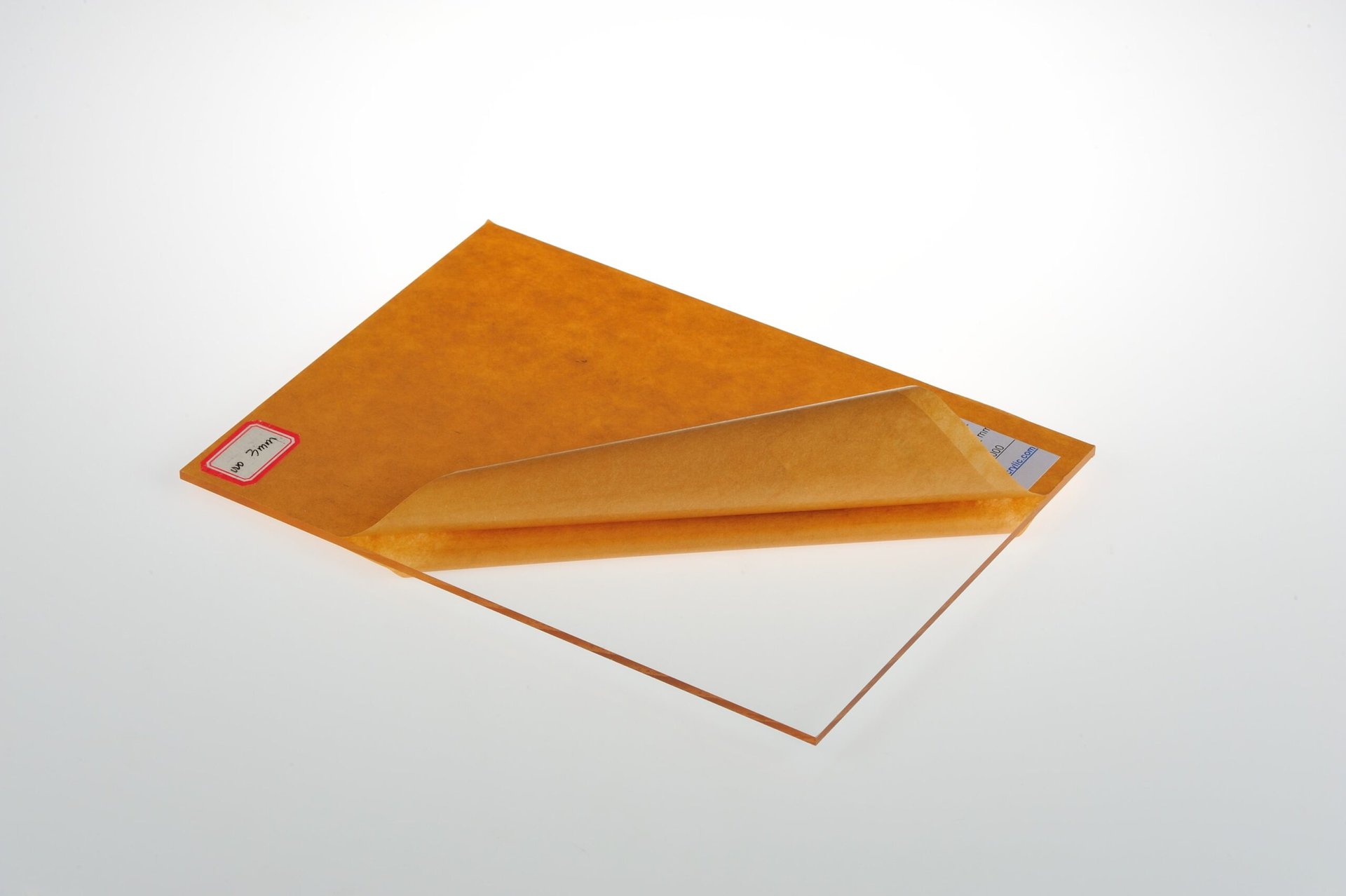
Common Limitations (with Solutions)
- Reduced Transparency: Frosted surfaces may not suit applications requiring full visibility. Deploy clear acrylic inserts or combine with transparent panels.
- Limited Color Options: Fewer hues are available compared to standard acrylic. Opt for custom frosted finishes or layered color-acrylic combinations.
- Surface Texture Constraints: Matte finish may not suit glossy design themes either. Use dual-finish sheets (frosted one side and gloss on the other).
- Higher Cost Than Clear: They’re slightly more expensive due to the finishing process. Buying in bulk or going for extruded frosted acrylic can enable cost efficiency.
Some Real-World Examples
- Retail Branding: A luxury boutique used frosted acrylic signage with edge-lit LEDs. It created a soft halo effect that elevated brand perception and increased foot traffic.
- Educational Spaces: STEM labs implement frosted partitions to divide collaborative zones while maintaining light flow. It boosts concentration for reduced distractions.
- Hospitality Design: Luxury hotels have adopted frosted acrylic panels in spa and lounge areas. It initiates semi-private + serene environments with minimal structural bulk.
Option #03: Color Acrylic Sheets
Function meets flair in the form of distinctive colors. They’re available in a dazzling array of hues. Such sheets let creative designers infuse personality, brand identity, and emotional resonance. You can craft signage, lighting, and art installations. Colored acrylics offer unmatched versatility and visual impact.
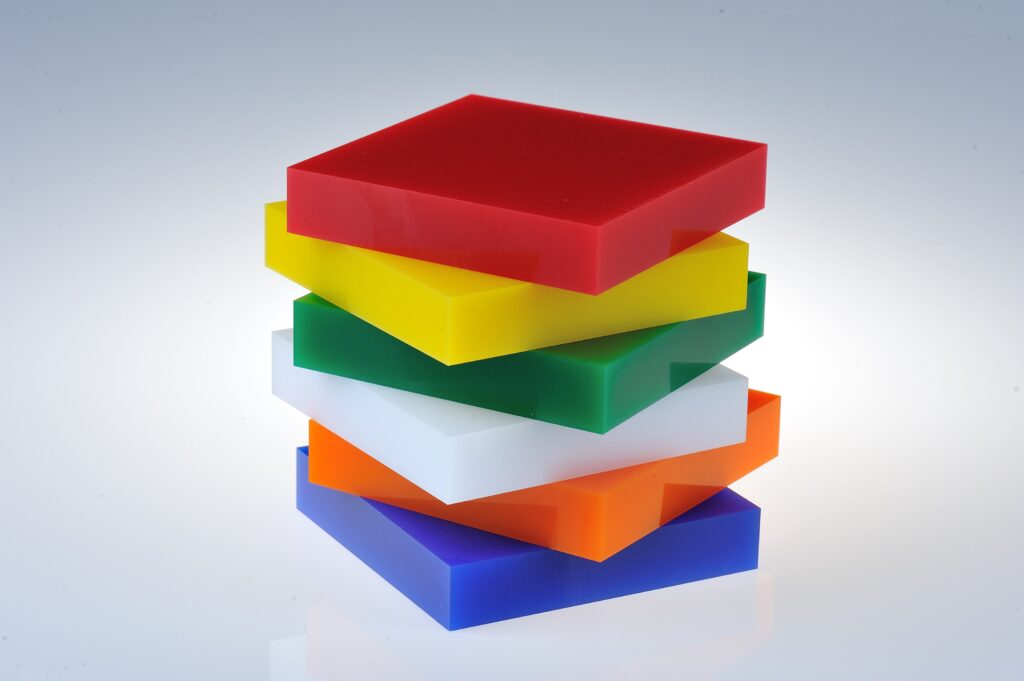
Best Applications in Creative Projects
- Signage and Branding Displays: Used for laser-cut logos, UV-printed signs, and edge-lit panels. Vibrant colors enhance visibility and brand recall.
- Art Installations + Sculptures: Artists employ layered or backlit colored acrylic to create dynamic light effects, geometric forms, and immersive environments.
- Lighting and Accent Pieces: Translucent colored sheets diffuse LED light beautifully, making them perfect for lampshades, lightboxes, and ambient fixtures.
- Decorative Panels + Furniture Accents: Increasingly used in cabinetry, shelving, and wall features to add texture and color contrast in modern interiors.
- Retail Displays and Product Risers: Colored acrylic adds pop and polish to product showcases in fashion, cosmetics, and tech retail for glass good electrical.
Advantages for Creative Designers
- Vibrant Color Palette: It enables bold, expressive designs across sectors, from retail to hospitality.
- Customizability: Sheets can undergo laser cutting, engraving, printing, or layering for unique requirements.
- Brand Alignment: Custom colors can effectively match corporate palettes and thematic installations.
- Design Versatility: These sheets are suitable for indoor and outdoor uses with UV-resistant variants.
Colored cast acrylic has a Rockwell hardness of M95 and tensile strength of 10,000 psi. No wonder they serve decorative as well as structural applications.
Common Limitations (with Solutions)
- Color Fading in Sunlight: Prolonged UV exposure may dull the vibrancy. Choose UV resistivity easy acrylics for outdoor installations.
- Limited Transparency in Opaque Sheets: They may not suit projects requiring light diffusion. Translucent or semi-transparent variants suit lighting applications.
- Scratch Sensitivity: Glossy surfaces may show wear over time. Apply anti-scratch coatings or use matte finishes for high-touch areas.
- Higher Cost for Specialty Finishes: Iridescent or glitter sheets may be pricier. Extruded colored acrylic can help you achieve some cost efficiency.
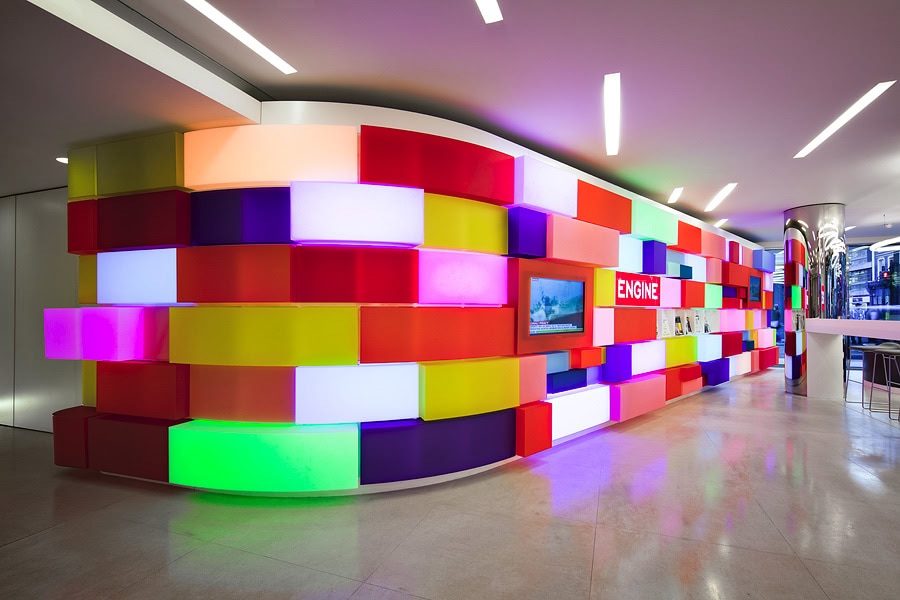
Some Real-World Examples
- Event Design: An event agency used fluorescent pink and green acrylic sheets for stage backdrops. The vibrant colors and edge-lit effects created a futuristic ambiance that wowed attendees.
- Interior Decor: Boutique hotels have integrated opaque red and gold acrylic panels into headboards and wall art. Such measures added warmth and luxury without the weight of traditional materials.
- Educational Installations: Maker spaces use color-coded acrylic panels to differentiate zones (blue for robotics + yellow for electronics). It enhances spatial orientation and thematic learning.
Option #04: Mirror Acrylic Sheets
They combine the sleek elegance of traditional mirrors with the versatility of modern thermoplastics. The reflective surface mimics glass mirrors with superior handling, customization, and durability. That’s why it has been a favorite in creative, commercial, and DIY environments.
Best Applications in Creative Projects
- Decorative Mirrors (Wall Panels): Used in homes, salons, and retail interiors to add depth and light without the fragility of glass.
- Mirrored Signage for Branding Displays: Ideal for laser-engraved logos, event signage, and edge-lit installations that demand a premium look.
- Furniture Design + Accents: Integrated into tabletops, drawer fronts, and shelving to add a reflective pop as well as an impressive modern aesthetic.
- Fashion Accessories: Used in jewelry, costume design, and DIY projects for reflective embellishments and lightweight wearability.
- Stage + Event Décor: Popular in theatrical sets and exhibitions for creating illusions, light effects, and spatial expansion with creative details.
Creative studios have used gold mirror acrylic sheets for wedding decor and signage. And the outcome achieved a luxurious look with reduced setup time and cost.
Advantages for Creative Designers
- Lightweight (Easy to Handle): They effectively reduce labor and risk during transport and installation.
- Shatter-Resistant: Incredibly safer than glass across public, child-accessible, and/or high-traffic zones.
- Highly Customizable: Cutting, shaping, and engraving can accomplish complex dimensional products.
- Color Variety: Available in silver, gold, rose, bronze, and tinted finishes throughout top-tier options.
- Cost-Efficient in Bulk: Noticeably lower shipping and fabrication costs compared to traditional mirrors.
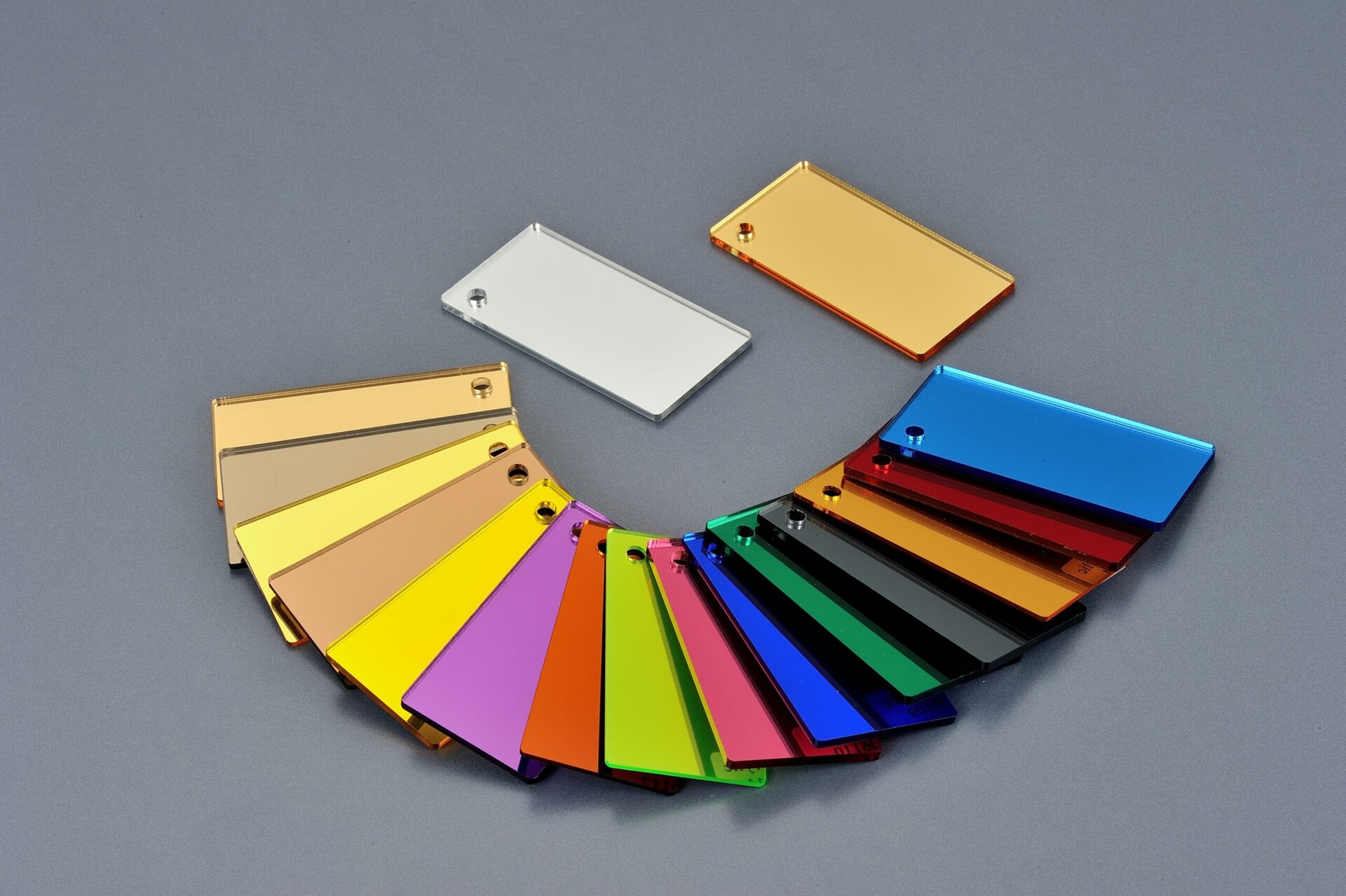
Common Limitations (with Solutions)
- Flexibility: The sheets may distort if not mounted on a flat, rigid surface. Use adhesive backing or mount on MDF, aluminum, or foam board.
- Scratch Sensitivity: Glossy surface can show wear over time. Apply protective films or choose anti-scratch coatings.
- Lower Optical Precision: Slight distortion compared to glass mirrors. Stick to thicker sheets or cast-grade acrylic for better reflectivity.
- UV Vulnerability: The sheets may fade or yellow outdoors without protection. Opt for UV-resistant mirror acrylic for exterior applications.
Some Real-World Examples
- Retail Interiors: A fashion brand used rose gold mirror acrylic for wall-mounted logo signage and fitting room accents. It created a chic, Instagram-friendly environment that boosted foot traffic.
- Event Decor: Wedding planners across South Asia frequently use silver mirror acrylic table numbers and signage. Such a pattern combines elegance with durability for outdoor and indoor venues.
- DIY + Maker Projects: Local craft stores report high demand for 8 x 8 mirror acrylic panels, especially among hobbyists. They can comfortably create vanity trays, jewelry holders, and wall art.
Option #05: Textured Acrylic Sheets
It’s where tactile artistry meets functional design. Unlike smooth or glossy variants, these sheets feature embossed, patterned, or sculpted surfaces. The stock ranges from subtle ripples to bold geometric motifs. Such sheets are ideal for projects involving glue, specific thickness, and glazing.
Best Applications in Impact Resistance Projects
- Art Installations + Sculptures: Artists use textured sheets to create multi-layered compositions, light-reactive sculptures, and interactive exhibits.
- Furniture and Interior Accents: Integrated into tabletops, cabinet doors, and shelving. Textured acrylic adds tactile richness and modern elegance.
- Architectural Features: Used in wall cladding, privacy panels, and ceiling diffusers. Textured sheets offer light diffusion and visuals without full opacity.
- Decorative Signage: Laser-engraved or edge-lit textured acrylic signs stand out with dimensional depth, especially in retail and hospitality environments.
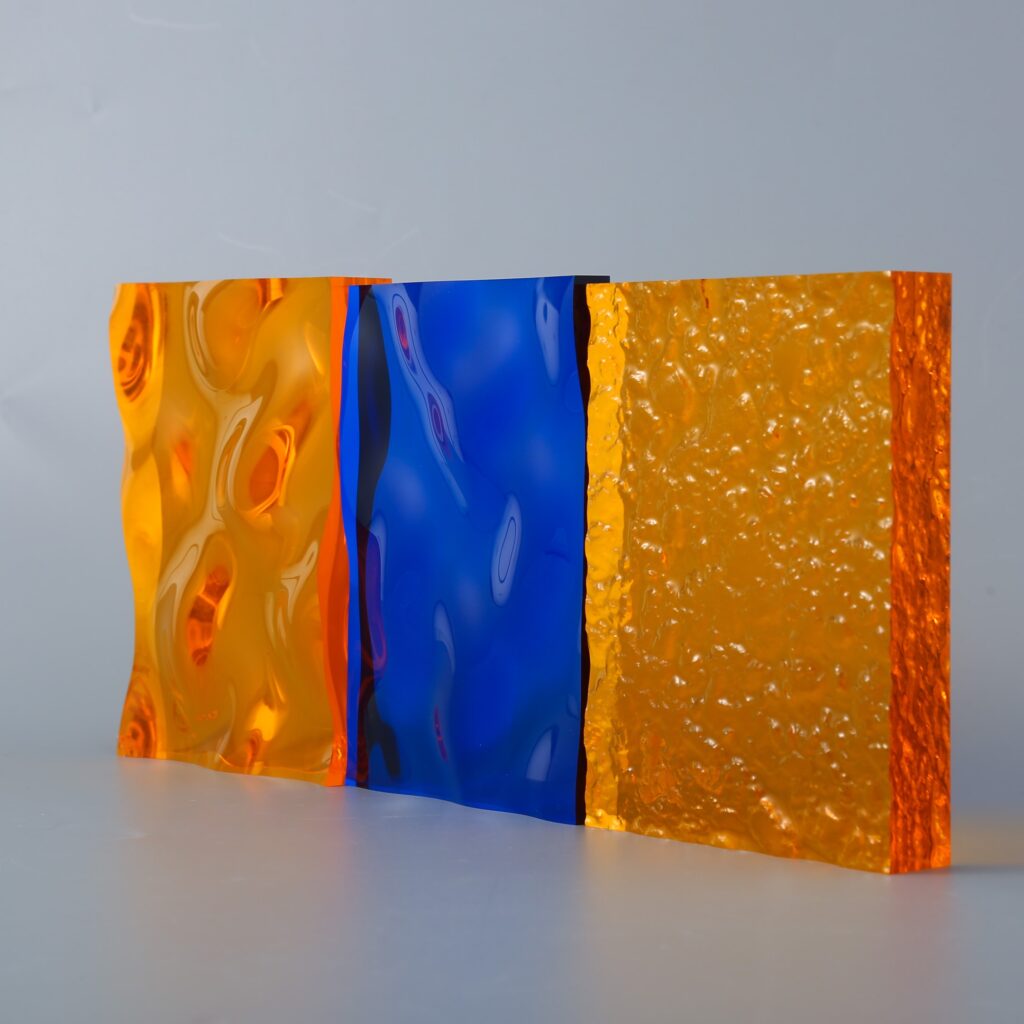
Advantages for Creative Designers
- Visual Depth with Dimension: Textures create dynamic light effects and layered aesthetics.
- Customizable Designs: Commonly available in a wide range of patterns, colors, and finishes.
- Light Diffusion: Softens harsh lighting that is ideal for standard-level ambient environments.
- Fabrication-Friendly: They can be laser-cut, CNC-machined, or bonded for custom installations.
Textured cast acrylic maintains 90% of its structural integrity under thermal and mechanical stress. It seems suitable for both decorative and semi-load-bearing applications.
Common Limitations (with Solutions)
- Surface Cleaning Challenges: Textures may trap dust or fingerprints. Use anti-static cleaners or microfiber cloths for maintenance.
- Limited Transparency: They may not suit applications requiring full visibility. Combine with clear acrylic inserts or use dual-layer panels.
- Higher Cost for Specialty Finishes: Iridescent or custom textures may be pricier. Buy in bulk or opt for extruded textured acrylic for cost efficiency.
- Warping in Thin Sheets: Thin panels may flex under pressure. Mount on rigid substrates like MDF or aluminum for stability.
Some Real-World Examples
- Event Design: An event agency used pearlescent ripple acrylics for stage backdrops and signage at a fashion show. The textured surface reflected light in waves to create a dynamic visual experience.
- Retail Interiors: Boutique stores have adopted bubble-textured acrylic panels for product displays and shelving. Such a creative measure effectively added playful sophistication and tactile engagement.
- Hospitality Decor: Luxury hotels implement frosted honeycomb acrylic sheets in spa partitions and lighting fixtures. The decorative action created light-filled environments with privacy and elegance.
Option #06: Plexiglass Acrylic (Laser-Cut)
Plexiglass (Plexiglas, Lucite, Perspex) is heavily used interchangeably with acrylic. However, Plexiglass is actually a brand name for standard PMMA. In bulk form, Plexiglass acrylic sheets are a go-to material for creative projects.
Best Applications in Creative Projects
- Display Cases: It (half the weight of glass) has uses in retail stores to showcase business items to customers for sales with high visibility and protection.
- Protection Shields + Barriers: Common in healthcare, hospitality, and educational settings for sneeze guards, desk partitions, and equipment covers.
- DIY Projects and Home Décor: Makers use Plexiglass for floating shelves, custom trays, wall calendars, and furniture accents.
- Product Prototypes: Engineers and designers rely on Plexiglass for mockups, enclosures, and functional prototypes due to its machinability and stability.
Some startups widely carry on Plexiglass sheets for rapid prototyping of IoT devices. It’s because they offer a balance between structural integrity and aesthetics.
Advantages for Creative Designers
- High Durability: These sheets are impact-resistant. The same goes for weathering and mechanical stress.
- Scratch Resistance: Many variants include hard-coated surfaces that go well with high-touch environments.
- Lightweight + Safe: Notably easier to transport and install; safer in public or child-accessible zones.
- Finish Variety: Supports diverse design aesthetics, ranging from minimalist to vibrant and textured.
- UV and Weather Resistance: Suitable for both indoor and outdoor applications with long-term clarity.
Plexiglass sheets are up to 50% lighter than glass. Therefore, it reduces installation costs while improving safety in suspended or mobile applications.
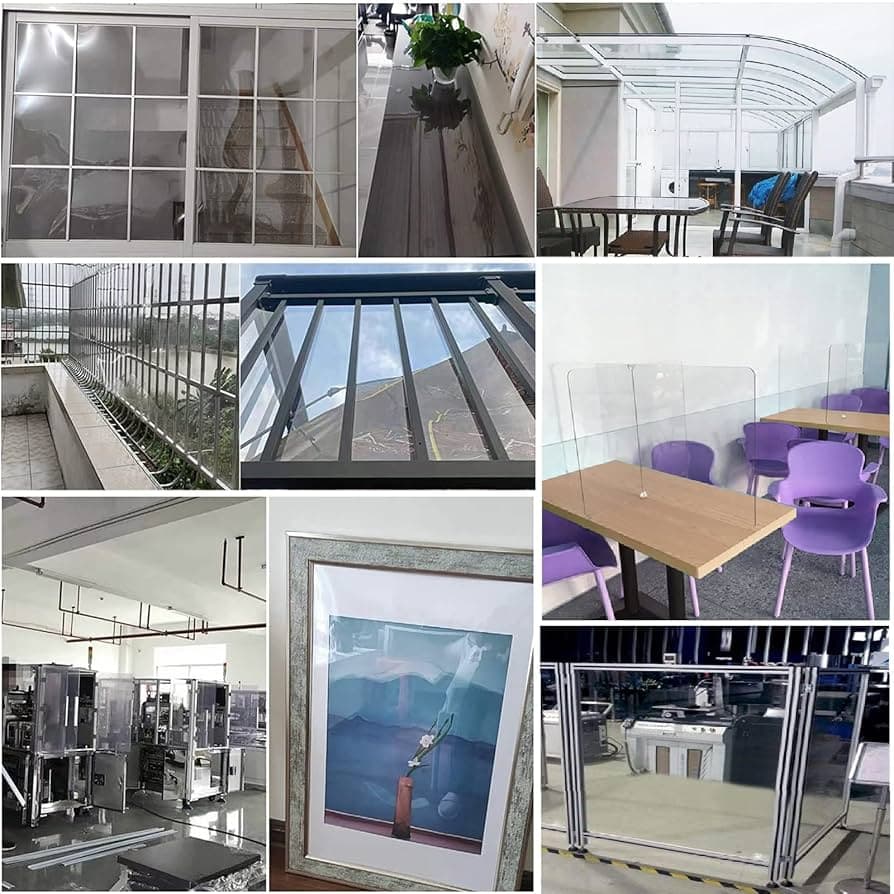
Common Limitations (with Solutions)
- Surface Scratching: Glossy finishes may show wear over time. Use matte or hard-coated variants, or apply protective films.
- Brittleness Under Extreme Force: They may crack under high-impact stress. Switch to impact-modified acrylic or polycarbonate for critical zones.
- Thermal Expansion: They can expand or warp under heat. Allow expansion gaps in mounting or use cast-grade sheets.
- Higher Cost for Specialty Finishes: Mirrored or textured Plexiglass may be pricier. Buy in bulk or choose extruded sheets for cost-sensitive projects.
Some Real-World Examples
- Retail Displays: A cosmetics brand used frosted Plexiglass panels for product risers and signage. It helped the brand achieve a clean, modern aesthetic while ensuring durability in high-traffic zones.
- Educational Installations: STEM labs in many countries increasingly implement clear Plexiglass shields for robotics enclosures and lab partitions. They offer superior visibility and safety for hands-on learning.
- Home Decor: DIY enthusiasts have created floating shelves, custom desk organizers, and wall-mounted calendars using pre-cut Plexiglass sheets. It effectively combines function with minimalism.
Conclusion
Appropriate material choice is mandatory for any project, creative or not. Bulk options can save you time, effort, and money in the long run. The right acrylic can offer many possibilities for designers, DIYers, makers, and innovators to build with confidence.
Get Your Wholesale Acrylic Sheets from JUMEI
Not many suppliers can meet the quality, aesthetics, and longevity of acrylic sheets. That’s where Jumei Acrylic shines bright in the market. You can find the best experts with top work experience to partner with you. Contact us for information through questions from our team.
]]>