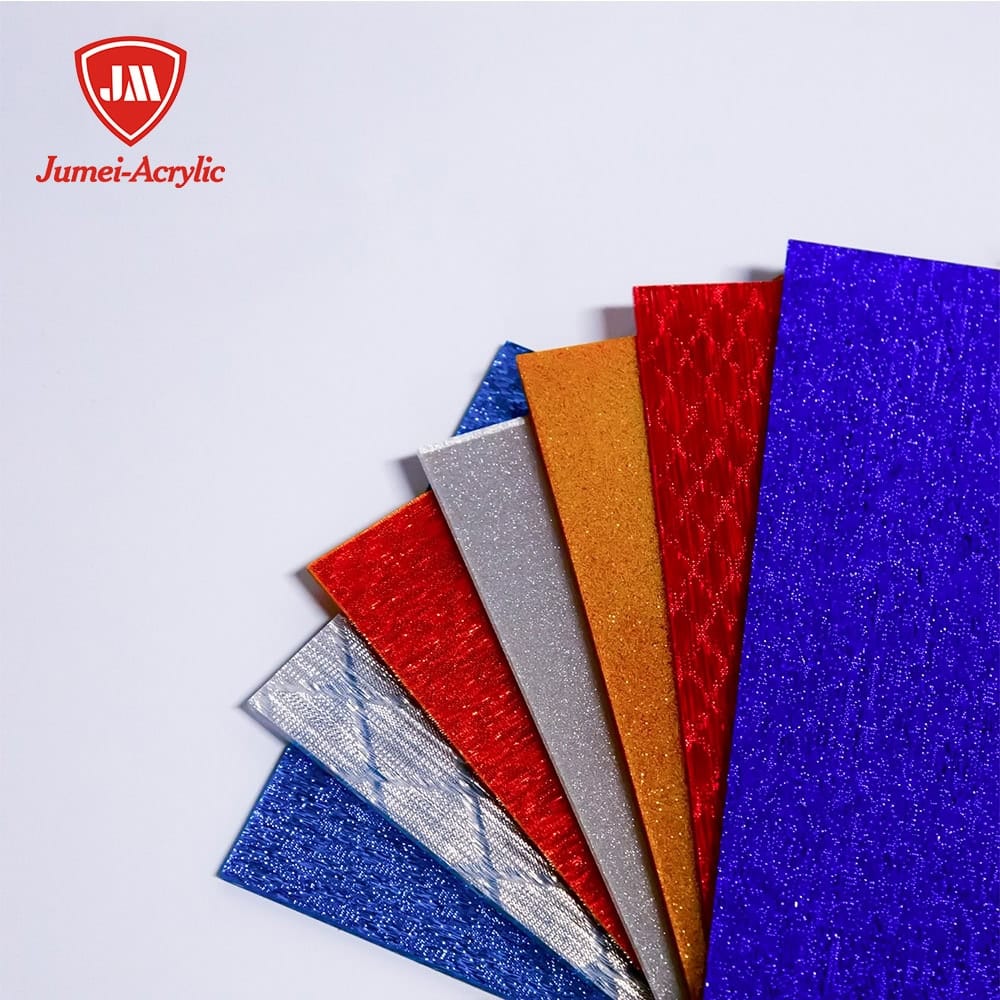
Visual impact delivers a competitive advantage in today’s market. Brands, retailers, and event planners are looking for materials to elevate aesthetics with practicality, durability, and cost efficiency.
One standout solution is glitter acrylic sheets, a decorative material that blends eye-catching sparkle with proven acrylic performance. This comprehensive guide explores everything you must know.
What Are Glitter Acrylic Sheets?
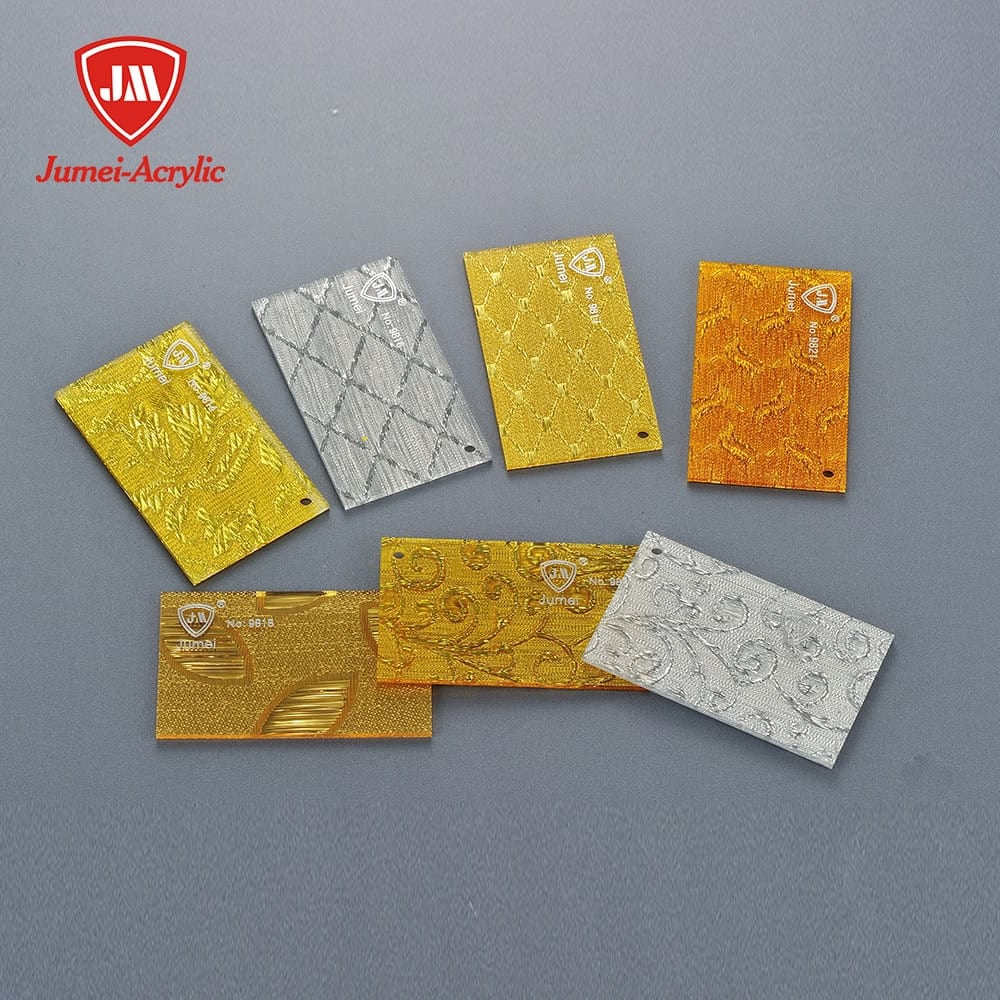
Glitter acrylic sheets are a decorative PMMA (polymethyl methacrylate) panel with reflective particles. The combination creates a sparkling effect under light. Unlike surface-applied finishes, the glitter is integrated into the sheet. Thus, it enables consistent appearance and long-term durability.
Composition and Manufacturing
These sheets are primarily produced using cast acrylic processes. The glitter particles are evenly distributed throughout the material during production. This particular method ensures –
- Uniform sparkle across the sheet.
- Better optical clarity (when semi-transparent).
- Enhanced resistance to surface wear compared to coated alternatives.
Key Features
- High visual impact: Reflects and refracts light for a shimmering effect.
- Lightweight: Much lighter than glass, making installation easier.
- Durable: Strong and impact-resistant compared to brittle decorative materials.
- Customizable: Available in various colors, sizes, and finishes.
- Weather-resistant options: Suitable for outdoor use with UV-stable grades.
Why Glitter Acrylic Is Gaining Popularity?
i. Strong Visual Branding: In crowded commercial environments, standing out is essential. Glitter acrylic enhances –
- Brand visibility
- Perceived product value
- Customer engagement
ii. Versatility Across Industries: From signage to furniture accents, glitter acrylic adapts to –
- Cutting
- Engraving
- Bending
- Layering with other materials
iii. Cost-Effective Alternative to Luxury Materials: Compared to glass, metal, or specialty laminates –
- Lower material and transport costs.
- Easier fabrication reduces labor expenses.
- Minimal maintenance over time.
iv. Durability and Maintenance: Unlike painted or laminated decorative surfaces –
- The sparkle effect doesn’t peel or fade easily.
- Resistant to moisture and environmental exposure.
- Easy to clean with non-abrasive solutions.
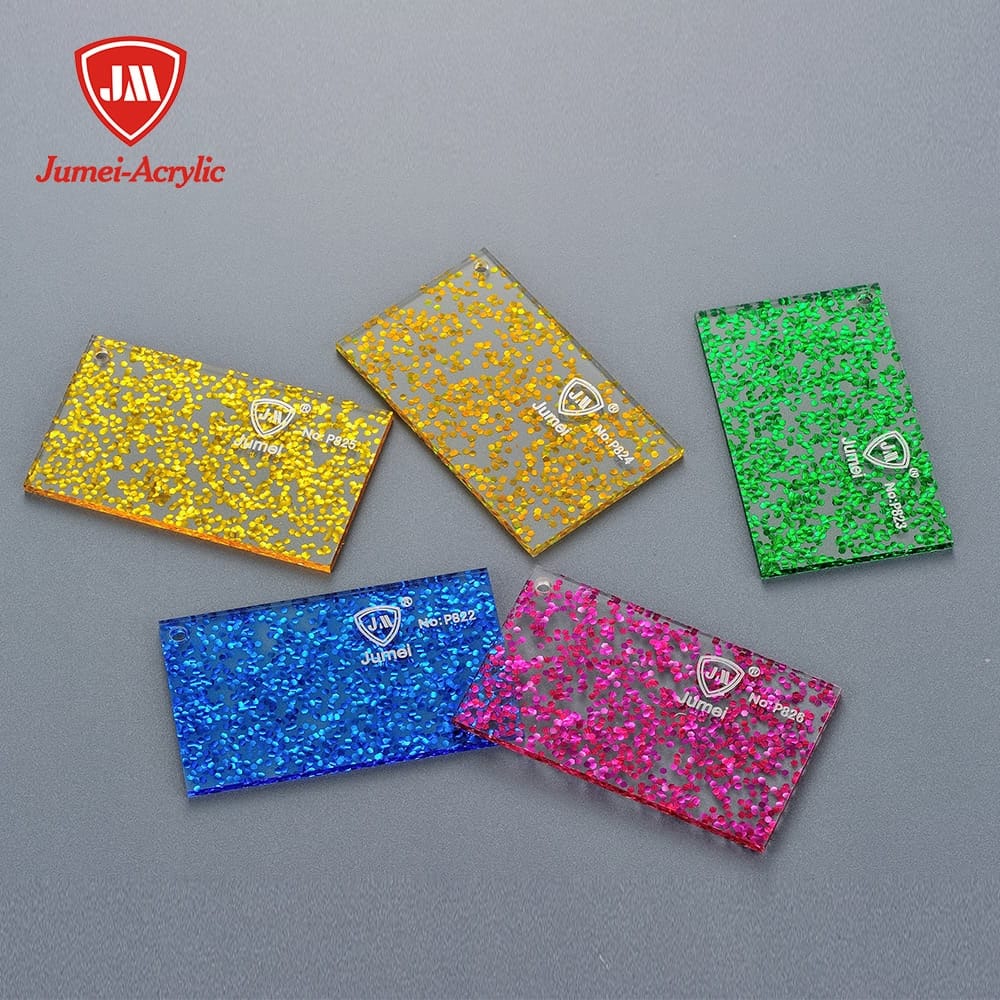
Types of Glitter Acrylic: Knowing Your Options
Not all glitter acrylic behaves the same way visually or structurally. Understanding the variants is the first step to specifying the right sheet for a project.
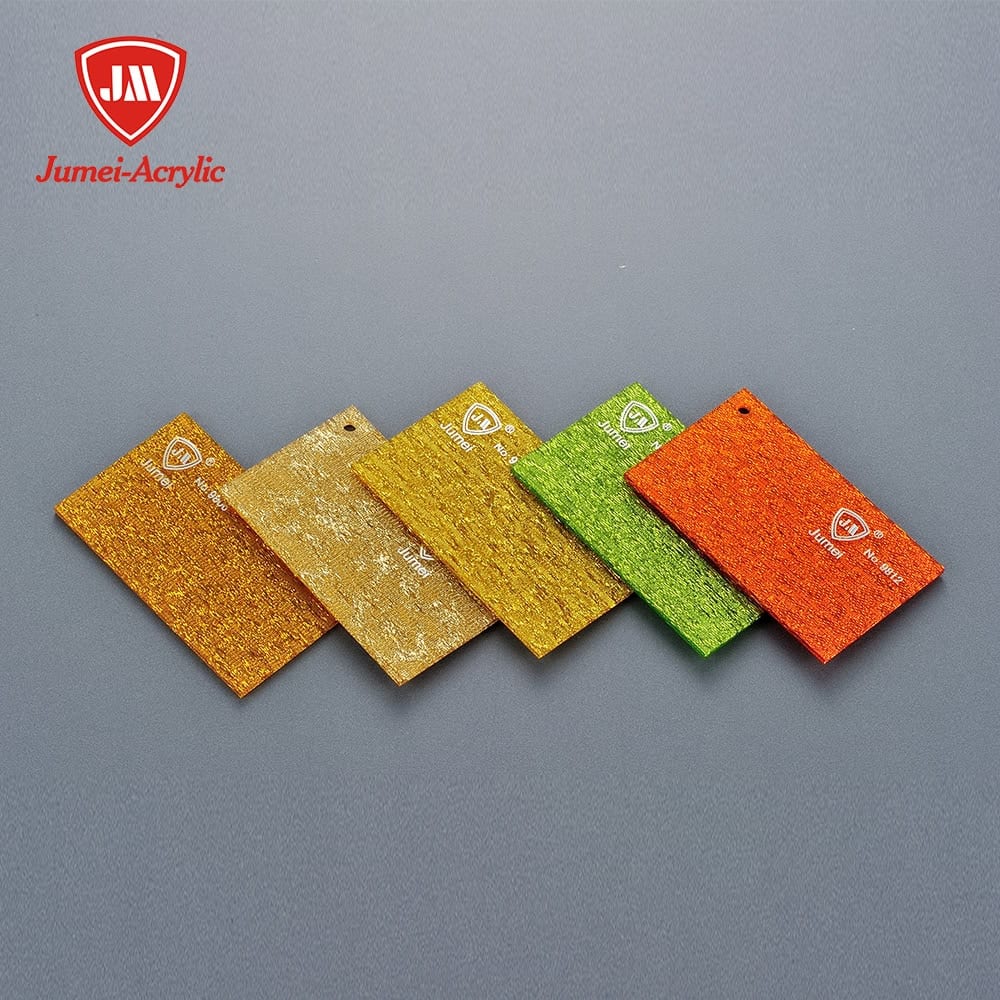
01. Metallic Glitter
It uses gold, silver, copper, or bronze glitter particles in an opaque or translucent base. These are the most commercially versatile — familiar, luxurious, and readable across a wide range of brand aesthetics.
02. Holographic/Iridescent Glitter
Its color-shifting effect changes dramatically depending on the viewer’s angle and the light source direction. It photographs differently in every image, which makes it especially effective for events and activations.
03. Fine Glitter
It uses small-diameter particles that produce a soft, refined shimmer. It reads as premium and restrained — well-suited to high-end retail environments where subtlety is part of the brand language.
04. Chunky/Coarse Glitter
It uses larger particles that scatter light more aggressively and read from a greater distance. It’s a good choice for large-format event backdrops and outdoor signs where the sheet needs to attract attention.
05. Transparent/Clear Glitter
It combines optical clarity with suspended sparkle. The clear base allows light to pass through while the glitter creates a luminous shimmer — ideal for backlit applications and layered designs.
06. Colored Glitter
It combines an opaque or translucent colored base with glitter particles. Get a green glitter sheet for a Christmas retail campaign, a cobalt blue for a tech brand launch, or a hot pink for a beauty activation.
Glitter acrylic shares the core advantages of standard PMMA. For instance, it weighs roughly half as much as glass at the same thickness, and it’s significantly more impact-resistant.
Also, it’s UV-stable in indoor environments with high natural light exposure, and it’s compatible with standard acrylic fabrication equipment without requiring specialist tooling.
Creative Applications in Signage
a. Retail Storefront Signage
Glitter acrylic is widely used in storefront branding to –
- Create bold lettering and logos.
- Enhance visibility both day and night.
- Add a premium aesthetic to brand identity.
It works especially well for fashion, beauty, and luxury retail sectors.
b. Indoor Branding Elements
Inside stores, glitter acrylic is used for –
- Reception signage.
- Wall-mounted logos.
- Directional signage.
The reflective quality adds depth and dimension, making signage more engaging.
c. LED and Backlit Signage
One of the most powerful uses of glitter acrylic is in illuminated signage –
- Backlighting enhances sparkle intensity.
- Edge-lit panels create glowing effects.
- Works well with RGB lighting systems.
d. Event and Promotional Signage
Temporary signage for campaigns, festivals, or product launches benefits from –
- High visual impact.
- Lightweight installation.
- Reusability.
Applications in Retail Display Design
a. Point-of-Sale (POS) Displays
Glitter acrylic is highly effective in POS setups –
- Product stands
- Display risers
- Highlight panels
These elements help draw customer attention and increase impulse purchases.
b. Window Displays
Retail windows are crucial for attracting foot traffic. Glitter acrylic:
- Reflects natural and artificial light.
- Creates dynamic, changing visuals throughout the day.
- Enhances storytelling in visual merchandising.
c. Product Branding Fixtures
Especially popular in –
- Cosmetics displays
- Jewelry showcases
- Luxury product stands
Custom-cut glitter acrylic adds a sense of exclusivity and sophistication.
d. Shelving and Decorative Panels
Used as accent materials in –
- Retail interiors
- Feature walls
- Display cabinets
It pairs well with wood, metal, or clear acrylic for layered designs.
Event Design and Decorative Applications
a. Event Backdrops
Glitter acrylic is a favorite for –
- Wedding stages
- Photo booths
- Corporate event backdrops
Custom-cut names, logos, or patterns can transform simple setups into memorable visual experiences.
b. Stage and Set Design
For live events and productions –
- Reflective surfaces enhance lighting effects.
- Adds depth and movement to stage visuals.
c. Decorative Installations
Designers use glitter acrylic for –
- Hanging panels
- Partitions
- Artistic installations
Its lightweight nature makes it easy to install and reposition.
d. Trade Shows and Exhibitions
Exhibitors benefit from –
- Unique booth designs.
- Lightweight transport.
- Quick installation.
Glitter acrylic helps brands stand out in crowded exhibition halls.
Design Tips for Maximum Visual Impact
· Choose the Right Color
Match brand identity for consistency. Use bold colors for high visibility. Also, get neutral tones for elegant designs.
· Optimize Lighting
Lighting plays a critical role, as backlighting enhances sparkle intensity. Edge lighting creates a modern glow. Avoid excessive glare by balancing light angles.
· Combine Materials
For a premium look, pair with metal for contrast. Use clear acrylic layers for depth. Combine with wood for warmth.
· Scale Strategically
Get large panels for dramatic impact. Deliver small accents for subtle elegance.
Choosing the Right Glitter Acrylic for Your Project
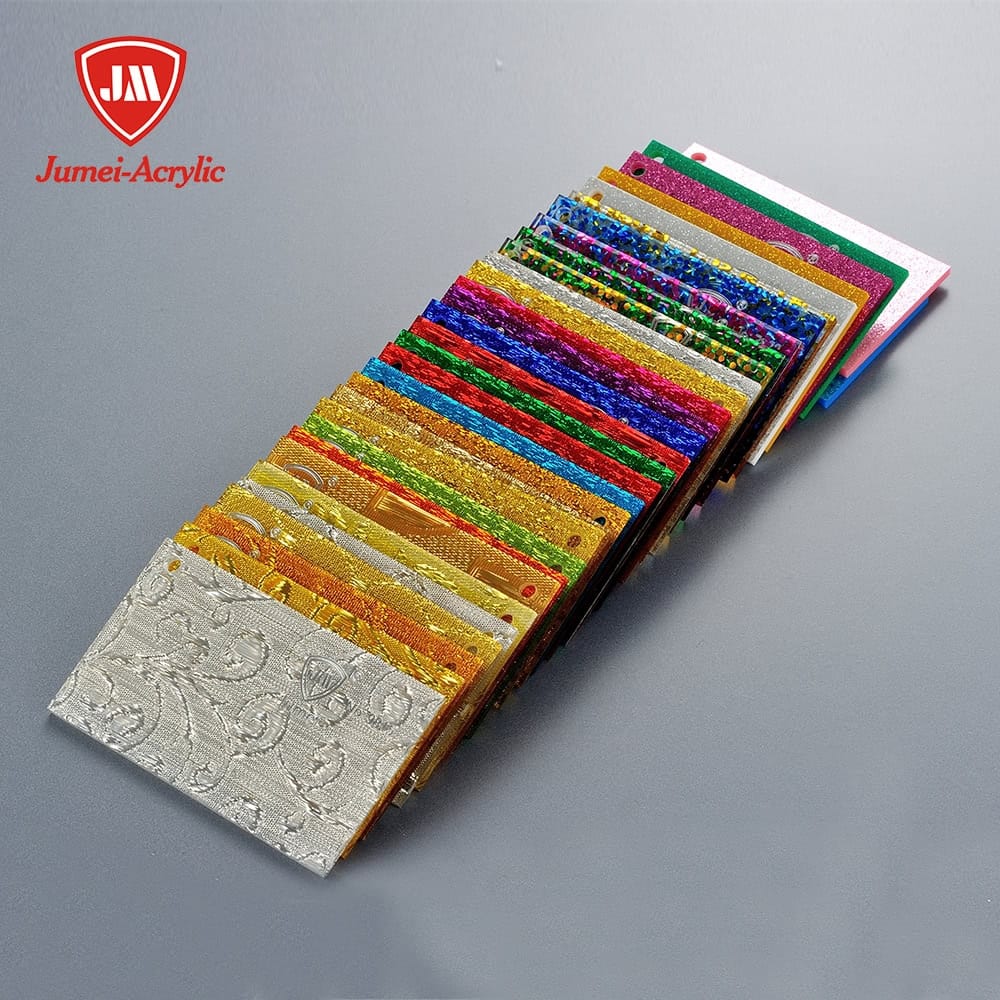
With several glitter types, base transparency options, and a range of thicknesses available, the specification decision is straightforward once you map the project requirements –
By viewing distance: Fine glitter → close-range applications (retail counters, boutique signage, table settings, jewelry displays); Chunky glitter → distance applications (event backdrops, large-format signage, window displays, trade show walls).
By lighting environment: Transparent or translucent base → backlit, edge-lit, or layered applications; Opaque base → surface-lit applications, retail furniture, structural panels.
By industry and aesthetic: Gold / rose gold → beauty, fashion, hospitality, luxury retail, weddings; Silver/chrome → technology, automotive, corporate events, contemporary architecture; Holographic/iridescent → entertainment, festivals, youth brands, social-media-first events; Clear glitter → premium minimalist retail, product photography backgrounds, modern interiors.
By thickness and application: 2–3mm → hanging signage, decorative inserts, jewelry, cake toppers, small POS items; 4–5mm → countertop displays, medium-format signage, wall-mounted panels; 6–10mm → structural display furniture, large POS units, exhibition counters and stand walls.
Fabrication Guide: Cutting, Shaping, and Finishing Glitter Acrylic
Glitter acrylic behaves like standard cast acrylic in almost all fabrication contexts. The same tools, the same methods, the same general settings — with a small number of glitter-specific considerations that are straightforward to accommodate once you know them.
Laser Cutting
Laser cutting is the preferred fabrication method for precision shapes, signage letters, complex geometric forms, and high-volume batch production of small elements.
Cast glitter acrylic — such as Jumei’s range — is the better choice for laser work over extruded variants. The consistent molecular structure of cast PMMA produces cleaner edges and more predictable flame-polishing behavior at the cut line.
Machine Type
CO2 lasers are the standard for acrylic at any commercial scale, with power ratings from 40W (adequate for sheets up to 5mm) through 150W and above for thicker material. Diode lasers can work on sheets up to 3mm, but typically require multiple passes and produce less clean edge finishes than CO2 machines.
Starting Settings
The settings must be adjusted for your specific machine and sheet. For instance,
| Thickness | Power | Speed |
|---|---|---|
| 2mm | 45–55% | 18–22mm/s |
| 3mm | 55–65% | 15–20mm/s |
| 5mm | 75–80% | 10–12mm/s |
| 8mm | 85–90% | 6–8mm/s |
Always test settings on an offcut from the same sheet before committing to the final piece.
Glitter Variable
Chunky and coarse glitter particles can cause minor laser path deflection as the beam encounters particles of differing density from the PMMA base. Run at a slightly lower speed than you would for equivalent plain acrylic to maintain edge quality.
Keep the protective masking film on during cutting — it prevents surface scorching on the sheet’s face and is removed cleanly after the cut is complete.
After cutting, allow the edges to cool fully before handling. Use a soft, dry brush to remove soot and glitter dust from the cut edges before peeling the masking film.
CNC Routing
CNC routing is the preferred method for large-format panels, structural furniture components, and high-volume commercial production runs where edge finish quality needs to be consistent across many identical pieces.
Air cooling is recommended over liquid coolant. Liquid contamination of the glitter finish — particularly at cut edges where the particle structure is exposed — can dull the sparkle that is the whole point of the material.
Score-and-Snap (Manual Cutting)
Score-and-snap is viable for straight-line cuts on sheets up to 5mm and is the most accessible method for fabricators without laser or CNC equipment. Use a sharp, dedicated acrylic scorer and a metal straight edge — never a utility knife or box cutter, which will create an irregular score line.
The exposed glitter edge after snapping will be more pronounced than on plain acrylic. Sand lightly with 400-grit wet-dry paper, progressing to 800-grit, then finish with a fine plastic polish compound for a clean, professional-looking edge.
Thermoforming and Line Bending
Glitter acrylic is compatible with strip heating, which is the most common thermoforming operation for display (requiring right-angle bends for standing displays, box forms, and curved panel elements).
Heat the bending zone evenly and slowly. Overheating causes glitter particles near the surface to discolor or “bloom” — producing dull patches that interrupt the sparkle. Target temperature for PMMA is 160–175°C. Always test with a scrap piece of the same sheet.
For vacuum forming (used for deeper draws and compound curves), be cautious with sheets that have high particle loads — uneven particle distribution can cause thin spots to form at areas of deep draw.
Cleaning and Maintenance
Proper cleaning preserves the glitter finish and extends the panel’s usable life — particularly important for retail fixtures and exhibition elements that are handled frequently.
- Use a soft microfiber cloth with a mild, non-abrasive plastic cleaner or diluted dish soap.
- Avoid acetone, alcohol, ammonia-based glass cleaners, or any solvent-based product.
- For light surface scratches, a plastic polish compound applied with a soft cloth restores clarity.
- Store panels flat or vertically with the protective masking film intact, away from heat.
Frequently Asked Questions (FAQs)
1) What is a glitter acrylic sheet made of?
Glitter acrylic sheet is PMMA (polymethyl methacrylate) — the same base material as standard acrylic. It comes with metallic, holographic, or iridescent glitter particles embedded throughout the sheet.
2) Can a glitter acrylic sheet be laser cut?
Yes. Glitter acrylic is fully compatible with CO2 laser cutting, the most common method for producing precision shapes, signage letters, and decorative forms. Cast glitter acrylic performs better in laser cutting than extruded variants.
3) Is glitter acrylic suitable for outdoor signage?
Glitter acrylic made from virgin PMMA with UV-stable additives is suitable for outdoor and indoor-adjacent applications. For fully exposed outdoor signage, metallic glitter finishes in gold or silver outperform holographic variants in UV stability.
4) How do you clean glitter acrylic without scratching it?
Use a soft microfiber cloth with a mild, non-abrasive plastic cleaner or diluted dish soap. Avoid acetone, alcohol, ammonia-based glass cleaners, or any solvent-based product to prevent clouding the acrylic.
5) What thickness of glitter acrylic is best for retail displays?
For small freestanding product risers and shelf inserts, 3mm is sufficient. Medium countertop display units work well at 5mm. 8–10mm provides the rigidity needed for stable freestanding applications.
6) What is the difference between holographic and metallic glitter acrylic?
Metallic glitter acrylic uses particles (gold, silver, copper, bronze) that reflect light in a single consistent color. Holographic glitter acrylic uses particles with prismatic surfaces that split white light into its spectral components.
Conclusion
Glitter acrylic sheets offer a powerful combination of aesthetic appeal, durability, and versatility, making them an ideal choice for modern signage, retail displays, and event design. Whether used in bold storefront signage or elegant event backdrops, they help create memorable visual experiences that capture attention and elevate brand perception.
Top-Quality Glitter Acrylic Sheets at JUMEI
Jumei‘s glitter acrylic is manufactured from 100% virgin PMMA using a cast process. Every panel delivers uniform sparkle, consistent color, and predictable behavior. Contact us to know how our glitter sheets can help, or proceed to request a free sample.