The global acrylic sheet market continues to undergo a dynamic transformation. Diverse applications, sustainability initiatives, and evolving demand contribute to the reshaping of the industry.
But the entire market is leaning toward eco-friendly solutions, initiating a change in traditional growth. Take a look at the applications, sustainability efforts, trends, and demand outlook for acrylic sheets.
Evolving Applications of Acrylic Sheets
Acrylic sheets are rapidly diversifying across industrial adoption. The increasing demand comes from construction, automotive, healthcare, and retail applications.
a. Construction and Architecture
Facades, skylights, and partitions extensively use acrylic as they’re lightweight and versatile. Weather resistance ensures longevity in outdoor installations.
High transmission (up to 94% with Jumei) enables natural illumination. Design flexibility lets architects mold sheets into curves and unique structures.
b. Automotive and Transportation
Interior panels, instrument clusters, and lighting components have acrylic sheets. Automakers prioritize lightweight materials to improve fuel efficiency and EV range.
Acrylic weighs 50% lighter than glass, contributing to sustainability goals. Impact-modified acrylic offers durability, meeting stringent automotive safety regulations.
c. Retail, Signage, and Point-of-Sale Displays
Acrylic’s clarity and easy fabrication seem ideal for high-visibility signage and POS displays. Retailers increasingly combine LED lighting with acrylic panels to create interactive, eye-catching displays.
Sheet dimensions or custom sizes, exact dimensions, and sharp edges remain constant. Pop displays or display cases, scratch resistance, and the ability to withstand demanding conditions suit businesses and large-scale projects.
d. Medical and Healthcare Industries
Acrylics are also used in equipment housings, protective barriers, and medical devices. It withstands repeated sterilization without losing clarity for hospital partitions and diagnostic equipment.
e. Consumer Electronics and Appliances
Acrylic serves as housing for screens, panels, and covers in TVs, laptops, and appliances. Manufacturers experiment with tactile finishes and transparency options, enhancing user experience.
f. Packaging Solutions
Acrylic sheets receive increasing preference in luxury packaging for cosmetics, electronics, and jewelry. Brands leverage recyclable acrylic packaging to align with eco-conscious consumer demand.
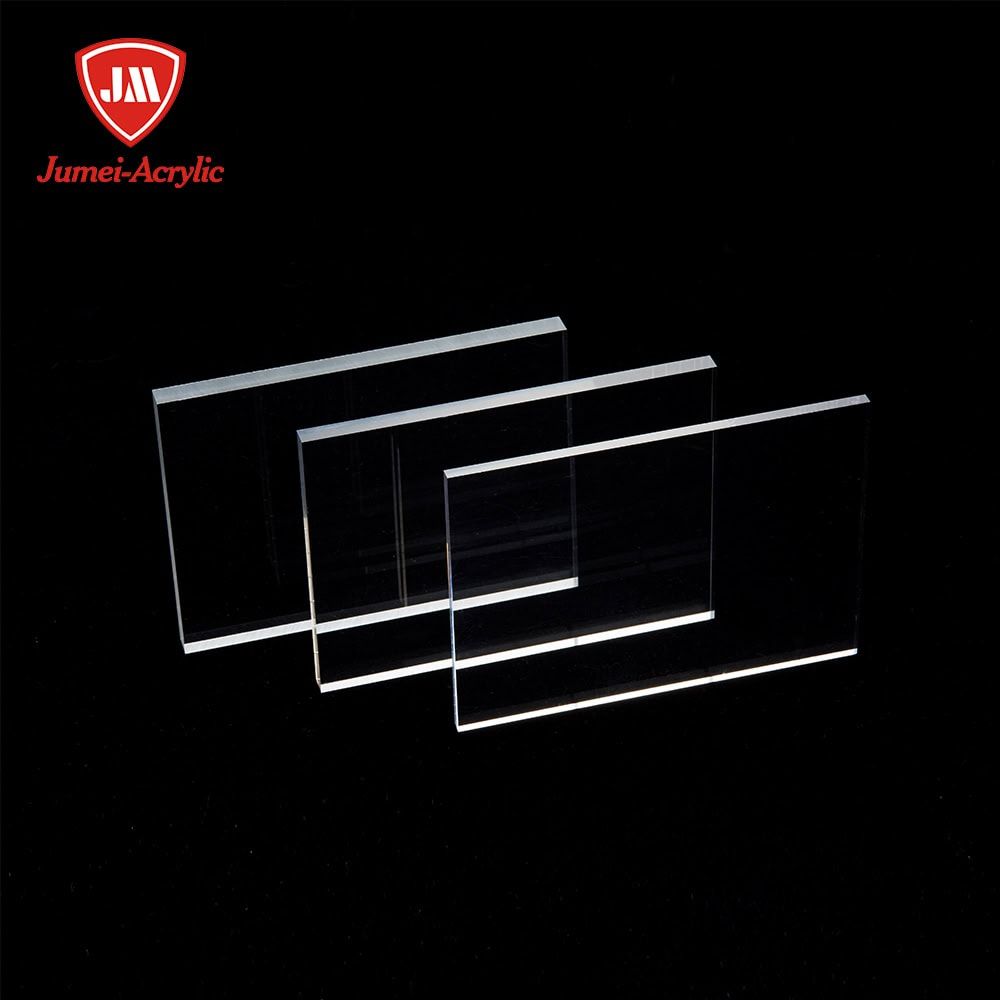
Modern acrylic products hold a wide range of applications. Standard sheet sizes and options for custom shapes. These sheets are durable, resistant to chemicals, moisture, and yellowing to ensure longevity.
Sustainability Trends for Acrylic Sheet Manufacturer
Manufacturers are looking into a sustainability revolution with recycled materials, renewable energy, and eco-compliance. And it’s justified by emerging sustainability trends.
01. Circular Economy with Plexiglass Sheets
Brands are increasingly reclaiming post-consumer acrylic to reprocess it into new products. It reduces landfill waste while supporting resource efficiency.
Companies are adopting closed-loop recycling. Meanwhile, production scrap is reintegrated into manufacturing lines, minimizing raw material demand.
Third-party certifications like ISO 14001 and ecolabels (EU Ecolabel) validate sustainable practices. It can boost credibility with environmentally conscious buyers.
02. Recycled and Bio-based Acrylic Materials
The recycled acrylic sheet market is projected to double from $1.2B in 2024 to $2.5B by 2033. Such growth is likely to be fueled by sustainable material demand due to regulatory pressure.
Research into bio-based methyl methacrylate (MMA) offers potential for reducing reliance on fossil fuels. Early trials show promise in maintaining clarity and durability.
03. Energy Efficiency for Clear Acrylic Sheets
Leading producers are favoring solar and wind-powered plants to reduce dependence on fossil fuels. Strategies include low-emission furnaces and optimized logistics to cut transportation emissions.
Closed-loop water systems and advanced filtration reduce water usage. European acrylic brands report a 20% – 30% reduction in carbon emissions after transitioning to renewable-powered facilities.
04. Sustainable Design as an Alternative to Plastic Sheets
Acrylic sheets are being designed for easy disassembly and repair to extend product lifespans. Enhanced UV resistance and scratch-proof coatings reduce material turnover, aligning with sustainability goals.
An acrylic sheet manufacturer offers clear acrylic sheets and durable acrylic sheets. Optical clarity and impact resistance made plexiglass sheets a lightweight alternative to glass, weighing half as much.
05. Regulatory Landscape and Standards
EU Directives mandate recycling targets and restrict hazardous substances in plastics. US Environmental Policies emphasize carbon reduction and sustainable sourcing.
Companies meeting ecolabel standards gain a competitive advantage, particularly in markets like Europe and North America, where green procurement is prioritized.
Global Demand Dynamics in the Acrylic Sheet Market
a. Regional Demand of Polymethyl Methacrylate
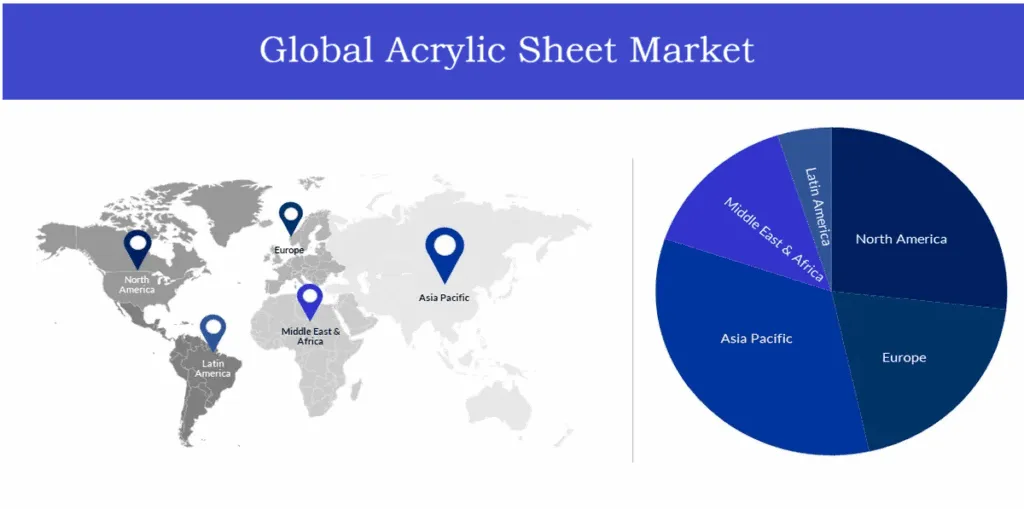
- Asia-Pacific: Asia-Pacific dominates the acrylic sheet market, accounting for over 45% of the demand. Rapid urbanization in China, India, and Southeast Asia drives demand for acrylic in construction facades, skylights, and partitions.
Japan, South Korea, and Taiwan lead in consumer electronics, using acrylic sheets in displays, housings, and panels. India’s Smart Cities Mission has accelerated the adoption of acrylic sheets in urban infrastructure projects.
- North America: The US and Canada see strong demand in home renovation and remodeling, where acrylic sheets replace traditional glass for safety and energy efficiency.
With EV adoption rising, acrylic sheets are in instrument clusters, lighting systems, and light panels. Tesla integrates acrylic components in dashboard displays to improve durability.
- Europe: Europe’s strict environmental regulations (EU Green Deal, Circular Economy Action Plan) fuel demand for eco-friendly acrylic sheets.
Recycled and bio-based acrylics are gaining traction in Germany and Scandinavia. IKEA has shifted toward recyclable acrylic signage and displays.
- Latin America + Middle East: Brazil, Mexico, and the UAE are becoming manufacturing and retail hubs. It drives acrylic demand in construction, retail signage, and packaging.
Middle Eastern mega-projects like Saudi Arabia’s NEOM city are considering adopting acrylic sheets at mass scales for futuristic architectural designs.
b. Demand Drivers of Durable Acrylic Sheets
By 2030, 68% of the global population will live in cities, fueling demand for acrylic in skylights, facades, and partitions. Brands increasingly use customized acrylic signage and LED-integrated displays to attract consumers.
Post-pandemic, hospitals and clinics worldwide adopted acrylic barriers and housings for medical equipment. Lightweight acrylic materials are critical for EVs, reducing vehicle weight and extending battery range.
c. Impact of Global Supply Chains
Acrylic sheets are derived from PMMA (polymethyl methacrylate) monomers. Supply disruptions in Asia (a major producer) affect global pricing. Tariffs on plastics between the US and China have influenced acrylic sheet costs, pushing manufacturers to diversify sourcing.
Post-COVID, companies shifted to nearshoring and just-in-time inventory models, balancing cost efficiency with resilience. Procurement managers should diversify PMMA sourcing across Asia and Europe to mitigate risks from geopolitical tensions.
d. Competitive Landscape
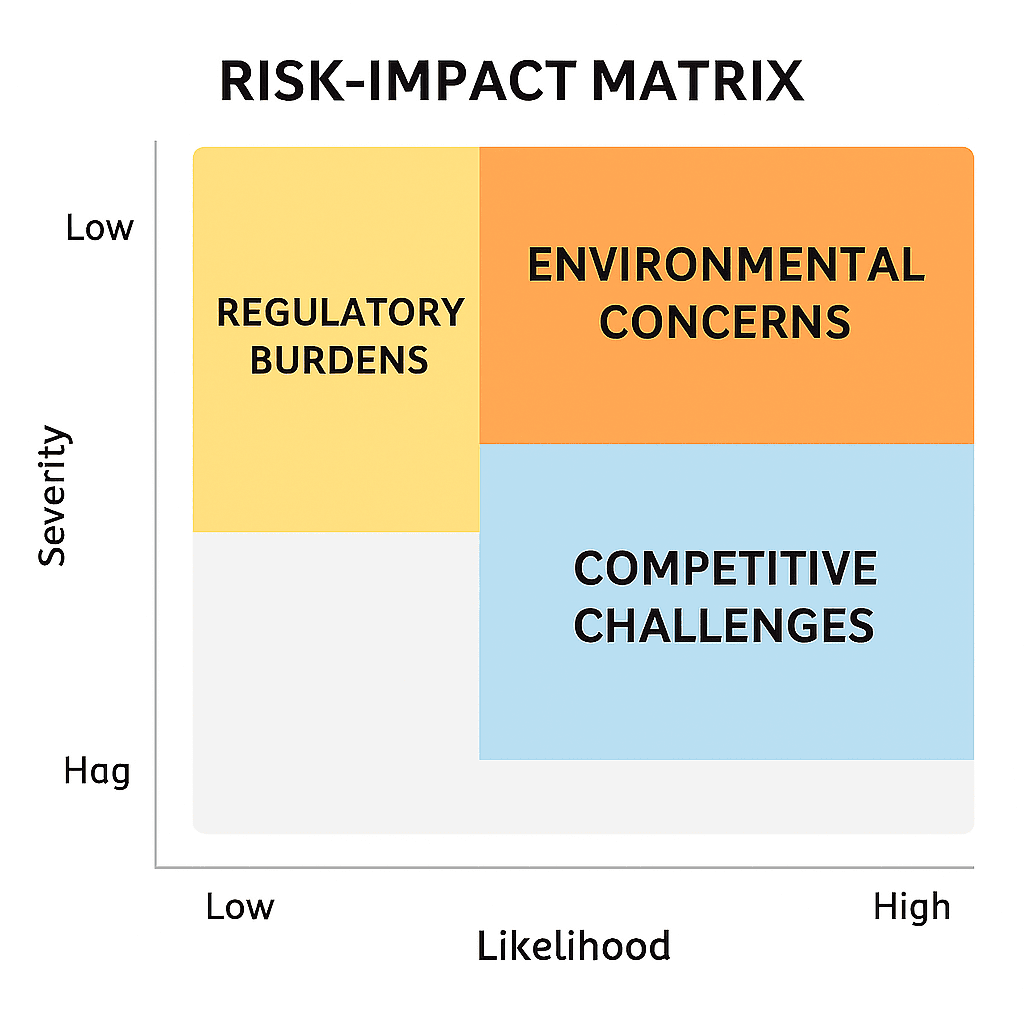
Companies like Mitsubishi Chemical, Evonik Industries, and Arkema are moving forward with recycled and bio-based acrylic. Smaller firms in Asia-Pacific and Latin America offer cost-effective local sheets.
Thanks to laser engraving and polishing services, brands create custom projects with high-impact visuals. Acrylic’s transparency and resistance make it a suitable material that demands clarity and durability.
e. Pricing Trends and Forecasts
PMMA prices fluctuate with crude oil markets, creating uncertainty for manufacturers. Rising energy prices in Europe have increased production costs, pushing manufacturers toward renewable-powered plants.
Pricing Strategies –
- Premium Pricing: For bio-based and recycled acrylic sheets as sustainable alternatives.
- Competitive Pricing: In Asia-Pacific, where cost-sensitive markets dominate.
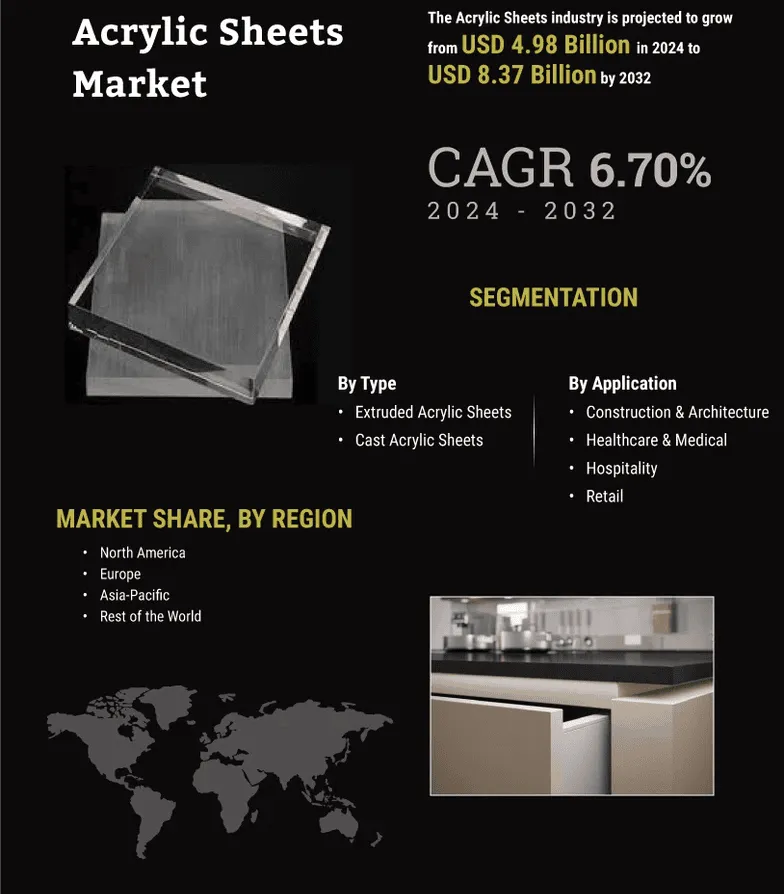
The global acrylic sheet market is projected to grow at a CAGR of 6.5% from 2024 to 2032, reaching $8.6B by 2032.
Technical Innovations in the Acrylic Sheet Market
In industrial applications, acrylics are valued due to resistance to moisture, chemicals, and shatter risks. They can be machined, taped, or polished for mirror finishes, translucent windows, and metal-acrylic hybrid projects.
- Automation and Digital Fabrication: Modern production lines are adopting robotic handling and CNC to reduce labor costs. CAD/CAM integration lets manufacturers design complex geometries and cut sheets with micron-level accuracy.
- Additive Manufacturing (3D Printing with Acrylic): Acrylic-based filaments and resins are now used in 3D printing for customized prototypes. The global 3D printing plastics market is projected to grow at 20% CAGR through 2030.
- Improved Scratch Resistance and Coatings: Nanocoatings and hard-surface treatments have significantly improved the scratch resistance of acrylic. Evonik Industries developed anti-scratch PMMA coatings that extend product life by up to 40%.
- UV Stabilization and Anti-Fog Treatments: Enhanced formulations prevent yellowing degradation under prolonged sun exposure. Anti-fog treatments are widely adopted in medical barriers and automotive windshields for visibility and safety.
- IoT and Real-Time Quality Control: Embedded sensors monitor temperature, pressure, and thickness during production. Automated alerts allow operators to adjust parameters instantly, reducing defect rates by 15% – 20%.
- Data-Driven Predictive Analytics: AI-driven analytics forecast demand, optimize raw material usage, and reduce waste. Data-driven dashboards track production efficiency, allowing 10% – 12% cost savings in energy and materials.
Acrylic sheets, in thick standard sheet sizes and custom dimensions, provide flexibility for delivery locations. Many manufacturers provide additional services such as laser cutting, polishing, and packaging. It helps clients complete their purchase with confidence in quality and durability.
Challenges and Headwinds in the Acrylic Market
01. End-of-Life Disposal Issues
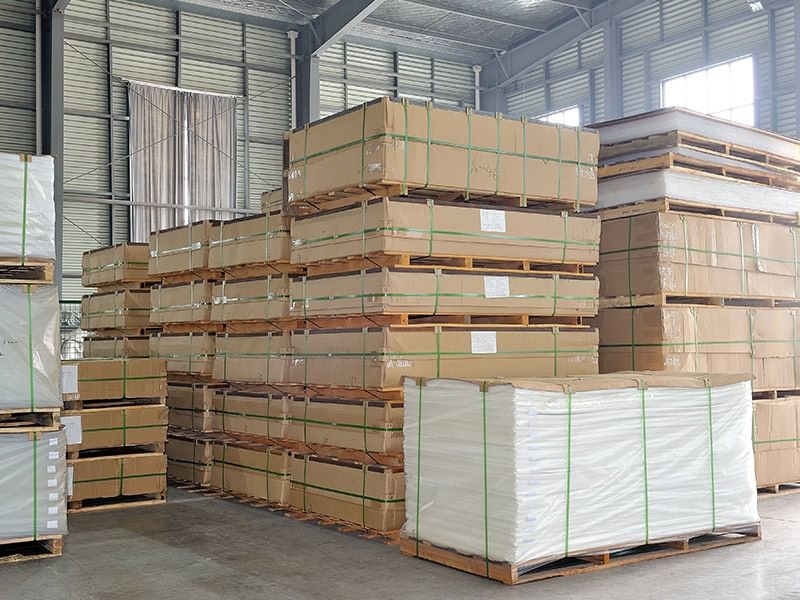
Acrylic sheets, primarily made from PMMA (polymethyl methacrylate), are not biodegradable. It creates end-of-life disposal issues in construction and retail sectors involving large volumes.
Much of the made acrylic ends up in landfills after use. Unlike glass, acrylic does not naturally break down, raising concerns about microplastic pollution when improperly disposed of.
02. Recycling Limitations and Cost Barriers
Recycling acrylic is technically possible but cost-intensive. Mechanical recycling often results in downgraded material quality, while chemical recycling requires expensive infrastructure.
Current recycling of acrylic plastics remains below 10%, far lower than metals or glass. High collection and sorting costs discourage widespread adoption in developing/underdeveloped regions.
03. Rising Performance Plastics (Sharp Edges + 48 x 96)
Alternatives like polycarbonate (PC) and PETG are gaining traction due to superior impact resistance. Polycarbonate, 250x stronger than glass, gets preference in automotive and aerospace applications.
Despite being heavier, glass remains a strong competitor due to its 100% recyclability and low footprint. Hybrid materials combining polymers with fibers (carbon or glass fiber composites) are also emerging.
04. Global Differences in Environmental Policy
The EU’s Circular Economy Action Plan and Single-Use Plastics Directive impose strict recycling and sustainability requirements. They continue to push acrylic manufacturers to innovate.
Meanwhile, the US policies emphasize carbon reduction, which varies by state (a fragmented landscape). Japan and South Korea enforce strong recycling mandates, while others (India) are still developing.
Future: What to Expect in 2026 and Beyond?
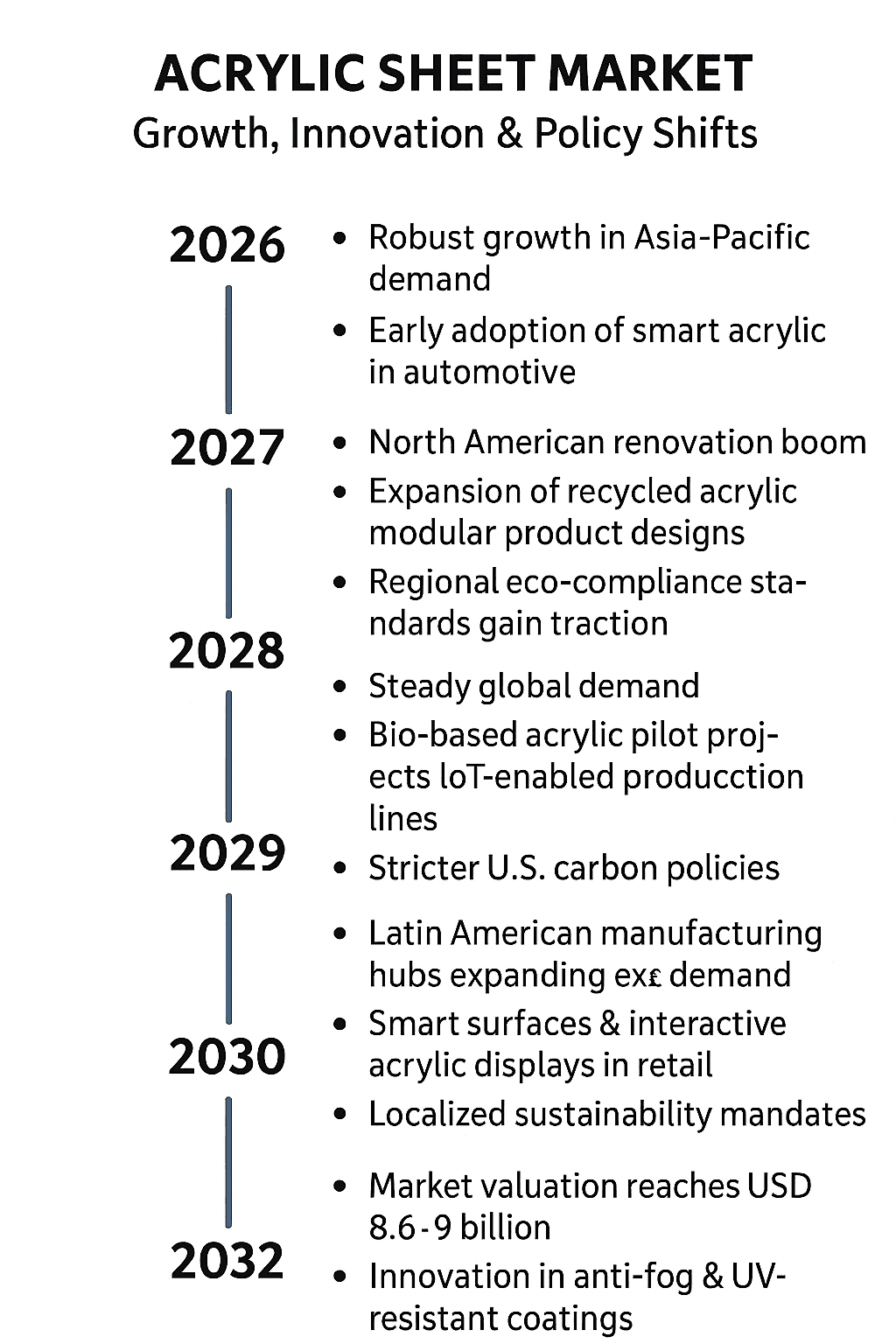
The global acrylic sheet market is projected to grow at a CAGR of 6% – 7% between 2024 and 2032. It’ll reach the market value of $8.6 – 9.0B by 2032.
Asia-Pacific will remain the largest consumer, accounting for nearly 45% – 50% of demand. The demand gets driven by construction, automotive, and electronics manufacturing.
North America and Europe will see a rather steady growth. It’ll come from an increase in renovation, EV adoption, and stricter sustainability policies.
Key Sectors Expected to Surge
- Construction and Architecture: Urbanization and smart city projects will boost demand for acrylic facades, skylights, and partitions.
- Automotive and EVs: Lightweight acrylic components will be critical in dashboards, lighting, and aerodynamic designs.
- Healthcare: Post-pandemic investments in medical infrastructure will sustain demand for acrylic barriers, housings, and diagnostic equipment.
- Retail and Packaging: Customizable displays and premium recyclable packaging will expand acrylic’s role in consumer-facing industries.
Innovation Trajectories
- Recycled Acrylic: By 2033, recycled acrylic sheets are expected to reach USD 2.5 billion, growing at a CAGR of 9.2%.
- Bio-based Acrylic: Research into bio-derived monomers (bio-MMA) is advancing, with pilot projects in Europe and Japan showing promise for reducing fossil fuel dependence.
- Circular Economy: Manufacturers are investing in closed-loop recycling systems, ensuring production waste is reintegrated into new sheets.
New Application Frontiers
- Smart Surfaces: Acrylic sheets embedded with sensors, LEDs, and interactive coatings will redefine retail displays and architectural facades.
- Interactive Materials: Integration with IoT and AR technologies will allow acrylic signage to deliver real-time information in retail and healthcare settings.
- Case Example: In 2025, European retailers began experimenting with LED-integrated acrylic panels to respond to consumer movement.
Frequently Asked Questions (FAQs)
1) What is driving the growth of the acrylic sheet market in 2026?
The acrylic sheet market growth in 2026 is driven by rising demand in construction, automotive, healthcare, and retail sectors, alongside sustainability initiatives and lightweight material adoption.
2) How does sustainability impact the acrylic sheet market?
Sustainability trends such as recycling, bio-based acrylics, and energy-efficient manufacturing are reshaping the market. More importantly, eco-compliance is becoming a competitive advantage.
3) Why are acrylic sheets preferred in automotive manufacturing?
Acrylic sheets are 50% lighter than glass and also meet safety standards. That’s why it’s a widespread preference in instrument clusters, lighting systems, and EV dashboards to improve efficiency.
4) How is the retail sector using acrylic sheets?
Retailers use acrylic sheets for customizable signage, point-of-sale displays, and LED-integrated panels. Such simple yet captivating integration continues to push brand visibility and customer engagement.
5) Are acrylic sheets recyclable?
Yes. Acrylic sheets can be recycled. However, the current recycling rates remain below 10% globally due to cost barriers. Advances in closed-loop recycling systems are improving the rate slowly but surely.
6) How do global regulations affect the acrylic sheet market?
EU directives, US environmental policies, and Asia-Pacific recycling mandates are pushing manufacturers toward eco-friendly production. It’s the same reason for brands to invest in compliance requirements.
Conclusion
The modern acrylic sheet market stands at a junction of innovation, sustainability, and demand. Applications always revolve around construction, automotive, healthcare, and retail. Groundbreaking advancements in the material incorporate resilience and adaptability. Waste management, regulatory compliance, and competition are real, but they’re the catalysts of transformation.
Top-Tier Acrylic Sheet for the Best Price at JUMEI
Jumei Acrylic specializes in making the pitch-perfect sheets for your project. We’ve been around for years with guaranteed satisfaction. Contact us to reach our top experts for insightful consultation.